
How to get from Bangkok to Hua Hin
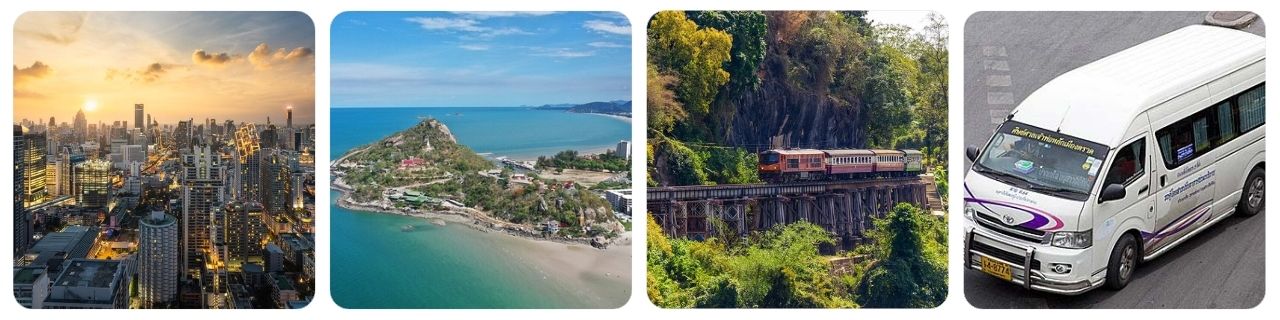
Heading from Bangkok to Hua Hin? This guide compares trains, buses, minivans, private transfers, and self-drive options so you can match your time, comfort, and budget to the right route.
At A Glance (Bangkok to Hua Hin)
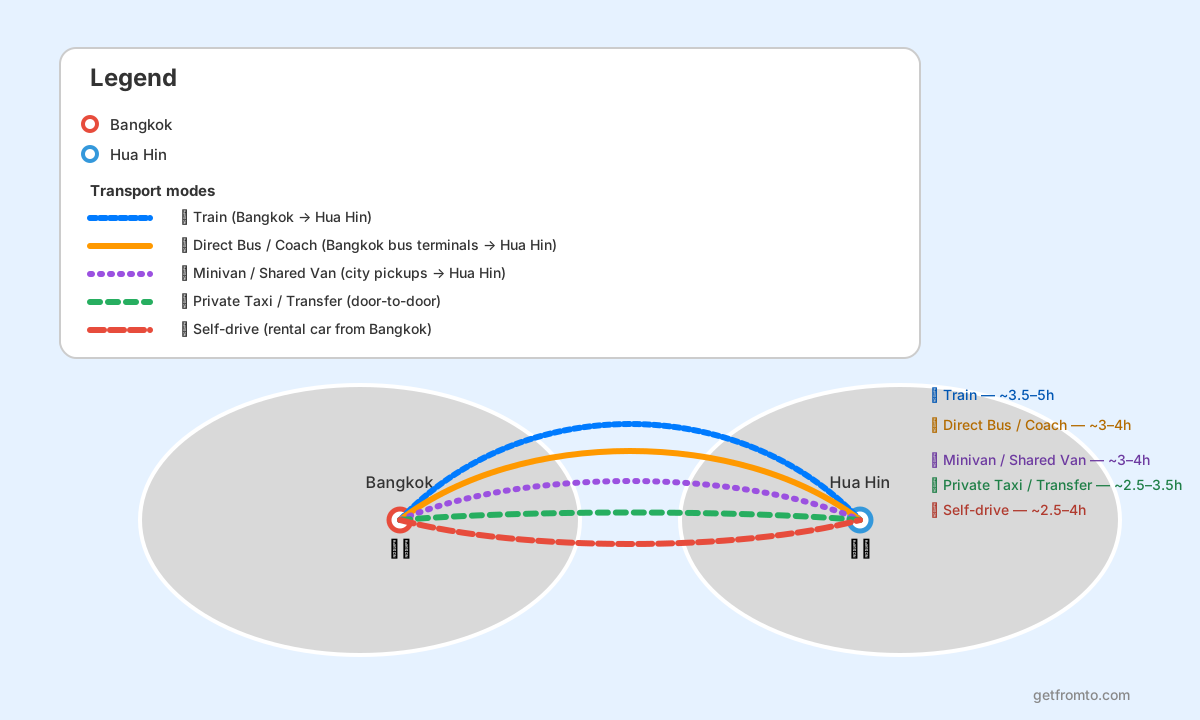
| Mode | Duration | Best For |
|---|---|---|
| 🚆 Train (Bangkok → Hua Hin) | ~3.5–5h (service-dependent) | Scenic views, budget travel, no traffic |
| 🏷️ Cost: ~THB 90–1,200 one-way depending on class and train type; check State Railway schedules and prices, or compare tickets on Bangkok–Hua Hin listings. | ||
| 🚌 Direct Bus / Coach (Bangkok Bus Terminals → Hua Hin) | ~3–4h (traffic-dependent) | Most travelers, simple point-to-point |
| 🏷️ Cost: ~THB 180–350 one-way; compare operators and timetables on 12Go Asia or search buses on Trip.com’s Hua Hin guide. | ||
| 🚐 Minivan / Shared Van (City Pickups → Hua Hin) | ~3–4h door-to-door | Frequent departures, small groups |
| 🏷️ Cost: ~THB 200–450 per person; pre-book via minivans & buses or via shared transfers on Klook. | ||
| 🚕 Private Taxi / Transfer (Door-to-door) | ~2.5–3.5h | Families, late arrivals, lots of luggage |
| 🏷️ Cost: ~THB 2,000–3,500 per car (up to 3–8 passengers). Compare private cars and taxis on 12Go taxi options, Klook city transfers, or GetYourGuide transfers. | ||
| 🚗 Self-Drive (Rental Car from Bangkok) | ~2.5–4h depending on stops | Road-trippers, flexible itineraries |
| 🏷️ Cost: Car rental from ~THB 800–1,500/day plus tolls & fuel; browse cars from Bangkok on Booking.com Car Rentals or plan a road trip using Klook’s Hua Hin road-trip ideas. | ||
Which Option or Route Should You Choose?
- Fastest / Most Convenient: For door-to-door comfort and minimal hassle, choose a private taxi or transfer. Pre-book via platforms like Klook private charters, GetYourGuide transfers, or services such as Welcome Pickups airport transfer if you’re landing at BKK or DMK.
- Cheapest / Most Economical: Budget travelers usually prefer 3rd class or 2nd class trains or a direct bus from Sai Tai Mai or Ekkamai. Compare cheap seats and vans on 12Go Asia.
- Most Scenic / Relaxed: The coastal railway line is slower than a taxi but offers a classic Thai travel experience, sea glimpses, and Hua Hin’s photogenic station.
- Flexible Schedule & Side Trips: If you want to stop at Cha-Am, Phetchaburi, or national parks, go for self-drive or a private charter where you can request extra stops.
- Coming Straight from the Airport: If you land at Suvarnabhumi or Don Mueang and want to avoid crossing the city with luggage, look at airport buses and vans to Hua Hin on 12Go Suvarnabhumi–Hua Hin listings, or book a direct car with GetTransfer or Welcome Pickups. Ride-hailing apps like Grab and Bolt also operate widely in Bangkok.
How to Book and Practical Tips
- Book popular departure times in advance: Friday evenings, weekends, and Thai holidays sell out first. Use platforms like 12Go Asia, Klook’s Hua Hin transport page, or GetYourGuide transfers to secure seats.
- Use official systems where possible: For trains, you can reserve directly via the State Railway of Thailand’s D-Ticket booking system. For government buses, check timetables with The Transport Company (BorKorSor) on their official site and then buy at the terminal or via intermediaries.
- Plan city transfers in Bangkok: Getting to Krung Thep Aphiwat, Thonburi, Ekkamai or Sai Tai Mai can take 45–90 minutes in traffic. Consider BTS/MRT plus taxi/Grab, or pre-booked hotel pickup through services such as Welcome Pickups Bangkok or GetTransfer.
- Mind luggage & comfort: Trains and big buses have more legroom than some minivans. If you have large suitcases, look for bus or private transfer options that specify luggage capacity, or store bags in Bangkok using Radical Storage locations before or after the trip.
- Check accommodation and onward travel: Many travelers combine the journey with a few days at the beach. Compare hotels in town, near the beach, or by the station on Booking.com’s Hua Hin listings, and check Hua Hin activities and transfers on Trip.com or GetYourGuide.
- Consider two wheels for local exploring: Once in Hua Hin, you can walk, hire tuk-tuks, or rent scooters and bicycles. If you want a bike ready in Bangkok for a bigger road trip, search options on BikesBooking Bangkok scooters (always wear a helmet and ensure you have the right license).
🚆 Option #1 — Train (Scenic & Relaxed)
Budget-friendly No traffic Fixed timetable
- Overview: Trains run from Bangkok (mainly Krung Thep Aphiwat Central Terminal, with some services from Thonburi) south along the Gulf coast to Hua Hin. Journey time is typically 3.5–5 hours depending on whether you choose an ordinary, rapid, or special express train.
- How to book (with price): Standard 3rd class fan seats can be as low as ~THB 90–150, while 2nd class air-conditioned seats are usually ~THB 250–600, and 1st class sleepers (on longer routes passing Hua Hin) can reach ~THB 800–1,200. Reserve online via the official SRT D-Ticket system or compare train options in English on 12Go Asia.
- Pros: Scenic route, relaxed vibe, chance to meet locals, fixed fares, no highway stress.
- Cons: Slower than a car; popular services can sell out; air-con can be chilly so bring a layer; timetable changes do occur so always reconfirm.
Step-by-step: Train from Bangkok to Hua Hin
- Check timetables: Visit the State Railway site or D-Ticket online booking to see current departure times from Krung Thep Aphiwat/Thonburi to Hua Hin. Alternatively, browse departures and seat types on 12Go Asia.
- Reserve your seat: For weekends and holidays, pre-book 2nd or 1st class seats. Print or save your e-ticket as a PDF or QR code, following the instructions on D-Ticket or your chosen agent.
- Get to the departure station: Plan enough time (ideally 60–90 minutes) to reach Krung Thep Aphiwat or Thonburi using BTS/MRT plus taxi, Grab, or Bolt.
- Arrive early: Aim to be at the station at least 30 minutes before departure to find your platform, grab snacks, and board calmly.
- Onboard: Keep your ticket handy for inspections, store large bags in overhead racks or under seats, and enjoy the coastal and rural scenery as you approach Hua Hin.
- Arrival in Hua Hin: Hua Hin Railway Station is central; from here you can walk or take a songthaew/tuk-tuk to your hotel, or check in if you’re staying near the station (see Hua Hin accommodation options).
Getting to the main embarking points (Krung Thep Aphiwat / Thonburi)
- BTS/MRT + taxi: Use the BTS or MRT to reach Bang Sue / Chatuchak area, then take a short metered taxi or Grab/Bolt ride to Krung Thep Aphiwat Central Terminal.
- From Old Town / Khao San: Take a metered taxi, Grab, or Bolt directly to Krung Thep Aphiwat or Thonburi Railway Station (Thonburi is closer from the west bank).
- From Suvarnabhumi or Don Mueang airports: Airport Rail Link or shuttle + MRT to Bang Sue works well, or pre-book a direct airport pickup to the station via Welcome Pickups or GetTransfer.
- Using ride-hailing apps: Grab and Bolt operate widely around Bangkok; set the destination to “Krung Thep Aphiwat Central Terminal” or “Thonburi Railway Station” and confirm you’re going to the correct entrance.
- Locations/Trip Planner: 🔗 Google Map / 🔗 OpenStreetMap
🚌 Option #2 — Direct Bus / Coach (Most Popular, Good Value)
Low cost Frequent departures Traffic-dependent
- Overview: Direct buses and large coaches run from Bangkok’s main bus terminals (Southern/Sai Tai Mai, Eastern/Ekkamai, and sometimes Mo Chit) as well as from Suvarnabhumi Airport to Hua Hin. Journey time is around 3–4 hours, depending on traffic and en-route stops.
- How to book (with price): Fares are typically ~THB 180–350 per person, slightly more from the airport. Book in advance on 12Go Asia (buses & vans), via Klook shared bus transfer, or check state-run services through The Transport Company (BorKorSor) and then buy at the terminal.
- Pros: Cheap, simple, many daily departures, air-conditioned coaches, often a central Hua Hin drop-off near the clock tower or bus station.
- Cons: Journey time can vary with traffic; seats on some older buses may be less comfortable; expect air-con to be cold and occasional loud Thai movies.
Step-by-step: Direct Bus from Bangkok to Hua Hin
- Pick your terminal: If you’re staying in western Bangkok or Khao San, Sai Tai Mai (Southern Bus Terminal) is convenient. Ekkamai works well from Sukhumvit BTS, and Suvarnabhumi Airport buses are ideal if you’re landing by air.
- Check schedules: View available departure times, bus classes, and operators on 12Go Asia or on your chosen booking platform. For Suvarnabhumi connections, filter for routes starting at BKK airport.
- Book tickets: Reserve online (e-ticket or voucher) or buy at the terminal ticket counters. Arrive early if you’re buying on the day, especially on weekends or holidays.
- Boarding: At the terminal, confirm your platform, show your ticket or voucher, and store larger luggage in the underfloor compartment. Keep valuables with you.
- En route: Most coaches make a short rest stop; bring small change for snacks and use the bathroom on the bus or at the rest area.
- Arrival in Hua Hin: Buses usually stop at a Hua Hin bus station or roadside drop-off in town. From there, take a short tuk-tuk or songthaew to your accommodation.
Getting to the main embarking points (Sai Tai Mai / Ekkamai / Mo Chit / Suvarnabhumi)
- To Sai Tai Mai (Southern Bus Terminal): Best reached by taxi, Grab, or Bolt from most central areas; allow extra time for traffic over the river.
- To Ekkamai (Eastern Bus Terminal): Take the BTS Skytrain to Ekkamai station; the terminal is a short walk from Exit 2.
- To Mo Chit 2: Use BTS to Mo Chit or MRT to Chatuchak Park, then taxi, Grab, or bus to the intercity terminal.
- From Suvarnabhumi Airport: Follow signs to the transportation centre or Hua Hin bus counters; some services leave from the terminal level directly. You can also use the Airport Rail Link plus bus/taxi to another terminal.
- Locations/Trip Planner: 🔗 Google Map / 🔗 OpenStreetMap
🚐 Option #3 — Minivan / Shared Van (Frequent & Flexible)
Mid-range cost Many daily departures Less legroom
- Overview: Minivans and shared vans depart from bus terminals and some city offices/mini-hubs, taking 8–12 passengers directly to Hua Hin. They’re quicker to load than big buses and often have slightly more flexible departure patterns.
- How to book (with price): Expect ~THB 200–450 per person depending on pick-up point and operator. Search for shared vans on 12Go Asia, or look for shared bus/van products such as the Klook shared transfer.
- Pros: Fast boarding, frequent departures, door-to-door options in some cases, small-group feel.
- Cons: Less legroom and luggage space; can feel cramped for tall travelers; safety and comfort vary by operator, so read recent reviews before booking.
Step-by-step: Minivan / Shared Van
- Choose your pick-up zone: Decide whether you prefer a terminal departure (Sai Tai Mai, Ekkamai, Mo Chit) or a more central meeting point near your hotel.
- Compare operators: On 12Go Asia, check each van operator’s reviews, luggage policy, and departure frequency.
- Book and confirm: Reserve online, noting your exact pick-up location and time. Screenshot or save your voucher; some operators will contact you via messaging apps.
- Waiting & boarding: Arrive 15–20 minutes early. Have your passport and booking reference ready and load large bags into the rear compartment.
- During the ride: Buckle up, keep valuables with you, and expect a short comfort stop on longer journeys. If you’re prone to motion sickness, sit near the front.
- Drop-off in Hua Hin: Many vans use a central drop-off hub or office; from there, use a tuk-tuk or songthaew to reach your hotel, or walk if nearby.
Getting to the main embarking points (City Offices / Terminals)
- From central Bangkok hotels: Taxi, Grab, or Bolt are easiest for early morning vans; always confirm the exact office address with your booking voucher.
- By BTS/MRT: For Sukhumvit-based van offices, the BTS (Asok, Phrom Phong, Thong Lo, Ekkamai) works well; you can then walk or take a short motorcycle taxi.
- From Old Town: Use a metered taxi or Grab/Bolt to reach your van operator’s office; allow extra buffer time for river crossings.
- Luggage strategy: If your van booking notes limited luggage, consider storing extra bags in Bangkok using Radical Storage’s Bangkok network and traveling light.
- Locations/Trip Planner: 🔗 Google Map / 🔗 OpenStreetMap
🚕 Option #4 — Private Taxi / Transfer (Fastest, Door-to-door)
Door-to-door Great for groups Highest cost
- Overview: A private taxi or transfer picks you up from your hotel or the airport and drops you directly at your accommodation in Hua Hin. The drive usually takes 2.5–3.5 hours depending on traffic and route.
- How to book (with price): Typical prices are ~THB 2,000–3,500 per car (sedan/SUV/van). Compare options on 12Go taxis, Klook private city transfers, or GetYourGuide private transfers. If you need an airport pickup, consider Welcome Pickups for fixed-price airport rides or request a quote via GetTransfer.
- Pros: Fastest and simplest; hotel or airport pickup; great for families, late-night arrivals, or travelers with heavy luggage; cost-effective when shared between several people.
- Cons: More expensive than bus or train; you’re still subject to highway traffic; not as social or “local” as train travel.
Step-by-step: Private Taxi / Transfer
- Choose pick-up and drop-off: Decide if you want to be collected at the airport, a Bangkok hotel, or another landmark, and specify your Hua Hin accommodation.
- Get quotes: Use 12Go, Klook car charters, GetYourGuide transfers, or GetTransfer to compare vehicle sizes, inclusions (tolls, fuel), and reviews.
- Confirm details: Provide your flight or hotel details, pick-up time, phone/WhatsApp number, and any special requests (child seats, extra luggage).
- Meet your driver: At hotels, wait in the lobby 10–15 minutes before pickup; at the airport, follow instructions on your voucher (meeting point in arrivals hall or transport area).
- Enjoy the ride: Sit back in air-conditioned comfort. Many drivers are happy to make a short restroom or snack stop en route if requested.
- Arrive & check in: You’ll be dropped at your accommodation entrance or other requested stop in Hua Hin.
Getting to the main embarking points (Your Hotel / Airport)
- From any Bangkok hotel: Most private transfers include hotel pickup; simply wait in the lobby and watch for a sign with your name.
- From Suvarnabhumi (BKK) or Don Mueang (DMK): Follow the meeting-point instructions given by Welcome Pickups, GetTransfer, or your chosen provider; they usually wait at Arrivals with a sign.
- Using ride-hailing: If you choose not to pre-book, you can request a Grab or Bolt from your hotel to Hua Hin, but always check the estimated fare and confirm that the driver is comfortable with an intercity trip.
- Locations/Trip Planner: 🔗 Google Map / 🔗 OpenStreetMap
🚗 Option #5 — Self-Drive (Most Flexible, Road-trip Friendly)
Maximum freedom Great for side trips Requires confidence driving
- Overview: Renting a car and driving from Bangkok to Hua Hin gives you full control over your timetable and route. You can stop at Phetchaburi, Cha-Am, seaside cafes, and viewpoints as you go. The route uses well-maintained highways.
- How to book (with price): Daily rentals generally start from ~THB 800–1,500 for a small automatic car. Compare deals for pickup in central Bangkok or at the airport on Booking.com Car Rentals or browse road-trip ideas between Bangkok and Hua Hin via Klook’s road trip guide.
- Pros: Ultimate flexibility; ideal for families and photographers; easy to detour to beaches, caves, and national parks; convenient for bulky gear like golf clubs or surfboards.
- Cons: Driving in Bangkok traffic can be stressful; tolls and fuel add to the cost; you must be comfortable driving on the left and holding appropriate insurance and licenses.
Step-by-step: Self-Drive Bangkok to Hua Hin
- Choose pickup point: Decide whether to collect your car at the airport (easier to exit the city) or from a downtown office near your hotel.
- Book your car: On Booking.com or another rental platform, select an automatic transmission if you’re not used to manual, and ensure your package includes proper insurance.
- Plan your route: Most drivers use highways 35 and 4 via Samut Sakhon and Phetchaburi. You can plan scenic stops with inspiration from Thailand road-trip guides.
- Check documents: Carry your passport, driving licence (and International Driving Permit if required), rental contract, and a credit card for deposits.
- Drive & rest: Start early to avoid peak traffic leaving Bangkok. Stop at service areas for fuel, food, and rest; never drive when tired.
- Arrival & parking: Confirm your Hua Hin hotel’s parking options in advance via their listing or direct contact.
Getting to the main embarking points (Rental Offices / Airports)
- Downtown pickup: Many rental offices cluster around Sukhumvit and Silom; reach them via BTS/MRT then walk or take a short taxi ride.
- Airport pickup: If you’re flying into Bangkok then driving straight out, picking up your car at Suvarnabhumi or Don Mueang can avoid central-city traffic.
- Two-wheel alternatives: Confident riders sometimes rent scooters or motorbikes for regional exploring; if you’re considering this, compare options on BikesBooking and make sure you fully understand Thailand’s licensing and insurance rules.
- Locations/Trip Planner: 🔗 Google Map / 🔗 OpenStreetMap
FAQ (Bangkok to Hua Hin)
How long does it take to travel from Bangkok to Hua Hin?
Most journeys take 3–4 hours by bus, van, or car. Trains can take roughly 3.5–5 hours depending on the service, while self-drive times vary with traffic and stops.
What is the cheapest way to get from Bangkok to Hua Hin?
The cheapest options are usually ordinary or 3rd-class trains and basic buses from Bangkok’s main terminals, often starting below THB 200 one-way. Booking early for popular departures helps secure the lowest fares.
What is the most comfortable way to travel?
A private taxi or transfer offers the most comfort and convenience, especially for families or travelers with heavy luggage. Air-conditioned trains with reserved 2nd-class seats are also comfortable and less affected by traffic.
Is it safe to take a minivan?
Minivans and shared vans are widely used by locals and tourists. Choose reputable operators with good reviews, always wear your seatbelt, and avoid overloading. If you prefer more space and control, consider a bus, train, or private transfer instead.
Can I travel from Bangkok airports directly to Hua Hin?
Yes. There are direct buses and vans from Suvarnabhumi Airport, and you can also book pre-arranged private transfers from both Suvarnabhumi (BKK) and Don Mueang (DMK) to Hua Hin via platforms like Klook, GetYourGuide, Welcome Pickups, or GetTransfer.
Do I need to book in advance?
On weekdays outside of holidays, you can sometimes buy tickets on the day. However, for weekends, public holidays, and evenings, it’s smart to reserve bus, van, and train seats in advance online or at stations.
Is driving from Bangkok to Hua Hin difficult?
The route itself is straightforward, but driving in and out of Bangkok can be intense due to traffic and lane changes. Experienced drivers who are comfortable driving on the left and managing Thai traffic generally find the highway portion manageable.





Related Tours/Services
Popular Routes
Recent Routes
- How to get from PortMiami Cruise Terminal to Miami International Airport
- How to get from Samarkand to Bukhara
- How to get from Bell Tower (Xi’an) to Xi’an North Railway Station
- How to get from Canal City Hakata to Hakata Station
- How to get from Rialto Bridge (Venice) to Venezia Santa Lucia Station
- How to get from Florence Cathedral (Duomo) to Firenze Santa Maria Novella Station
- How to get from Nice to Paris
- How to get from Ribeira District (Porto) to Porto Campanhã Station
- How to get from Anne Frank House to Amsterdam Sloterdijk Station
- How to get from Buckingham Palace to London Victoria Station
Top Travel Gears

DUDE Wipes Unscented Pocket Packs, Adult Flushable Travel Wipes, 48 Count

zelin Anti Theft Zipper Clips, Travel Essentials, Carabiner, 4Pcs Grey

INIU 10000mAh 45W Fast Charging Portable Charger, Smaller Travel Power Bank | Flight-Safe, Detachable USB C Cable, Travel Essential, External Battery Phone Pack for iPhone 18 17 Samsung iPad etc
travel inspira Luggage Scale Digital Suitcase Weight Scale for Travel
2026 Travel Essentials for Apple Watch Charger,Cruise Vacation Camping Essentials,iPhone Charger,Multi Charging Cable,3 in 2 Charging Docks for iWatch Series 12 11-2/Ultra,iPhone 18 17-12,Car