
How to get from Guangzhou to Hong Kong
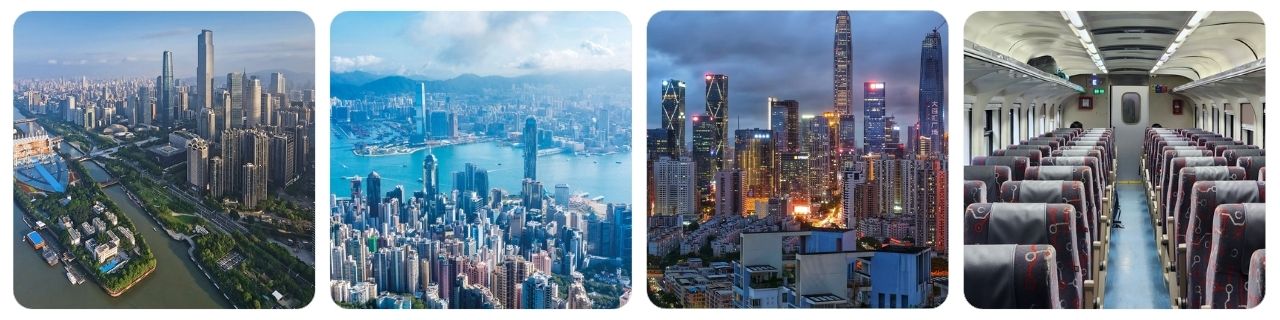
Guangzhou and Hong Kong are only about 170 km apart, and thanks to high-speed trains, cross-boundary buses, ferries and private transfers, it’s easy to choose a route that fits your budget and schedule.
At A Glance (Guangzhou to Hong Kong)
| Mode | Duration | Best For |
|---|---|---|
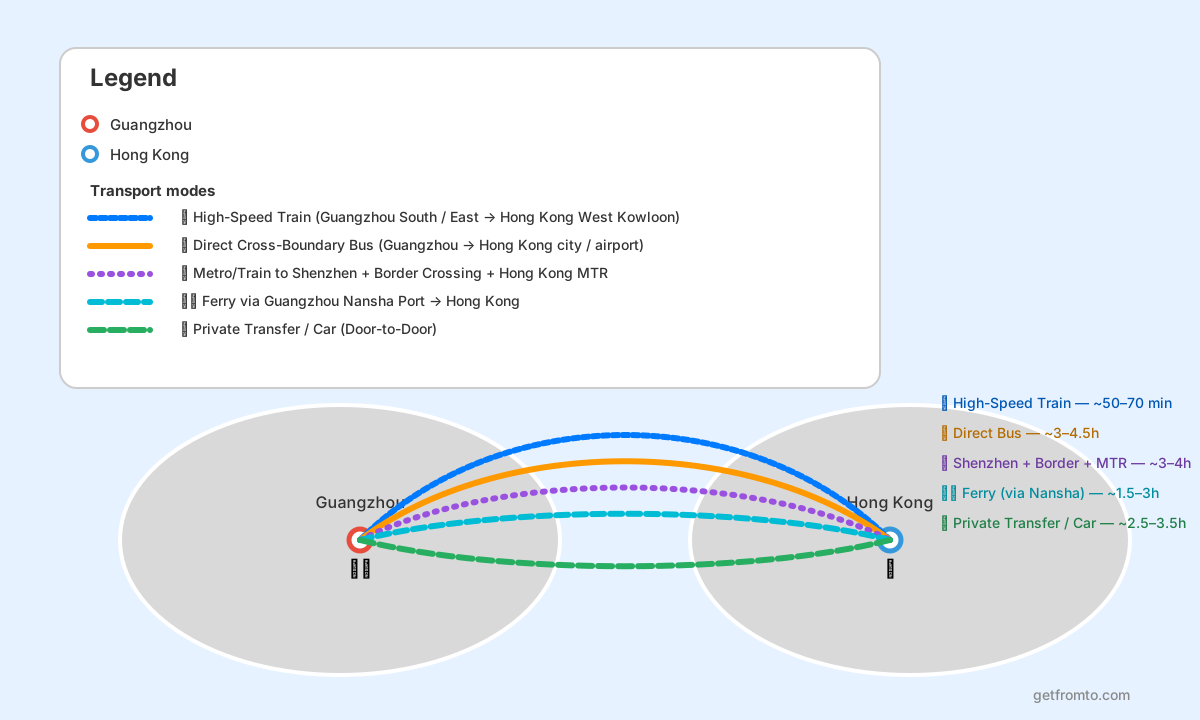
| 🚄 High-Speed Train (Guangzhou South/East → Hong Kong West Kowloon) | ~50–70 min train + station transfers | Fastest journey, first-time visitors |
| 🏷️ Cost: ~CNY 150–350 one-way (2nd–business class) » check trains | HSR tickets | compare routes | ||
| 🚌 Direct Cross-Boundary Bus (Guangzhou → Hong Kong city/airport) | ~3–4.5h, traffic and border-dependent | Good value, minimal changes |
| 🏷️ Cost: ~CNY 120–200 one-way » buses & shuttles | alt. bus/rail | ||
| 🚇 Metro/Train to Shenzhen + Border Crossing + Hong Kong MTR | ~3–4h total (several transfers) | Lowest cost, flexible schedules |
| 🏷️ Cost: From ~CNY 80–150 total (Guangzhou–Shenzhen train + metro/MTR) » GZ–SZ trains | Trip.com tickets | ||
| ⛴️ Ferry via Guangzhou Nansha Port → Hong Kong | ~1.5–3h including city transfers | Scenic route, airport connections |
| 🏷️ Cost: ~CNY 180–300 one-way (standard–VIP) » Nansha–HK ferry tickets | ||
| 🚗 Private Transfer / Car (Door-to-Door) | ~2.5–3.5h depending on traffic & border | Groups, lots of luggage, late arrivals |
| 🏷️ Cost: From ~CNY 800–1,500 per vehicle » MPV transfers | GetTransfer quotes | ||
Which Option or Route Should You Choose?
- Fastest & most convenient: For most travelers, the 🚄 high-speed train to Hong Kong West Kowloon is the best balance of speed, comfort, and simplicity.
- Cheapest/most economical: If you want to save money and don’t mind more transfers, the 🚇 metro/train to Shenzhen + border crossing + Hong Kong MTR can be the lowest-cost option.
- Most comfortable without transfers: If you prefer sitting down once and arriving close to your hotel, the 🚌 direct cross-boundary bus is a good compromise between cost and convenience.
- Most scenic / ferry lovers: Choose the ⛴️ Nansha–Hong Kong ferry for Pearl River estuary views or if you’re connecting via Hong Kong International Airport.
- Door-to-door with luggage or kids: Families, business travelers and late-night arrivals often prefer 🚗 private transfers, pairing them with ride-hailing apps like Didi (mainland China) and Uber (Hong Kong) if needed.
How to Book and Practical Tips
- Booking high-speed trains: Seats can sell out around weekends and holidays. Use platforms like Trip.com, Klook or 12Go Asia to see live schedules in English and pay with international cards.
- Hotels near stations: If you have an early/late train, consider staying close to Guangzhou South or Hong Kong West Kowloon. You can search for accommodation around these hubs on Booking.com hotels.
- Flights and car rental add-ons: If Guangzhou–Hong Kong is part of a longer trip, you can bundle onward flights and car rental using Booking.com when planning your itinerary.
- Tickets & documents: Trains and buses require your passport details when booking. Always carry your original passport for ticket checks and immigration.
- Time for border formalities: Whether you take train, bus or metro, allow extra time (often 30–60 minutes) for exit and entry immigration checks between mainland China and Hong Kong.
- Octopus & local transport: In Hong Kong, an Octopus card or contactless payments make it easy to use MTR, buses and trams. You can pre-book Airport Express and local transport passes via platforms like GetYourGuide or Klook.
- Luggage storage: If you arrive early or have a late train, luggage lockers in stations can be supplemented by city storage points; in Hong Kong, you can reserve space through Radical Storage.
- Exploring on arrival: Turn your transfer into a mini city-break with walking tours, Victoria Harbour cruises or Peak Tram tickets booked via GetYourGuide Hong Kong or Klook experiences.
- Onward mobility: If you’d like a scooter or bicycle while in Hong Kong’s New Territories or outlying areas, you can compare two-wheel rentals on BikesBooking.
🚄 Option #1 — High-Speed Train (Fastest & Most Convenient)
Fastest Frequent departures Immigration at stations
- Overview: Travel on the Guangzhou–Shenzhen–Hong Kong Express Rail Link from Guangzhou South (and some services from Guangzhou East/Guangzhou North) directly to Hong Kong West Kowloon Station. The train portion takes around 50–70 minutes, plus time to reach/depart stations and clear immigration.
- How to book (with price): Second-class seats usually start from about CNY 150–200, with first and business class costing more. You can check real-time availability and pay with foreign cards using Trip.com high-speed trains, Klook’s GZ–HK HSR page or 12Go Asia. For the official channel, you can also book through the MTR High Speed Rail / 12306 system.
- Pros: Fastest option; comfortable seats, air-conditioning and luggage racks; simple point-to-point route; immigration procedures are streamlined at stations.
- Cons: Popular trains can sell out around holidays or weekends; you must travel on the specific train/seat you booked; getting to Guangzhou South may take time if you’re staying in central districts.
Step-by-step: High-Speed Train
- Choose your departure station: Most travelers use Guangzhou South Railway Station (Guangzhounan); some trains also run from Guangzhou East or Guangzhou North. Pick the one closest to your hotel.
- Book your ticket: Reserve a seat on a train to Hong Kong West Kowloon via Trip.com, Klook or 12Go, entering your passport details exactly as printed.
- Arrive early at the station: Reach Guangzhou South/East at least 60–90 minutes before departure to collect any physical tickets (if required), pass security and find your boarding gate.
- Board and ride: Follow the platform signs for your train and carriage. Store small bags in overhead racks and heavier suitcases in luggage shelves at carriage ends.
- Immigration & arrival in Hong Kong: On arrival at West Kowloon, follow signs to immigration to complete mainland China exit and Hong Kong entry checks. After that you can walk to Austin or Kowloon MTR stations, or use taxis, Uber, Airport Express or a pre-booked city/airport ride with Welcome Pickups.
Getting to the main embarking points (Guangzhou South / Guangzhou East)
- To Guangzhou South: Take Guangzhou Metro Line 2 (north–south) or Line 7, or use an official taxi or Didi ride-hailing. Allow extra time at rush hour.
- To Guangzhou East: Guangzhou Metro Lines 1 and 3 both stop at Guangzhou East; from areas like Tianhe or Yuexiu it’s often a short metro ride.
- From West Kowloon in Hong Kong: West Kowloon is connected directly to Austin Station (Tuen Ma line) and via a footbridge to Kowloon Station (Airport Express/Tung Chung line). You can pick up Airport Express tickets or city passes via Klook or GetYourGuide.
- Locations/Trip Planner: 🔗 Google Map / 🔗 OpenStreetMap
🚌 Option #2 — Direct Bus (Most Popular, Good Value)
Low cost Central & airport drop-off Border-dependent
- Overview: Cross-boundary coaches run from Guangzhou (often from major hotels or coach stations in Tianhe and Yuexiu) directly to Hong Kong districts like Tsim Sha Tsui, Mong Kok, Causeway Bay and sometimes Hong Kong International Airport (HKIA). Total travel time is usually 3–4.5 hours depending on traffic and the border queue.
- How to book (with price): Fares typically range from about CNY 120–200 one-way. You can compare and book tickets on sites such as 12Go Asia or look for specific Guangzhou–Hong Kong direct buses listed on Trip.com. For official route details, consult cross-boundary coach operators referenced by the Hong Kong Transport Department.
- Pros: Straightforward boarding in Guangzhou with drop-off close to your Hong Kong hotel area; you stay on the same bus for most of the journey; generally cheaper than high-speed train + local transport.
- Cons: Journey time varies with traffic and border queues; you may need to change buses or unload luggage briefly at immigration; fewer departures late at night.
Step-by-step: Direct Cross-Boundary Bus
- Pick a departure point: Check which pickup (e.g. large hotels in Tianhe, dedicated coach terminals) is most convenient from your accommodation.
- Reserve seats: Book online via 12Go’s Guangzhou–Hong Kong bus listings or the operator’s website. You’ll typically need your passport details.
- Arrive early: Get to the coach stop at least 30–45 minutes before departure to find the correct bay, check in and load your bags.
- Ride to the border: The coach heads south towards a land border (commonly Shenzhen Bay or similar). Staff will tell you when to get off for immigration.
- Immigration formalities: Disembark with your carry-on and passport, clear mainland China exit and Hong Kong entry checks, then rejoin your coach on the other side (follow your driver’s instructions).
- Arrive in Hong Kong: Get off at your chosen stop. From there, use the MTR, taxis or ride-hailing apps like Uber in Hong Kong to reach your final hotel if needed.
Getting to the main embarking points (Guangzhou city coaches)
- Coach pickup locations: Many Guangzhou–Hong Kong coaches depart from large hotels, shopping centers or coach stations in Tianhe, Yuexiu and around Guangzhou East station. Always double-check the exact address in your booking voucher.
- Local transport to pickup: Use the Guangzhou Metro (Lines 1, 3, 5 and others) or city buses to reach central pickup points, or take an official taxi/Didi ride-hailing if you have heavy luggage.
- Arrival points in Hong Kong: Common drop-offs include Kowloon (Tsim Sha Tsui/Mong Kok), Hong Kong Island and sometimes HKIA. Plan your onward route by MTR or taxi in advance.
- Locations/Trip Planner: 🔗 Google Map / 🔗 OpenStreetMap
🚇 Option #3 — Metro/Train to Shenzhen + Border Crossing + Hong Kong MTR
Very budget-friendly High frequency More walking & transfers
- Overview: Travel from Guangzhou to Shenzhen by high-speed or intercity train, then transfer to the Shenzhen Metro to reach border crossings like Luohu or Futian. Cross the border on foot, then continue on Hong Kong’s MTR East Rail line into Kowloon or the New Territories. Total journey time is roughly 3–4 hours.
- How to book (with price): The Guangzhou–Shenzhen train portion usually costs around CNY 70–120 depending on train type and seat class. You can book tickets via Trip.com’s Guangzhou East–Shenzhen route or Klook’s Guangzhou–Shenzhen high-speed train page. Shenzhen and Hong Kong metro fares are inexpensive and paid on-site by card or contactless.
- Pros: Often the cheapest way to travel; trains and metros run very frequently; good if you’re staying near northern New Territories or crossing outside peak train times.
- Cons: Requires multiple changes and walking with luggage; border control areas can be crowded at peak times; instructions can be mostly in Chinese on the mainland side (English is more common on the Hong Kong side).
Step-by-step: Metro + Border Crossing
- Train Guangzhou → Shenzhen: Take a high-speed or intercity train from Guangzhou East or another Guangzhou station to Shenzhen, Shenzhen North or Futian. Book tickets in advance via Trip.com or Klook.
- Metro to the border: From your Shenzhen arrival station, use the Shenzhen Metro to reach border ports like Luohu (for Lo Wu Control Point) or Futian Port (for Lok Ma Chau). Signs clearly indicate “Hong Kong” or the port names.
- Exit mainland China: Follow the crowd into the immigration hall, queue at mainland China exit counters and have your passport ready.
- Enter Hong Kong: Walk across the short bridge/walkway into the Hong Kong immigration area, clear entry formalities and keep the entry slip if you receive one.
- Take the MTR into the city: At Lo Wu or Lok Ma Chau, board the MTR East Rail line to reach destinations like Kowloon Tong, Mong Kok East or Hung Hom, then interchange as needed.
Getting to the main embarking points (Guangzhou & Shenzhen stations)
- Guangzhou departure stations: High-speed and intercity trains to Shenzhen leave from Guangzhou East, Guangzhou and sometimes Guangzhou South. All are connected to the Guangzhou Metro network.
- Using metro & ride-hailing: In Guangzhou and Shenzhen, the metro is usually the simplest way to get to/from train stations. For hotel transfers or late-night travel, consider using Didi ride-hailing.
- Arrival in Hong Kong via MTR: Once on the East Rail line, it’s easy to connect to other lines in Kowloon and on Hong Kong Island. Consider staying near major hubs you pass through, using Booking.com to find hotels close to MTR stations.
- Locations/Trip Planner: 🔗 Google Map / 🔗 OpenStreetMap
⛴️ Option #4 — Ferry via Guangzhou Nansha Port
Scenic Airport-friendly Limited departures
- Overview: High-speed ferries link Guangzhou Nansha Passenger Port with terminals in Hong Kong such as China Ferry Terminal (Tsim Sha Tsui) and sometimes Hong Kong International Airport’s SkyPier. Sailing time is usually around 70–90 minutes, plus transfers to and from the ports.
- How to book (with price): Standard class fares are commonly from about CNY 180–220, with first/VIP class costing more. You can check and reserve Nansha–Hong Kong ferries on Klook’s Nansha–China Ferry Terminal route. For official information on ferry connections via the airport, see the HKIA SkyPier ferry page and local ferry operator announcements.
- Pros: Relaxing and scenic ride along the Pearl River estuary; convenient if you’re connecting directly to an international flight at HKIA; immigration is usually handled efficiently at terminals.
- Cons: Fewer daily departures than trains; services can be affected by weather; you must plan around fixed sailing times and check the latest operating status.
Step-by-step: Ferry via Nansha
- Transfer to Nansha Passenger Port: From central Guangzhou, ride Metro Line 4 to Nansha Passenger Port station or use a taxi/Didi to the terminal.
- Buy or confirm tickets: Pre-book a sailing on Klook or via the operator’s official channels, then arrive at least 45–60 minutes early for check-in and luggage drop.
- Board the ferry: After ticket and passport checks, board your assigned ferry and store any large luggage where instructed by staff.
- Immigration & arrival: On arrival at China Ferry Terminal or SkyPier, follow signs to immigration to complete Hong Kong entry formalities before exiting into the city or onward to your flight.
Getting to the main embarking points (Nansha Passenger Port)
- From Guangzhou city: Metro Line 4 connects central Guangzhou with Nansha; allow additional time from districts like Tianhe or Yuexiu for transfers.
- From Hong Kong terminals: China Ferry Terminal is in Tsim Sha Tsui and is a short walk from Tsim Sha Tsui MTR and Austin Station; SkyPier at HKIA has dedicated shuttle and transit passenger arrangements via Hong Kong International Airport.
- Locations/Trip Planner: 🔗 Google Map / 🔗 OpenStreetMap
🚗 Option #5 — Private Transfer / Car (Door-to-Door)
Door-to-door Great with luggage Highest cost
- Overview: For maximum comfort, you can book a private car or MPV with a driver for the full Guangzhou–Hong Kong journey using licensed cross-boundary vehicles, or combine local taxis/ride-hailing on each side of the border.
- How to book (with price): Expect from around CNY 800–1,500 per vehicle depending on size, route and time of day. You can get instant quotes on GetTransfer or use dedicated MPV services listed on Klook. Once in Hong Kong, you can also arrange airport and in-city rides with Welcome Pickups.
- Pros: True door-to-door travel with no luggage hauling between trains; ideal for families, business groups or those with mobility issues; can schedule pickups around your exact flight or meeting times.
- Cons: More expensive than public transport; cross-boundary vehicles need special permits so last‑minute availability may be limited; traffic and border queues still affect travel time.
Step-by-step: Private Transfer
- Request quotes: Enter your pickup/drop-off addresses and travel date on GetTransfer or Klook MPV transfer to compare prices and vehicle types.
- Confirm vehicle type & passenger details: Choose an MPV or van large enough for your group and luggage, then enter your contact details and flight information (if applicable).
- Meet your driver: Your driver will usually pick you up at your Guangzhou hotel lobby, residence or the airport arrivals hall, holding a sign with your name.
- Border crossing: At the land border, follow the driver’s instructions on where to disembark and how to pass through immigration; some services have arrangements for smoother transfers.
- Arrival in Hong Kong: Continue in the same or a connecting vehicle to your hotel or meeting address in Hong Kong. For local rides later on, use regular taxis, Uber in Hong Kong or Didi on the mainland side.
Getting to the main embarking points (Door-to-door)
- Pickup points: Your exact pickup is usually your hotel, office or apartment in Guangzhou; confirm the address and any gate details with your driver in advance.
- Drop-off options: Popular drop-offs include Hong Kong Island’s central business districts, Kowloon hotel clusters and Hong Kong International Airport.
- Locations/Trip Planner: 🔗 Google Map / 🔗 OpenStreetMap
FAQ (Guangzhou to Hong Kong)
Do I need a visa to travel from Guangzhou to Hong Kong?
Most foreign travelers need a valid passport and, in some cases, a visa or entry permit to enter both mainland China and Hong Kong. Requirements vary by nationality and length/purpose of stay, so always check the latest information from the Hong Kong Immigration Department and your own country’s travel advisories before you go.
How long does the Guangzhou–Hong Kong journey take door-to-door?
With high-speed rail, most people spend around 2–3 hours door-to-door including metro/taxi transfers and immigration. Direct buses and metro + border crossings are closer to 3–4.5 hours, while ferries and private cars vary depending on sailing times and traffic.
What is the cheapest way to get from Guangzhou to Hong Kong?
The lowest-cost options are usually the Guangzhou–Shenzhen train plus metro and MTR, or some cross-boundary buses, especially if you travel outside peak holidays and book in advance. High-speed trains cost more but save time.
Can I use the same transport card in Guangzhou and Hong Kong?
No. Guangzhou uses local transit cards and QR payments (e.g. WeChat Pay, Alipay), whereas Hong Kong’s system is based around the Octopus card plus contactless bank cards. You’ll likely use different payment methods on each side of the border.
Is it better to fly between Guangzhou and Hong Kong?
Because the distance is short and airports involve long check-in and security times, flying is rarely the most efficient option unless you’re connecting to international flights and your airline offers a through-ticket. High-speed rail and cross-boundary buses or ferries are usually more practical.





Related Tours/Services
Popular Routes
Recent Routes
- How to get from PortMiami Cruise Terminal to Miami International Airport
- How to get from Samarkand to Bukhara
- How to get from Bell Tower (Xi’an) to Xi’an North Railway Station
- How to get from Canal City Hakata to Hakata Station
- How to get from Rialto Bridge (Venice) to Venezia Santa Lucia Station
- How to get from Florence Cathedral (Duomo) to Firenze Santa Maria Novella Station
- How to get from Nice to Paris
- How to get from Ribeira District (Porto) to Porto Campanhã Station
- How to get from Anne Frank House to Amsterdam Sloterdijk Station
- How to get from Buckingham Palace to London Victoria Station
Top Travel Gears

DUDE Wipes Unscented Pocket Packs, Adult Flushable Travel Wipes, 48 Count

zelin Anti Theft Zipper Clips, Travel Essentials, Carabiner, 4Pcs Grey

INIU 10000mAh 45W Fast Charging Portable Charger, Smaller Travel Power Bank | Flight-Safe, Detachable USB C Cable, Travel Essential, External Battery Phone Pack for iPhone 18 17 Samsung iPad etc
travel inspira Luggage Scale Digital Suitcase Weight Scale for Travel
2026 Travel Essentials for Apple Watch Charger,Cruise Vacation Camping Essentials,iPhone Charger,Multi Charging Cable,3 in 2 Charging Docks for iWatch Series 12 11-2/Ultra,iPhone 18 17-12,Car