
How to get from Kyoto to Osaka
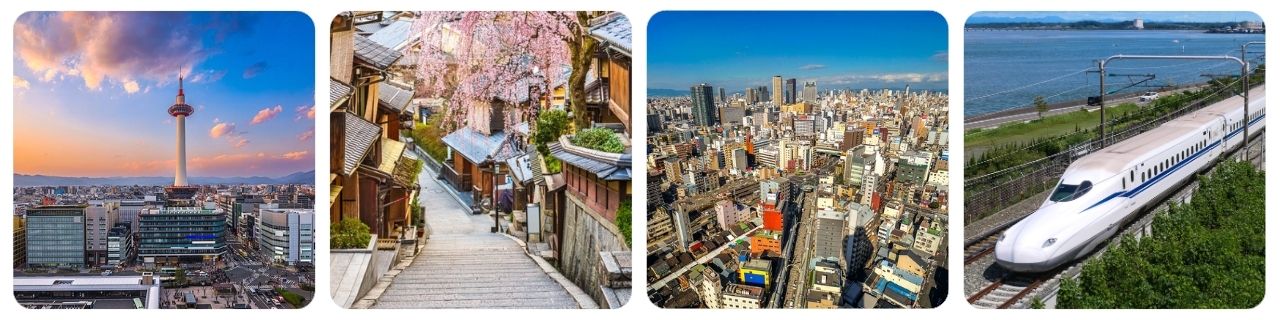
Heading from Kyoto to Osaka for a day trip, an onward connection, or a base change in Kansai? This guide walks you through every way to travel between the two cities, how to book tickets, and how to move smoothly through the major stations.
At A Glance (Kyoto to Osaka)
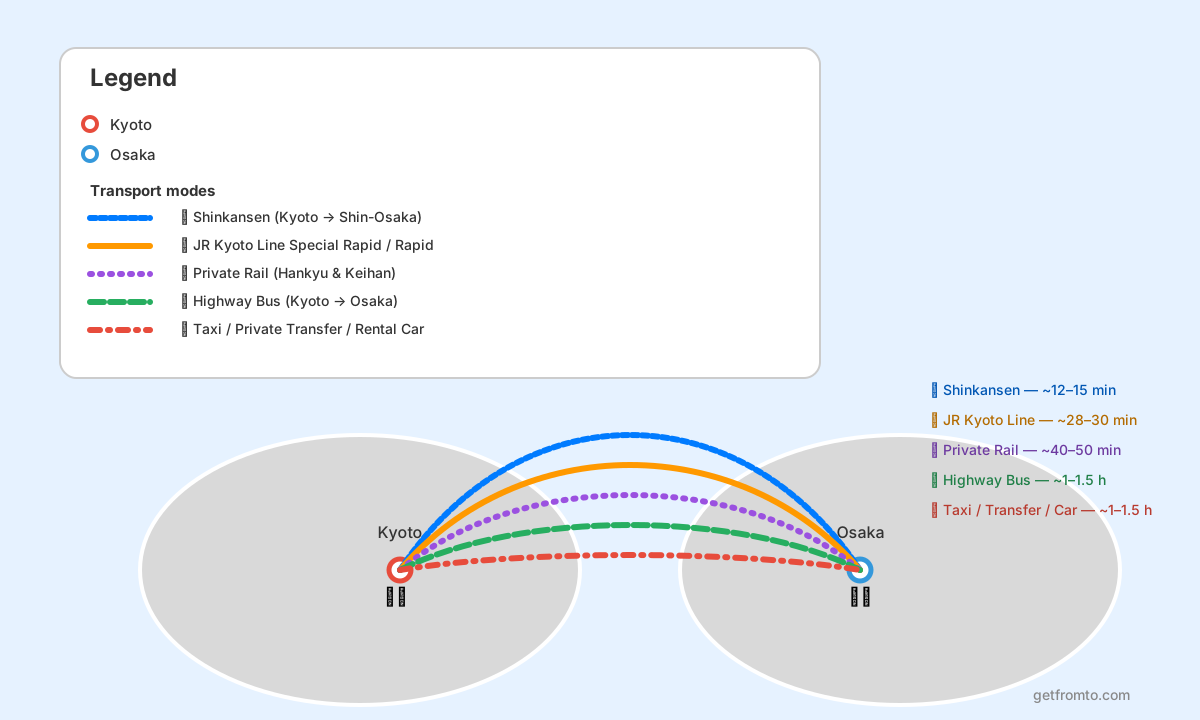
| Mode | Duration | Best For |
|---|---|---|
| 🚄 Shinkansen (Kyoto → Shin-Osaka) | ~12–15 min on train (+ 10–25 min transfers) | Fastest trip, time-sensitive travelers |
| 🏷️ Cost: ~¥1,500–3,000 one-way (unreserved vs reserved) » check Shinkansen tickets | times & fares | ||
| 🚆 JR Kyoto Line Special Rapid / Rapid | ~28–30 min Kyoto → Osaka Station | Budget-friendly, JR Pass holders, Osaka/Umeda stays |
| 🏷️ Cost: ~¥580–1,000 one-way (IC vs paper ticket) » JR route maps | compare JR options | ||
| 🚈 Private Rail (Hankyu & Keihan) | ~40–50 min (station-to-station) | Central city hubs (Kawaramachi, Gion, Umeda, Yodoyabashi), scenic route |
| 🏷️ Cost: ~¥420–600 one-way » Hankyu Kyoto Line map | Keihan access guide | ||
| 🚌 Highway Bus (Kyoto → Osaka) | ~1–1.5 h (traffic-dependent) | Travelers preferring reserved seats, direct drop-offs |
| 🏷️ Cost: ~¥800–1,500 one-way » compare Kyoto–Osaka buses | alt. bus listings | ||
| 🚖 Taxi / Private Transfer / Rental Car | ~1–1.5 h door-to-door | Groups with luggage, late-night arrivals, door-to-door comfort |
| 🏷️ Cost: ~¥18,000–30,000 per car (taxi/transfer) » pre-book transfers | Kyoto–Osaka private ride | ||
Which Option or Route Should You Choose?
- Fastest / Most convenient: If you care mainly about speed and comfort, choose the Shinkansen from Kyoto to Shin-Osaka (Option #1). It’s ideal when you have a tight schedule or onward Shinkansen connections from Shin-Osaka.
- Best value for most travelers: The JR Kyoto Line Special Rapid (Option #2) hits the sweet spot of price, speed, and convenience, especially if you’re staying around Osaka/Umeda and/or using a JR rail pass.
- Best if you’re staying in central Kyoto or downtown Osaka (Namba/Umeda/Yodoyabashi): The Hankyu and Keihan private railways (Option #3) are great if you’re near Kawaramachi, Karasuma, Gion, or Sanjo in Kyoto and want to arrive right in Osaka’s core areas.
- Cheapest & seated with minimal transfers: Consider a highway bus (Option #4) if you prefer a reserved seat, don’t want to change trains with luggage, or are traveling late in the evening when train connections feel confusing.
- Door-to-door & luggage-heavy trips: Families, small groups, or travelers with multiple suitcases may enjoy the simplicity of door-to-door taxis or private transfers (Option #5), especially when moving accommodations between Kyoto and Osaka.
How to Book and Practical Tips
- Buying train tickets: For JR and private rail, you can buy tickets from station machines or use an IC card (ICOCA, Suica, PASMO, etc.). For advance seat reservations on Shinkansen, use JR ticket offices, automated machines, or the official JR online reservation sites; you can also compare options on platforms like Klook’s Kyoto–Osaka transport guide or book selected trains via 12Go and Trip.com Trains.
- Using passes: If you’re exploring the wider Kansai region (Kyoto, Osaka, Nara, Kobe), check regional rail passes from JR-West, as well as private-rail passes like the Keihan Kyoto-Osaka Sightseeing Pass and Hankyu Tourist Pass, often sold via ticket counters and online resellers.
- Staying flexible: Trains between Kyoto and Osaka run very frequently, so you rarely need to commit to one exact departure time—great if you’re sightseeing and may run early or late.
- Luggage handling: If you’d like to explore luggage-free, consider same-day storage near Kyoto Station or Osaka Station using coin lockers or services such as Radical Storage in Kyoto and Radical Storage in Osaka.
- Accommodation and car rental: When shifting your base to Osaka, you can book hotels and, if needed, a rental car via Booking.com hotels in Osaka and compare cars around Kansai Airport or Osaka via Booking.com car rental.
- Bike & scooter rentals: If you want to combine your transfer day with some cycling in either city, you can compare bike, scooter, or motorcycle rentals across Japan through BikesBooking.com, or use local bike-share schemes in Kyoto and Osaka.
🚄 Option #1 — Shinkansen Kyoto → Shin-Osaka (Fastest)
Very fast Easy connections Higher cost
- Overview: Take the Tokaido Shinkansen from Kyoto Station to Shin-Osaka Station. The ride itself is only about 12–15 minutes, with frequent departures all day. From Shin-Osaka, you can transfer to local JR lines or Osaka Metro to reach areas like Umeda, Namba, or Tennoji.
- How to book (with price): A one-way unreserved seat is roughly ¥1,500–2,000; reserved seats cost a bit more depending on season and train type (Kodama/Hikari/Nozomi). You can buy tickets at JR station machines or ticket offices, or compare and reserve online via Klook’s Kyoto–Osaka Shinkansen tickets or rail booking sections on sites like Trip.com.
- Pros: Fastest way between the two cities; very frequent; comfortable reserved seating; easy when connecting to long-distance Shinkansen at Shin-Osaka.
- Cons: Slightly more expensive than standard JR or private rail; you must change trains at Shin-Osaka if your accommodation is closer to Osaka or Namba stations.
Step-by-step: Shinkansen Kyoto → Shin-Osaka
- Reach Kyoto Station: Take local bus, subway (Karasuma Line), taxi, or bike to Kyoto Station. The station is a key hub; you can get orientation help at tourist information centers or via the Kyoto City Official Travel Guide.
- Find the Shinkansen area: Follow signs for the Tokaido Shinkansen. There are clearly marked Shinkansen central and south gates.
- Buy your ticket: Use ticket machines with English language options or go to a JR ticket office. Choose an unreserved or reserved seat; for peak travel times, a reserved seat is recommended. You can also reserve in advance online using JR’s systems or by checking timetables via sites like JR Central’s Shinkansen timetable pages, then using online tools or 12Go to compare.
- Board the correct train and car: Check your departure track and car number. Line up at the platform markings; trains stop exactly where indicated. Doors open only briefly, so board promptly.
- Ride to Shin-Osaka: Enjoy the quick ride. There is overhead luggage space and limited space behind the last row of seats—if you have very large luggage, review JR’s oversized luggage rules on JR-West’s official site.
- Transfer at Shin-Osaka: On arrival, follow signs to JR local lines (e.g., JR Kyoto Line for Osaka/Umeda) or Osaka Metro (Midosuji Line) to reach central Osaka, Namba, or Tennoji.
Getting to the main embarking points (Kyoto Station & Shin-Osaka)
- Kyoto Station: Easily reached by Kyoto City Subway Karasuma Line, numerous city buses, taxis, or even bike; if arriving from further afield in Japan, you may already be on a JR line terminating here.
- Shin-Osaka Station: After arriving by Shinkansen, transfer downstairs to the JR Kyoto Line for Osaka Station/Umeda or to the Osaka Metro Midosuji Line for Namba and other downtown areas. Use the Osaka Metro route map to see your options.
- Local access in Osaka: From Osaka Station/Umeda you can walk to many hotels or hop onto JR Loop Line, Hankyu, Hanshin, or Osaka Metro for other districts.
- Locations/Trip Planner: 🔗 Google Map / 🔗 OpenStreetMap
🚆 Option #2 — JR Kyoto Line Special Rapid (Best Overall Value)
Low cost Frequent Can be crowded
- Overview: From Kyoto Station, take the JR Kyoto Line Special Rapid or Rapid service directly to Osaka Station (Umeda area). Trains run every few minutes at peak times and the ride takes about 28–30 minutes.
- How to book (with price): No advance booking is required; these are regular commuter trains. A one-way ticket is roughly ¥580. Simply tap in with an IC card or buy a paper ticket at the station. If you hold a JR-West rail pass that covers the Kyoto–Osaka area, this ride is usually included.
- Pros: Cheap, frequent, and takes you right into the Osaka/Umeda hub which is convenient for many hotels and onward JR/Metro services.
- Cons: Can be standing-room only during rush hours; no seat reservations; less comfortable if you have large luggage.
Step-by-step: JR Kyoto Line Special Rapid
- Get to Kyoto Station: Arrive by city bus, subway, taxi, or on foot if staying nearby. Inside the station, follow signs to the JR Lines (Conventional) rather than the Shinkansen gates.
- Buy a ticket or use IC: Use a ticket machine to purchase a fare to Osaka or simply tap your IC card at the gate. Fare adjustment machines are available if needed at the destination.
- Find the right platform: Look for platforms serving the JR Kyoto Line / JR Kobe Line toward Osaka / Sannomiya. Overhead boards will show whether the next train is a Local, Rapid, or Special Rapid—aim for a Special Rapid for the fastest ride.
- Board and ride: Board when your train arrives; there are no reserved seats, so grab any available seat or stand. The train will stop at a few major stations (e.g., Takatsuki, Shin-Osaka) before reaching Osaka.
- Arrive at Osaka Station: Exit the gates into the Umeda district. From here you can walk to nearby hotels, transfer to Osaka Metro, Hankyu, Hanshin, or other JR lines for onward travel.
Getting to the main embarking points (Kyoto Station & Osaka Station)
- Kyoto Station access: Subway Karasuma Line, numerous city buses, and airport buses from Kansai and Itami make Kyoto Station easy to reach. Tourist information and maps are available inside the station and via the Kyoto City Official Guide.
- Osaka Station/Umeda: Osaka Station connects directly to Hankyu and Hanshin railways, as well as multiple Osaka Metro lines (Umeda, Nishi-Umeda, Higashi-Umeda). Use the Osaka-Info access pages or the Osaka Metro route map to plan local travel.
- Luggage options: Both Kyoto Station and Osaka Station have extensive coin lockers; if they are full or you want more flexibility, consider nearby partners via Radical Storage at Kyoto Station or locations in Osaka.
- Locations/Trip Planner: 🔗 Google Map / 🔗 OpenStreetMap
🚈 Option #3 — Hankyu & Keihan Private Rail (Central & Scenic)
Low cost City-center to city-center Not covered by JR Pass
- Overview: Private rail lines link central Kyoto neighborhoods directly with downtown Osaka. Hankyu Railway connects Kyoto-Kawaramachi / Karasuma to Osaka-Umeda, while Keihan Railway connects Gion-Shijo / Sanjo to Yodoyabashi / Nakanoshima in Osaka. Travel time is roughly 40–50 minutes.
- How to book (with price): Tickets are bought on the day at machines or paid via IC card—no reservations needed. Fares are usually around ¥420–600 one-way. Visitors often combine these lines with special passes like the Keihan Kyoto-Osaka Sightseeing Pass or Hankyu Tourist Pass highlighted in guides such as Klook’s Kansai pass overview.
- Pros: Perfect if you’re staying around Kawaramachi, Gion, or Sanjo in Kyoto and want to arrive right in Osaka’s central business and shopping districts. Trains are frequent and fares are low.
- Cons: Not covered by the Japan Rail Pass; may require a transfer if starting/ending far from these lines; rush-hour crowding is common.
Step-by-step: Hankyu Kyoto Line (Kyoto-Kawaramachi → Osaka-Umeda)
- Reach Kyoto-Kawaramachi or Karasuma Station: From central Kyoto, walk or use city bus/subway to reach a Hankyu station such as Kyoto-Kawaramachi or Karasuma. Use Hankyu’s official lines and stations guide if unsure.
- Buy a ticket or tap IC: Use the purple ticket machines to buy a ticket to Osaka-Umeda or simply tap your IC card at the gate.
- Board a Limited Express or Express train: Check the destination boards for trains heading to Osaka-Umeda via Katsura and Takatsuki-shi. Limited Express trains are usually the fastest.
- Ride to Osaka-Umeda: The journey takes about 44 minutes. Trains are comfortable but mostly commuter-style; there are no seat reservations.
- Arrive in Osaka-Umeda: Exit into the Hankyu Osaka-Umeda complex, connected via underground passages and concourses to JR Osaka Station and multiple Osaka Metro lines.
Alternative: Keihan Railway (Gion/Shijo/Sanjo → Yodoyabashi/Nakanoshima)
- From central/eastern Kyoto: Walk or take local buses to Gion-Shijo or Sanjo Keihan stations.
- Buy a ticket/pass: Purchase a ticket to Yodoyabashi or consider a sightseeing pass via Keihan’s official access guide.
- Board a Limited Express: Take a Limited Express towards Osaka. The ride to Yodoyabashi is about 50 minutes and deposits you right in Osaka’s business core.
- Connect onward: From Yodoyabashi, transfer to Osaka Metro Midosuji Line or walk to nearby districts.
Getting to the main embarking points (Kawaramachi / Gion-Shijo / Umeda / Yodoyabashi)
- Kyoto-Kawaramachi & Karasuma: Located in the downtown shopping area; easy walking distance from many hotels and sights like Nishiki Market and Gion.
- Gion-Shijo & Sanjo (Keihan): Perfect if you’re staying near Gion or the Higashiyama temple district.
- Osaka-Umeda: Major transport hub with connections to JR, Hanshin, Osaka Metro, and numerous shopping complexes.
- Yodoyabashi/Nakanoshima: Convenient for business hotels and offices, plus easy subway transfers.
- Locations/Trip Planner: 🔗 Google Map / 🔗 OpenStreetMap
🚌 Option #4 — Highway Bus (Reserved Seat, Simple)
Seated & simple Direct to city districts Slower, traffic-dependent
- Overview: Several highway bus operators run services between Kyoto and Osaka, often stopping at hubs like Osaka/Umeda, Namba, and sometimes Universal Studios Japan. Travel time is typically 1–1.5 hours depending on traffic.
- How to book (with price): Expect fares around ¥800–1,500 one-way. You can compare and book on dedicated bus platforms such as Kosoku Bus Kyoto–Osaka, other highway bus aggregators, or multi-modal tools like 12Go.
- Pros: Everyone has a reserved seat; some routes go straight to Namba or USJ; luggage is stored in the hold; fewer station transfers.
- Cons: Slower than trains and subject to highway congestion; toilets and Wi‑Fi depend on operator; less frequent than trains.
Step-by-step: Kyoto → Osaka by Highway Bus
- Choose your departure/arrival stops: In Kyoto, buses typically leave from areas near Kyoto Station. In Osaka, options may include Osaka/Umeda, Namba, or USJ—pick the stop closest to your accommodation.
- Reserve online: Use an English-friendly booking site like Kosoku Bus or another highway bus portal to see times, prices, and seat types. Book seats in advance during busy seasons.
- Arrive early at the bus stop: Reach the bus terminal 15–20 minutes before departure to find your bay and check in if required.
- Board and stow luggage: Store large bags under the bus; keep valuables with you in a small daypack.
- Ride to Osaka: Sit back and relax. At your arrival stop, check onward connections or walk/taxi to your hotel.
Getting to the main embarking points (Kyoto Bus Stops & Osaka Terminals)
- Kyoto departure stops: Many Kyoto–Osaka buses use stops around Kyoto Station’s Hachijo exit or nearby streets; precise locations are shown in your booking confirmation.
- Osaka arrival stops: Common terminals include Umeda/Osaka Station area and Namba (OCAT). Both are directly linked to Osaka Metro and JR lines.
- Local transfers: From bus terminals, it’s usually easiest to hop onto the subway or grab a taxi for the final short hop to your accommodation.
- Locations/Trip Planner: 🔗 Google Map / 🔗 OpenStreetMap
🚖 Option #5 — Taxi, Private Transfer & Rental Car (Door-to-Door)
Door-to-door Great for groups Most expensive
- Overview: A point-to-point car transfer between Kyoto and Osaka takes about 60–90 minutes, depending on traffic and exact locations. This is the most comfortable way when you’re moving hotels with multiple suitcases or traveling with kids/elderly travelers.
- How to book (with price): Expect around ¥18,000–30,000 per vehicle for a standard car/van. You can pre-book online through platforms like GetTransfer or intercity rides on GetYourGuide transfers. For airport connections combined with city transfers, check services like Welcome Pickups Osaka.
- Pros: No transfers or ticket machines; pick-up at your hotel and drop-off at your next door; ideal at odd hours or with very large luggage.
- Cons: Significantly more expensive than trains; can be slower at rush hour; parking and driving in city centers can be stressful if you self-drive.
- Ride-hailing alternatives: In Kyoto and Osaka, you can use taxi-hailing apps such as GO or Uber (often dispatching regular taxis) to estimate fares, book rides, and pay in-app without language stress.
- Rental car: If you plan road trips around Kansai (e.g., to rural Kyoto, Nara, Wakayama), consider picking up a car around Osaka or Kansai Airport via Booking.com car rental at KIX. For just Kyoto ↔ Osaka, however, trains are usually easier.
Step-by-step: Private Transfer Kyoto → Osaka
- Choose pickup and drop-off: Decide your Kyoto pickup address (hotel, ryokan, or apartment) and Osaka destination (hotel or apartment).
- Compare vehicles: On platforms like GetTransfer or GetYourGuide Kyoto transfers, compare sedans, minivans, and premium cars; pick one sized for your group and luggage.
- Book and confirm: Enter dates/times, flight details if relevant, and confirm your booking. You’ll receive driver and vehicle details by email/app.
- Pickup day: Be ready in your lobby or at your chosen meeting point at the agreed time. The driver will load your luggage and confirm your drop-off in Osaka.
- Arrival: On arrival, settle remaining payment if not prepaid, then check into your accommodation or continue by foot or short taxi/Metro ride.
Getting to the main embarking points (Hotels & City Pickups)
- Kyoto side: Most transfers pick up directly from hotels or popular areas like Kyoto Station, Gion, or Kawaramachi. Confirm your exact pickup spot (e.g., hotel entrance or a taxi stand).
- Osaka side: Drop-offs can usually be anywhere within central Osaka (Umeda, Namba, Shin-Osaka, etc.). Check if your provider charges extra for locations outside the central area.
- Taxi-hailing: If you prefer to book on the day, use apps like GO or Uber to hail taxis in Kyoto and Osaka and pay the meter fare plus tolls.
- Locations/Trip Planner: 🔗 Google Map / 🔗 OpenStreetMap
FAQ (Kyoto to Osaka)
How long does it take to travel from Kyoto to Osaka?
Most train journeys take 12–50 minutes station-to-station, depending on whether you choose the Shinkansen, JR Special Rapid, or private rail. Allow extra time to get to and from stations on each end.
Do I need to reserve seats for trains between Kyoto and Osaka?
You only need reservations for Shinkansen and certain limited express services; JR Special Rapid, regular JR trains, Hankyu, and Keihan are non-reserved commuter-style trains where you simply tap in or buy a ticket and board.
Which option is best with large luggage?
High-speed and JR trains have overhead racks and some space at carriage ends, but with several large suitcases you may find a highway bus, private transfer, or luggage-forwarding service more comfortable. Alternatively, store bags near stations via services like Radical Storage and travel light.
Is driving between Kyoto and Osaka recommended?
It’s possible and reasonably quick outside rush hours, but due to highway tolls, city traffic, and parking costs, most visitors find trains easier. Driving only makes sense if you’re exploring rural areas beyond both cities.



Related Tours/Services
Popular Routes
Recent Routes
- How to get from PortMiami Cruise Terminal to Miami International Airport
- How to get from Samarkand to Bukhara
- How to get from Bell Tower (Xi’an) to Xi’an North Railway Station
- How to get from Canal City Hakata to Hakata Station
- How to get from Rialto Bridge (Venice) to Venezia Santa Lucia Station
- How to get from Florence Cathedral (Duomo) to Firenze Santa Maria Novella Station
- How to get from Nice to Paris
- How to get from Ribeira District (Porto) to Porto Campanhã Station
- How to get from Anne Frank House to Amsterdam Sloterdijk Station
- How to get from Buckingham Palace to London Victoria Station
Top Travel Gears

DUDE Wipes Unscented Pocket Packs, Adult Flushable Travel Wipes, 48 Count

zelin Anti Theft Zipper Clips, Travel Essentials, Carabiner, 4Pcs Grey

INIU 10000mAh 45W Fast Charging Portable Charger, Smaller Travel Power Bank | Flight-Safe, Detachable USB C Cable, Travel Essential, External Battery Phone Pack for iPhone 18 17 Samsung iPad etc
travel inspira Luggage Scale Digital Suitcase Weight Scale for Travel
2026 Travel Essentials for Apple Watch Charger,Cruise Vacation Camping Essentials,iPhone Charger,Multi Charging Cable,3 in 2 Charging Docks for iWatch Series 12 11-2/Ultra,iPhone 18 17-12,Car