
How to get from Dili to Atauro Island

Getting from Dili to Atauro Island is straightforward once you understand the handful of boats and the small island shuttle flight that connect the capital with this reef-ringed escape.
At A Glance (Dili to Atauro Island)
| Mode | Duration | Best For |
|---|---|---|
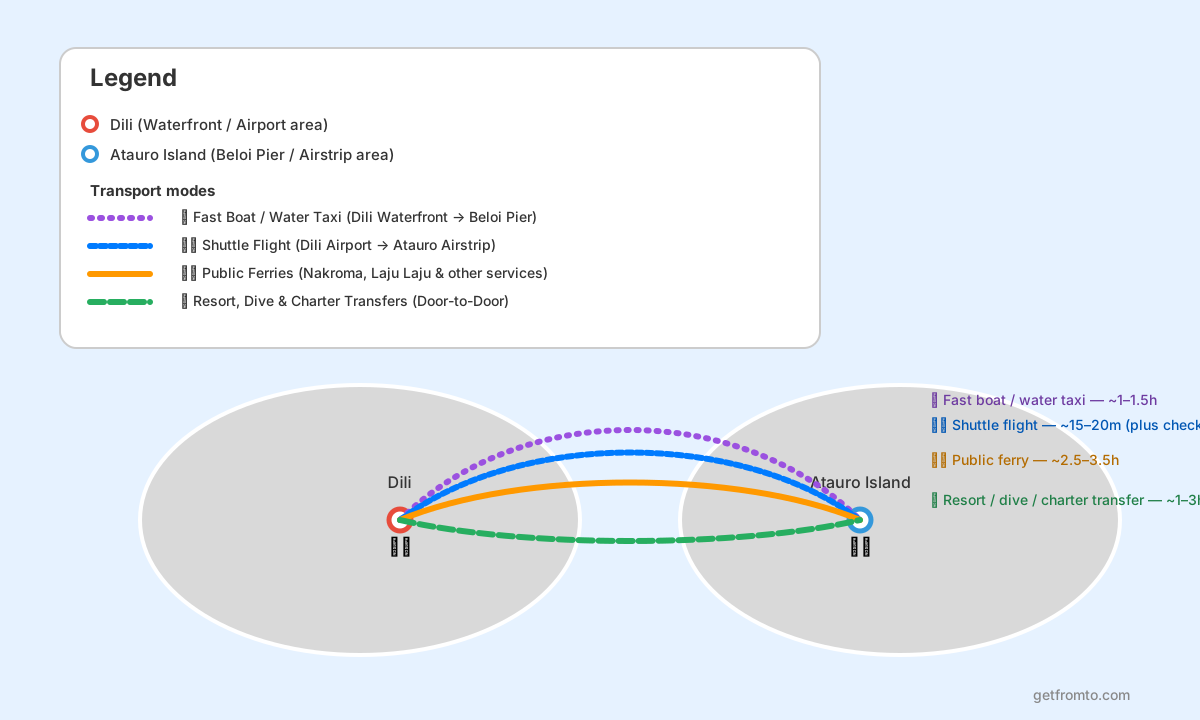
| 🚤 Fast Boat / Water Taxi (Dili Waterfront → Beloi Pier) | ~1–1.5h on water (sea-conditions dependent) | Most travelers, fast & flexible |
| 🏷️ Cost: ~US$35–80 one-way (shared speedboat) » book or request boats | ||
| ✈️ Shuttle Flight (Dili Airport → Atauro Airstrip) | ~15–20m flight (+ check-in & transfer) | Shortest crossing, seasick-prone travelers |
| 🏷️ Cost: ~US$80 adult / US$55 child each way (limited seats; book ahead via accommodation or ATKOMA) | ||
| ⛴️ Public Ferries (Nakroma, Laju Laju & other services) | ~2.5–3.5h on water | Budget travelers, relaxed schedules |
| 🏷️ Cost: ~US$4–6 one-way (economy class) » check current ferry info | ||
| 🚐 Resort, Dive & Charter Transfers (Door-to-Door) | ~1–3h door-to-door (operator- and boat-dependent) | Groups, divers, hassle-free logistics |
| 🏷️ Cost: ~US$35–75pp shared, ~US$150–400 per boat for private charters » request charters | ||
Which Option or Route Should You Choose?
- Fastest & generally most convenient: For most visitors, Option #1 – Fast Boat / Water Taxi offers the best balance of speed and price, especially if you are staying 2–3 nights and want to maximise time on Atauro. In rough seas or if you are very prone to seasickness, Option #3 – MAF shuttle flight is the quickest crossing.
- Cheapest / Most economical: If you are on a backpacker budget or travelling with a big family, Option #2 – Public Ferries are by far the most affordable way to reach Atauro. The trade-off is slower travel and limited departure days, so you need to plan your itinerary around the sailing schedule.
- Most scenic & flexible: Travelers who value comfort, custom departure times, or have lots of dive gear often prefer Option #4 – Resort & Charter Transfers. These can package hotel pickup in Dili with a chartered speedboat or ferry ticket, and can also combine the crossing with dolphin-watching, reef stops, or drop-offs in more remote villages around Atauro.
- Short day trips from Dili: If you only have one full day, look for fast boats or charter packages that allow a morning departure and late-afternoon return; public ferries are better for at least one overnight on the island.
- Season & weather: The Dry Season (roughly May–November) usually brings calmer seas and more frequent boats. In the Wet Season, sailings can be cancelled at short notice; keep your plans flexible and build in extra buffer days in Dili.
How to Book and Practical Tips
- Use local booking platforms: Many operators now coordinate through ATKOMA and the online boat reservation system. You can browse scheduled boats and request charters via the ATKOMA “Book a Boat” page or directly through the linked platform at Rezerva.tl. Your accommodation can also make bookings on your behalf.
- Plan your flights and Dili stay first: Getting to Dili usually involves flights via hubs like Denpasar (Bali) or Darwin. Compare routes and prices using tools such as Booking.com Flights or regional aggregators like 12Go’s Dili–Denpasar listings. For overnights on either side of the crossing, you can reserve central accommodation through Dili hotels on Booking.com or browse wider Timor-Leste stays on Trip.com.
- Airport & city transfers en route: In larger transit hubs such as Bali or Darwin you can prebook reliable pickups with services like Welcome Pickups in Bali or fixed-price taxis via GetTransfer in Bali. Inside Timor-Leste itself there is currently no Grab or Uber; instead, ask your hotel to organise a licensed blue taxi or private car.
- Tickets & ID: For public ferries, you normally need photo ID to buy tickets at Dili port. Keep your passport or driver’s licence handy. For MAF flights, passengers and baggage are weighed carefully; respect the luggage limits to avoid extra fees or delays.
- Cash & currency: Timor-Leste uses the US dollar. Boats and local taxis are usually cash-only, so withdraw enough in Dili before travelling. Small notes (US$1–5) are useful for snacks and porters.
- Luggage & storage: Space on boats is limited, especially on small speedboats. Soft duffel bags are easier to stow than hard suitcases. If you have bulky bags during long layovers in bigger hubs, you can store them with worldwide luggage networks such as Radical Storage while you explore.
- Continuing your trip by road: Roads on Atauro and across Timor-Leste can be rough. If you plan to ride scooters in other countries before or after your Atauro visit, global platforms like BikesBooking aggregate scooter and motorbike rentals across Asia and beyond.
- Health & seasickness: Wetar Strait can be choppy. If you are prone to motion sickness, travel early in the morning, choose larger ferries or the MAF flight, avoid heavy meals before sailing, and carry seasickness tablets and a dry bag for valuables.
- Check schedules close to departure: Boat timetables in Timor-Leste change frequently. Always reconfirm departure days and times with your accommodation or the official Atauro “Getting Here” page a few days before you travel.
🚤 Option #1 — Fast Boat / Water Taxi (Most Popular & Fastest)
Fast crossing Multiple operators Weather-dependent
- Overview: Several operators (including Beloi Beach Hotel, Compass Diving, Aquatica and Atauro Dive Resort) run shared fast boats between Dili’s waterfront and Beloi Pier. Boats usually depart Dili between about 7:30–8:00 in the morning, taking roughly 60–90 minutes to cross Wetar Strait, with return trips late morning or mid-afternoon.
- How to book (with price): Expect to pay around US$35–80 per person one-way depending on the operator, boat size, and whether you’re sharing or chartering. The easiest way to reserve is via your accommodation or by checking ATKOMA’s Book a Boat portal, which connects to the local reservation system Rezerva.tl for scheduled and on-demand services.
- Pros: Fastest sea option; more frequent than ferries; direct drop-off near most beachfront lodges; great views with regular sightings of dolphins and sometimes whales.
- Cons: More expensive than public ferries; sailings cancelled more readily in bad weather; limited shade and space for large hard suitcases; passengers can get wet from spray.
- Best for: Short breaks (weekends), divers and snorkellers with limited time, and travelers who prefer flexible schedules and smaller groups.
Step-by-step: Fast Boat / Water Taxi
- Choose your operator and date. Start with your Atauro accommodation – many lodges have preferred boats they work with regularly. Alternatively, browse upcoming departures on ATKOMA’s Getting Here and Book a Boat pages.
- Reserve your seats. Once you know which boat you want, confirm via email, WhatsApp, or the Rezerva system. You may be asked for names of passengers, a local contact number, and sometimes a deposit.
- Confirm the meeting point. Most fast boats depart either from Dili Port, the Marine Police (UPM) compound near Largo Lecidere, or a nearby jetty along the seafront. Your operator will tell you exactly where to meet and at what time.
- Pack for the crossing. Use soft bags that are easy to lift. Put valuables, electronics, and passports in a sealed dry bag; bring sun protection, water, and light snacks. Wear footwear you can get wet when boarding.
- Travel to the jetty. On the day, leave your hotel at least 45–60 minutes before departure. Ask your guesthouse to arrange a trusted blue taxi or private car – there are no ride-hailing apps like Grab or Uber in Timor-Leste, so you’ll be relying on local drivers.
- Check in and board. Pay any remaining balance in cash (US dollars), listen to the safety briefing, and keep your life jacket on during the crossing. Most boats seat passengers towards the back; keep cameras and phones stowed until the sea is calm.
- Arrive in Beloi. At Beloi Pier, staff from many lodges will meet the boats. It’s usually a short walk or tuk-tuk ride along the beach road to your accommodation. If you haven’t arranged a pickup, you can often negotiate a tuk-tuk ride on arrival.
Getting to the main embarking points (Dili waterfront & port)
- From central Dili (Lecidere / Colmera): Many travelers simply walk along the seafront (Avenida Marginal) to the waterfront jetties and Dili Port area, which can take 10–20 minutes depending on your hotel location.
- By taxi from other neighbourhoods: Ask your accommodation to call a licensed taxi and agree the fare before you set off. Show the driver a map pin for Dili Port or the Marine Police (UPM) pier and allow extra time during morning traffic.
- From Dili Airport: If flying in and boating out on the same day, you’ll need a taxi or hotel car from Presidente Nicolau Lobato International Airport to the waterfront (about 15–20 minutes). For wider road trips on the mainland you can arrange wheels in advance via Booking.com car rentals in Timor-Leste.
- Locations/Trip Planner: 🔗 Google Map / 🔗 OpenStreetMap
⛴️ Option #2 — Public Ferries (Nakroma, Laju Laju & Other Services)
Low cost Luggage-friendly Limited departure days
- Overview: Public ferries link Dili Port with Beloi Pier once or several times per week, depending on the season and vessel. Services include the government-operated Nakroma as well as private ferries such as Laju Laju “MV Success” and Atauro Express. Crossings typically take around 2.5–3.5 hours each way with indoor and outdoor seating and room for cargo.
- How to book (with price): Tickets generally cost about US$4–6 per person one-way. In Dili, you usually buy tickets inside the port gate at a small ticket office – bring your passport or driving licence. On Atauro, tickets are sold near the pier a few hours before departure. Because schedules change, always check the latest information on the Atauro “Getting Here” page or with your guesthouse.
- Pros: Cheapest way to travel; more spacious than small speedboats; easier for people with lots of baggage; offers a classic local travel experience with great views from the upper decks.
- Cons: Only runs on specific days; journey is slower; ferries can be crowded around weekends and holidays; departures may be cancelled or rescheduled due to rough seas or operational issues.
- Best for: Budget travellers, families, and anyone who prefers a relaxed voyage and doesn’t mind building their itinerary around the ferry timetable.
Step-by-step: Public Ferries
- Check which day the ferry sails. A week or two before travelling, ask your accommodation or ATKOMA for the latest schedule, or see the ferry section on the official Getting Here information.
- Buy your ticket at Dili Port. On the day of departure (or sometimes the day before) go to the ticket office inside Dili Port’s main gate. Bring your passport or other ID and cash in US dollars. Consider arriving at least an hour before departure on busy days.
- Board early and choose your seat. Once ticket checks begin, head aboard and pick a spot. Inside cabins offer shade and are better if you get seasick; the open top deck is breezier and more scenic.
- Stow luggage securely. Follow crew instructions about where to leave large bags. Keep valuables, travel documents, and electronics with you in a small daypack.
- Arrival in Beloi. Disembark with locals and follow the crowd to the beach road. Many accommodations send staff to meet ferries; otherwise, you can walk or take a tuk-tuk along the coast to your lodge.
Getting to the main embarking points (Dili Port – Public Ferries)
- Finding the ticket office: The main entrance to Dili Port is along the seafront, a short walk east of central Lecidere. After entering the gate, ask security to point you towards the Atauro ticket office; it’s usually a simple booth or room a short distance inside.
- Using local transport: If staying further from the centre, ask your hotel to hail a taxi or arrange a private car. Agree the fare before departure and show the driver “Porto de Dili” on your map.
- Timing: For popular weekend sailings, arrive 60–90 minutes before departure to buy tickets and get a good seat, especially if you’re travelling with children or lots of luggage.
- Locations/Trip Planner: 🔗 Google Map / 🔗 OpenStreetMap
✈️ Option #3 — MAF Shuttle Flight (Fastest, Limited Seats)
Very fast Scenic Tight baggage limits
- Overview: Mission Aviation Fellowship (MAF) operates a small aircraft linking Dili with Atauro’s airstrip, usually on three days per week. Flight time is only about 15–20 minutes, with sweeping views of Dili, the coast, and Atauro’s reefs and mountains.
- How to book (with price): Regular fares are typically around US$80 per adult each way, with discounted tickets for children and infants. You cannot usually book this route through large flight search engines; instead, reserve via your Atauro accommodation or by contacting ATKOMA, who coordinate with MAF.
- Pros: By far the quickest way to reach Atauro; avoids rough seas; spectacular aerial views; part of your fare supports MAF’s wider humanitarian work (including medical evacuations within Timor-Leste).
- Cons: Seats are limited and can sell out; flights can still be cancelled in poor weather; strict luggage limits and weight checks; there is no evening service.
- Best for: Those with very limited time, travellers prone to strong seasickness, and photographers keen on dramatic aerial shots.
Step-by-step: MAF Shuttle Flight
- Check flight days & times. Ask your lodge or the Atauro Tourism office which days MAF is currently flying and at what times, then plan your itinerary around those slots.
- Reserve via your accommodation or ATKOMA. Provide passenger names, approximate weights, and baggage information. Confirm payment method (cash on the day or bank transfer) and reconfirm the booking a few days before flying.
- Arrive at Dili Airport early. On the day of departure, get to the domestic side of Presidente Nicolau Lobato International Airport at least 60–90 minutes before your flight. Look for the small MAF office or check-in desk and follow staff instructions for weighing luggage.
- Boarding the small aircraft. After security and a short wait, you’ll walk out to the aircraft. Listen carefully to the safety briefing. Keep cameras ready but secured – windows are usually good for photos once airborne.
- Landing on Atauro. The Atauro airstrip is located inland between Beloi and Vila. Your accommodation will normally send a vehicle to meet the plane and transfer you (10–25 minutes) to the coast. If not, arrange a pickup in advance, as taxis are not usually waiting at the airfield.
Getting to the main embarking points (Dili Airport – MAF)
- From central Dili: The airport lies west of the city centre. A taxi or hotel car typically takes 15–25 minutes depending on traffic. There are no app-based ride-hailing services, so arrange transport through your accommodation or a trusted local driver.
- From other parts of Timor-Leste: If you’re arriving in Dili by road the previous day, consider staying near the seafront or airport for an easier morning transfer before your flight.
- Locations/Trip Planner: 🔗 Google Map / 🔗 OpenStreetMap
🚐 Option #4 — Resort & Charter Transfers (Door-to-Door, Customised)
Hassle-free Great for groups & gear Higher cost
- Overview: Many eco-lodges, homestays, and dive centres on Atauro can bundle road transfers in Dili with either public ferry tickets or chartered speedboats. Some operators will collect you directly from the airport or your hotel, arrange port formalities, and have a vehicle waiting at Beloi to transfer you to more remote parts of the island.
- How to book (with price): Contact your preferred accommodation by email or WhatsApp and ask about transfer packages. Shared transfers often run around US$35–75 per person each way; full private charters for families or dive clubs can range from about US$150–400 per boat depending on size, route, and inclusions. For inspiration and official contact details, browse the accommodation and tour listings on Ataúro’s official tourism site.
- Pros: Door-to-door convenience; one point of contact for questions or schedule changes; easier if you’re travelling with children, surfboards, or a lot of dive equipment; options to add snorkelling stops or dolphin-watching along the way.
- Cons: More expensive than booking each leg yourself; fewer departures to choose from; you may be sharing with other guests whose schedules differ slightly from yours.
- Best for: First-time visitors who want everything taken care of, groups and families, photographers with heavy gear, and travellers on tight itineraries who prefer guaranteed connections.
Step-by-step: Resort & Charter Transfers
- Pick your base on Atauro. Decide whether you want to stay near Beloi, in quieter villages like Adara, or in inland communities. Then select a lodge, homestay, or dive resort that matches your budget and comfort level.
- Ask for transfer options. When booking your room, enquire about “Dili–Atauro transfers” or “door-to-door packages”. Some operators will give you a choice between public ferry tickets with port pickup or a more expensive chartered speedboat.
- Share your international travel details. Send your incoming flight number and Dili hotel address so the driver knows where and when to pick you up. If you are transiting through hubs like Bali or Darwin, you can make those legs smoother with prebooked airport rides on platforms such as Welcome Pickups in Darwin or airport-transfer listings like GetYourGuide’s Bali transfers or Klook’s airport transfer hub.
- Confirm inclusions and payment. Clarify what is included (road transfer, boat ticket, port fees, snacks) and how you will pay (cash, bank transfer, or card). Get exact pickup times the day before travel and keep your phone or email accessible for last-minute weather updates.
- Enjoy a stress-free journey. On the day, your driver will collect you from your hotel or the airport, help with luggage and ticketing, and guide you to the correct boat. At Beloi or the airstrip, another vehicle will take you directly to your accommodation.
Getting to the main embarking points (Hotel / Airport to Boat)
- Hotel pickup in Dili: Your lodge or tour operator will usually collect you from your Dili accommodation. Be ready in the lobby 10–15 minutes before pickup time with your luggage packed and easy to load.
- Airport pickup: If you’re flying into Dili and heading straight to Atauro, confirm that your transfer includes an airport pickup. A driver will typically meet you in arrivals with a sign and then take you either to the port or directly to a speedboat jetty.
- Locations/Trip Planner: 🔗 Google Map / 🔗 OpenStreetMap
FAQ (Dili to Atauro Island)
How long does it take to get from Dili to Atauro Island?
Most crossings take between 1 hour and 3.5 hours depending on your mode of transport. Fast boats generally take about 60–90 minutes, public ferries around 2.5–3.5 hours, and the MAF shuttle flight around 15–20 minutes in the air (plus check-in and transfers).
Can I visit Atauro as a day trip from Dili?
Yes, but it works best with fast boats or charter packages. Many operators offer morning departures from Dili and late-morning or afternoon returns, giving you enough time to snorkel Beloi Reef, wander the market, or enjoy lunch at a beachfront lodge. Public ferries are better suited to at least one night on the island because of their fixed weekly timetable.
Do I need to book in advance?
Advance booking is strongly recommended, especially for weekends, public holidays, and school vacation periods. Fast boats and the MAF flight have limited seats and can sell out, while public ferries sometimes alter schedules at short notice. Wherever possible, secure your boat or flight at least a few days ahead and reconfirm details just before you travel.
Is the crossing safe, and what about seasickness?
Licensed ferries and reputable fast-boat operators carry lifejackets and follow local safety requirements, but seas can still be rough. If you’re nervous, choose larger ferries or the MAF flight and travel early in the day when the water is usually calmer. Traditional fishing outriggers are sometimes used by very experienced travellers, but they may lack safety equipment and are best avoided unless you know the crew and conditions well.
When is the best time of year to travel?
The most reliable time to travel is during the Dry Season, roughly May–November, when skies are clearer and seas are calmer. The Wet Season can still offer beautiful days, but heavy rain and wind make cancellations more likely. Regardless of season, always check the latest forecast and confirm departures with your boat operator or accommodation.





Related Tours/Services
Popular Routes
Recent Routes
- How to get from Port Louis Cruise Terminal to Flic en Flac
- How to get from Durban Cruise Terminal to uShaka Marine World
- How to get from Walvis Bay Cruise Port to Swakopmund
- How to get from PortMiami Cruise Terminal to Miami International Airport
- How to get from Samarkand to Bukhara
- How to get from Bell Tower (Xi’an) to Xi’an North Railway Station
- How to get from Canal City Hakata to Hakata Station
- How to get from Rialto Bridge (Venice) to Venezia Santa Lucia Station
- How to get from Florence Cathedral (Duomo) to Firenze Santa Maria Novella Station
- How to get from Nice to Paris
Top Travel Gears

LISEN Airplane Travel Essentials kitchen Tool Airplane Phone Holder Desk | Home & Kitchen Tools (Cookbook Stands) Phone Stand MagSafe Travel Accessories Flying Long Flight Travel Tech Gifts for Men

zelin Anti Theft Zipper Clips, Travel Essentials, Carabiner, 4Pcs Grey | Elegant Zinc Alloy Zipper Pull Locks, Airplane Gadgets and Travel Accessories for Backpacks, Commuting and Outdoor Safety

2026 Travel Essentials for Apple Watch Charger,Cruise Vacation Camping Essentials,iPhone Charger,Multi Charging Cable,3 in 2 Charging Docks for iWatch Series 12 11-2/Ultra,iPhone 18 17-12,Car
FYY Electronic Organizer, Travel Tech Pouch Bag, Cable Organizer Black | Wrist Strap, Waterproof, Double Layers Portable Electronics Travel Carrying Case for Cord, Charger, Daily Business Trips Use

MiiKARE Airplane Phone Holder Mount, Plane Travel Essentials Gift, Black | Universal Hands-free Phone Holer with 360° Rotation for Flying, Accessory Travel Must Haves Phone Stand for Desk, Tray Table