
How to get from Beijing to Harbin
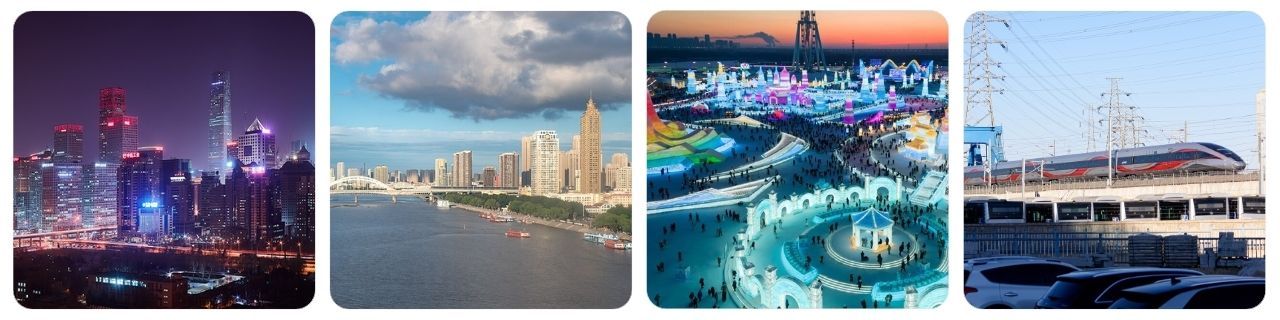
Traveling from Beijing to Harbin is straightforward thanks to frequent high-speed trains, classic overnight sleepers, and short flights, which make it easy to reach China’s famous Ice & Snow Festival city in any season.
At A Glance (Beijing to Harbin)
| Mode | Duration | Best For |
|---|---|---|
| 🚆 High-Speed Train (Beijing Chaoyang/Fengtai → Harbin / Harbin West) | ~4.5–5.5h (G/D-class trains) | Most travelers, winter trips, comfort & speed |
| 🏷️ Cost: ~CNY 220–600 one-way depending on class and train; compare second-/first-class and business seats on Trip.com Beijing–Harbin trains or via 12Go Asia and check official schedules on the China Railway 12306 English site. | ||
| 🛃 Overnight Sleeper Train (Conventional T/Z/K trains) | ~9–11h overnight | Budget travelers, saving a hotel night |
| 🏷️ Cost: ~CNY 200–450 one-way (hard/soft sleeper). Search slower trains and sleeper options using Trip.com train listings or compare with mixed train types on 12Go. | ||
| ✈️ Flight (Beijing Capital / Daxing → Harbin Taiping Airport) | ~2h flight + ~1.5–2h total airport transfers | Tight schedules, connecting international flights |
| 🏷️ Cost: Promo fares from ~CNY 400–450 one-way, often ~CNY 600–1,200+ in peak times. Compare airlines on Trip.com Beijing–Harbin flights or via Booking.com Flights. | ||
| 🚌 Long-Distance Bus / Private Car | ~16–18h by road (overnight bus) | Cheapest overland, slow travel, last-minute peak dates |
| 🏷️ Cost: Buses from ~CNY 350–500 one-way; private transfers much higher but can be quoted for custom routes on GetTransfer. | ||
Which Option or Route Should You Choose?
- Fastest & most reliable overall: For most visitors, Option #1 — High-Speed Train is the ideal balance of speed, comfort, and price. Trains run frequently throughout the day and are less affected by winter weather than flights can be.
- Cheapest with built-in accommodation: If you want to save a hotel night and don’t mind slower travel, Option #2 — Overnight Sleeper Train gives you a classic China rail experience and drops you into Harbin early in the morning.
- Best when connecting to/from long-haul flights: Option #3 — Flight is worth it if you’re flying into Beijing from overseas and want to continue to Harbin the same or next day, especially when you find a good fare on Trip.com or Booking.com.
- Most flexible for custom stops: Travelers who prefer road trips or want to stop in smaller northeastern cities can look at Option #4 — Long-Distance Bus / Private Car, but keep in mind the long hours and potential winter road conditions.
How to Book and Practical Tips
- Use official and trusted platforms: For trains, the official booking site is China Railway 12306 (English). If you prefer English interfaces and overseas payment options, book through platforms like Trip.com trains, 12Go Asia, or Klook’s Beijing–Harbin high-speed rail page.
- Buy winter tickets early: For the Harbin Ice & Snow Festival (usually January–February), high-speed trains and flights can sell out or spike in price. Book weeks in advance for weekend or holiday travel.
- Choose your Beijing station carefully: Many high-speed trains to Harbin depart from Beijing Chaoyang or Beijing Fengtai rather than Beijing Station/Beijing West. Check your departure station when booking and allow time to get there.
- Leverage ride-hailing apps: In Beijing and Harbin, apps like DiDi are widely used for taxis and private cars. If you prefer a pre-booked English-language service from the airport or train station, consider Welcome Pickups Beijing for airport transfers, or compare bespoke routes on GetTransfer.
- Store extra luggage: If you’re bringing bulky luggage for longer China trips, consider leaving some items in Beijing using station lockers or city storage networks like Radical Storage Beijing, then travel north lighter.
- Dress for Harbin winters: Harbin in January can be below -20°C. Pack or buy proper boots, thermal layers, and a windproof outer shell; trains and planes are heated, but platforms, bus bays, and streets are very cold.
- Have translation & offline maps ready: Download offline maps for Beijing and Harbin and keep a translation app handy for station signs or announcements that may only be in Chinese.
🚆 Option #1 — High-Speed Train (Most Popular, Fast & Comfortable)
Fast & frequent Comfortable in winter Advance booking recommended
- Overview: Modern G- and D-class high-speed trains link Beijing with Harbin or Harbin West in roughly 4.5–5.5 hours. Trains feature reserved seating, heating, food trolleys, and clean bathrooms — a great choice for winter travel.
- Classes & onboard comfort: Common classes are Second Class (most economical), First Class (wider seats, fewer per row), and Business Class (reclining seats similar to lie-flat). All are fine for the journey; second class is the default for most travelers.
- How to book (with price): One-way fares usually range from about CNY 220–600+ depending on train speed and class. You can:
- Register and buy tickets directly on the official 12306 China Railway site.
- Use Trip.com’s Beijing–Harbin train page for English support and foreign cards.
- Compare train times and classes along with buses and flights on 12Go Asia or book via Klook.
- Pros: Fast, comfortable, scenic; plenty of departures; less likely to be cancelled than flights during moderate winter weather; stations are centrally connected to local metro and buses.
- Cons: Popular departures can sell out around holidays; you must stick to the specific train you book (unless you change it); getting to/from Beijing Chaoyang or Fengtai may take extra time.
- Official info: Timetables and seat diagrams are available on the official China Railway 12306 website and in the official Railway 12306 app.
Step-by-step: Taking the High-Speed Train from Beijing to Harbin
- Check dates & times: Decide when you want to travel and whether you prefer an early-morning, midday, or late-afternoon departure. On busy days, earlier trains tend to be less delayed.
- Book tickets: Use 12306 if you’re comfortable registering with your passport, or book through Trip.com, 12Go, or Klook for English support and simpler payment.
- Note your departure & arrival stations: Many high-speed services use Beijing Chaoyang or Beijing Fengtai and arrive at Harbin West (Ha’erbinxi). Check the exact station names on your e-ticket.
- Arrive at the station early: Plan to be at your departure station at least 45–60 minutes before departure to clear security checks and find your waiting room and platform.
- Board and ride: Boarding usually opens 10–20 minutes before departure. Seats are assigned; store large luggage at carriage ends or overhead and keep valuables at your seat.
- Arrival in Harbin: At Harbin or Harbin West, follow signs to metro, buses, or taxis. In winter, have your hat and gloves ready before stepping out into the cold.
Getting to the main embarking points (Beijing High-Speed Stations)
- Beijing Chaoyang Railway Station: Connected by Beijing Metro (Line 14 and others). DiDi and regular taxis are plentiful; allow extra time in rush hour.
- Beijing Fengtai Railway Station: One of Beijing’s newer major hubs, also linked to the metro network. Follow station signs for high-speed rail areas and security checks.
- In Harbin: Harbin West has buses and taxis into the city; DiDi works well for reaching downtown or your hotel. Many hotels can also arrange a pickup if requested in advance via Booking.com messages.
- Locations/Trip Planner: 🔗 Google Map / 🔗 OpenStreetMap
🛃 Option #2 — Overnight Sleeper Train (Budget-Friendly, Time-Saver)
Low cost Saves hotel night Longer journey
- Overview: Classic T/Z/K overnight trains link Beijing and Harbin in around 9–11 hours, usually departing in the evening and arriving in the early morning — ideal if you enjoy old-school rail travel and want to wake up in the northeast.
- Classes: You can usually choose between Hard Seat (cheapest, least comfortable for overnight), Hard Sleeper (6 bunks per open compartment), and Soft Sleeper (4 bunks with door and more privacy).
- How to book (with price): One-way fares run roughly from CNY 200–450, varying by sleeper class and train type. You can search these slower trains using the same tools as high-speed:
- 12306 official site (select normal-speed trains).
- Trip.com Beijing–Harbin trains (filter by duration or train type).
- 12Go Asia for a mix of sleeper choices.
- Pros: Budget-friendly; you effectively combine transport and accommodation; you arrive in Harbin early, giving you a full day in the city.
- Cons: Older carriages than high-speed trains; more engine and track noise; less privacy in hard sleeper; winter nights can be very dry due to heating.
- Good to know: Bring earplugs, an eye mask, and maybe instant noodles or snacks (hot water is usually available). Keep valuables on your person or under your pillow.
Step-by-step: Using the Overnight Sleeper Train
- Pick your train: Look for evening departures from Beijing that arrive in Harbin early the next morning. On Trip.com or 12Go, sort by duration and departure time.
- Choose your sleeper class: If your budget allows, soft sleeper is the most comfortable. Hard sleeper is fine for most travelers; hard seat is not recommended for overnight journeys unless necessary.
- Book and collect tickets: Book online via 12306, Trip.com, or 12Go. Depending on current policy, foreign passport holders may need to collect a paper ticket at the station ticket window — arrive early if so.
- Board and settle in: Find your carriage and berth number on the ticket. Store larger luggage in overhead racks or at the end of the carriage and keep essentials with you in the bunk.
- Morning arrival in Harbin: Trains typically arrive at Harbin Station near the city center. Follow signs to taxis, buses, or the metro (where available) and head straight to your accommodation or to breakfast.
Getting to the main embarking points (Beijing Railway Stations)
- Beijing Station / Beijing West: Many classic sleeper trains still depart from older central stations like Beijing Station or Beijing West. Both are connected to the Beijing metro and city buses; DiDi and taxis are abundant.
- From your hotel: Ask hotel staff to write your departure station name in Chinese, and show it to taxi or DiDi drivers. In winter evenings, allow extra time for traffic.
- Arriving at Harbin Station: Harbin’s main station is centrally located; you can reach hotels near the pedestrian Zhongyang Street or the riverfront in a short taxi or DiDi ride.
- Locations/Trip Planner: 🔗 Google Map / 🔗 OpenStreetMap
✈️ Option #3 — Flight (Fastest in Pure Travel Time)
Very fast Good for connections Weather & airport time
- Overview: Multiple airlines operate direct flights from Beijing Capital (PEK) and Beijing Daxing (PKX) to Harbin Taiping International Airport (HRB). Flight time is about 2 hours, with total door-to-door time closer to 4–5 hours once you include transfers and check-in.
- How to book (with price): Economy fares vary widely by season and advance booking. Promo deals can be as low as ~CNY 400–450 one-way, but more commonly you’ll see CNY 600–1,200+ in peak winter:
- Compare airlines and times on Trip.com Beijing–Harbin flights.
- Use Booking.com Flights to search across airlines and airports (Capital vs Daxing).
- Pros: Fastest way to cover the distance; good when combined with international flights into Beijing; plenty of daily frequencies.
- Cons: More sensitive to snow, fog, or wind delays; additional time and cost for airport transfers; luggage restrictions may be tighter than trains.
- Official info: For airport facilities and transport into Harbin, consult Harbin Taiping Airport’s operator pages via the Heilongjiang Airports Group site (Chinese). For Beijing airports, check their English information pages for terminal and transport details.
Step-by-step: Flying from Beijing to Harbin
- Choose your airport pair: Decide whether it’s easier to depart from Beijing Capital (closer to older parts of the city) or Daxing (well connected by high-speed rail and express lines). Most international arrivals currently use Capital.
- Search and book: Use Trip.com or Booking.com Flights to compare departure times, baggage policies, and total travel time, then book your preferred flight.
- Get to the airport: From central Beijing, take airport express trains, metro connections, or a taxi/DiDi. If you prefer a meet-and-greet service with fixed pricing, consider booking a car with Welcome Pickups.
- Check in and clear security: Arrive at least 2 hours before departure (earlier in peak periods). Have your passport and booking confirmation ready.
- Arrive in Harbin: At Harbin Taiping Airport, collect your luggage and follow signs for airport buses and taxis into the city. There is no metro line yet; expect a 40–45 minute drive into central Harbin depending on traffic.
- Transfer to your hotel: Use the airport shuttle bus to major city stops, a taxi, DiDi, or a pre-booked transfer — many hotels listed on Booking.com Harbin can arrange pickups on request.
Getting to the main embarking points (Beijing & Harbin Airports)
- Beijing Capital International Airport (PEK): Connected via airport express and buses; taxis and DiDi are plentiful. Factor in Beijing traffic when traveling at peak times.
- Beijing Daxing International Airport (PKX): Linked to the city by high-speed rail and dedicated airport lines, as well as expressways for taxis and DiDi.
- Harbin Taiping International Airport (HRB): Located about 40 km southwest of the city. Airport buses and taxis are the main options; plan extra time in heavy snow conditions.
- Locations/Trip Planner: 🔗 Google Map / 🔗 OpenStreetMap
🚌 Option #4 — Long-Distance Bus / Private Car (Cheapest Overland, Most Time-Consuming)
Budget-friendly bus Scenic overland Very long ride
- Overview: Several long-distance buses run between Beijing and Harbin, usually overnight and taking around 16–18 hours. This is the slowest, but sometimes the cheapest, way to travel if train and flight prices are high.
- Bus routes & stations: Common departure points include stations like Beijing Zhaogongkou or Beijing Bawangfen, with arrivals at Harbin long-distance bus stations. Schedules can vary by season.
- How to book (with price): Expect fares around CNY 350–500 one-way. Tickets are often bought through Chinese apps, at bus stations, or via local agencies. If you prefer to see bus options in English alongside trains and flights, check 12Go Asia.
- Private car / charter: For full flexibility, small groups sometimes hire a car with driver between cities or for multi-day northeast China itineraries. Get quotes and vehicle options on GetTransfer, and compare the total cost against train and flight alternatives.
- Pros: Potentially the lowest cost; bus stations may be closer to some neighborhoods than major train stations; private cars allow custom stops.
- Cons: Long hours seated; winter road conditions may be challenging; less comfortable and usually slower than trains; basic English support at bus stations.
Step-by-step: Taking a Long-Distance Bus or Private Car
- Confirm if a bus is really your best option: Check train and flight prices first on Trip.com, 12Go, or Klook — many travelers find that high-speed trains offer better comfort for a similar price.
- Find a suitable departure: If you still choose the bus, ask your hotel or a local agency to help check current schedules from stations like Zhaogongkou or Bawangfen and to purchase tickets.
- Prepare for the ride: Bring warm layers, snacks, water, and entertainment. Even if the bus has heating, rest stops may be cold.
- For private transfers: Use GetTransfer to request quotes, vehicle size, and door-to-door pickup from your Beijing hotel to your address in Harbin. Compare the quoted cost with the combined price of train/flight plus local transfers.
- Arrival in Harbin: From the bus station, use DiDi or taxis to reach your hotel. If you’re arriving early morning in winter, confirm your hotel’s check-in or luggage storage policy in advance.
Getting to the main embarking points (Beijing Bus Terminals)
- From central Beijing to bus stations: Use the metro plus a short taxi/DiDi ride to reach long-distance bus stations. Travel outside rush hour if possible to avoid heavy traffic with luggage.
- In Harbin: Long-distance bus stations are usually on the edge of town; taxis and DiDi rides into central Harbin are straightforward and inexpensive compared with many Western cities.
- Locations/Trip Planner: 🔗 Google Map / 🔗 OpenStreetMap
FAQ (Beijing to Harbin)
What is the best way to travel from Beijing to Harbin in winter?
Most winter travelers prefer high-speed trains because they are fast, comfortable, and generally reliable even in cold weather. Flights are quicker in the air but more vulnerable to delays from snow, fog, or de-icing procedures.
How far in advance should I book my train or flight?
For peak Harbin Ice & Snow Festival dates and Chinese public holidays, try to book high-speed train tickets as soon as they’re released on 12306 or via platforms like Trip.com, 12Go, or Klook. For flights, booking several weeks in advance usually yields better prices and seat choices.
Which Harbin station or airport should I choose?
High-speed trains often arrive at Harbin West, which has good onward transport to the city center. Some services still use Harbin Station downtown. By air, you’ll land at Harbin Taiping International Airport, about 40 km from the city; airport buses and taxis connect you to central districts.
Do I need to show my passport when taking trains or flights?
Yes. Foreign travelers must use their passport to book and collect train tickets, and to board both trains and flights. Keep your passport handy at station security checks and boarding gates.
Is English widely spoken at stations?
Major Beijing and Harbin transport hubs have some English signage, but spoken English can still be limited. Booking tickets through English-language platforms, printing your ticket details, and having your hotel name and address written in Chinese make the journey smoother.





Related Tours/Services
Popular Routes
Recent Routes
- How to get from PortMiami Cruise Terminal to Miami International Airport
- How to get from Samarkand to Bukhara
- How to get from Bell Tower (Xi’an) to Xi’an North Railway Station
- How to get from Canal City Hakata to Hakata Station
- How to get from Rialto Bridge (Venice) to Venezia Santa Lucia Station
- How to get from Florence Cathedral (Duomo) to Firenze Santa Maria Novella Station
- How to get from Nice to Paris
- How to get from Ribeira District (Porto) to Porto Campanhã Station
- How to get from Anne Frank House to Amsterdam Sloterdijk Station
- How to get from Buckingham Palace to London Victoria Station
Top Travel Gears

DUDE Wipes Unscented Pocket Packs, Adult Flushable Travel Wipes, 48 Count

zelin Anti Theft Zipper Clips, Travel Essentials, Carabiner, 4Pcs Grey

INIU 10000mAh 45W Fast Charging Portable Charger, Smaller Travel Power Bank | Flight-Safe, Detachable USB C Cable, Travel Essential, External Battery Phone Pack for iPhone 18 17 Samsung iPad etc
travel inspira Luggage Scale Digital Suitcase Weight Scale for Travel
2026 Travel Essentials for Apple Watch Charger,Cruise Vacation Camping Essentials,iPhone Charger,Multi Charging Cable,3 in 2 Charging Docks for iWatch Series 12 11-2/Ultra,iPhone 18 17-12,Car