
How to get from Quito to Otavalo
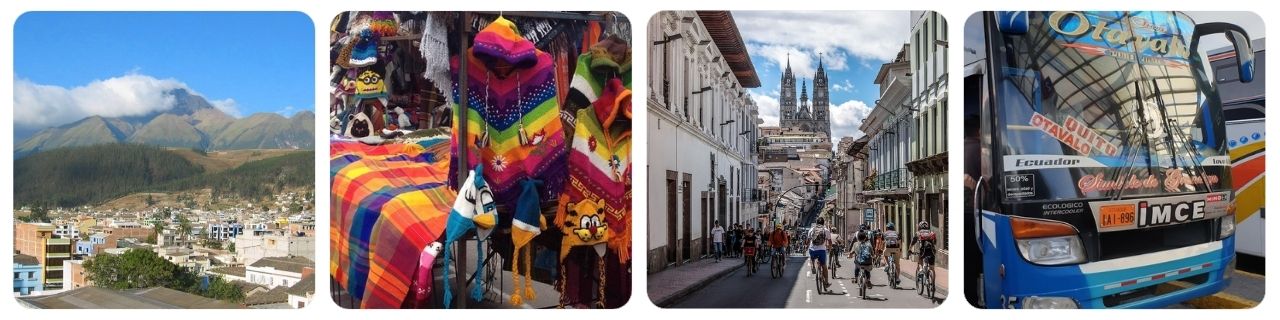
How to travel from Quito to Otavalo—whether you’re heading straight from the airport or planning a day trip to the famous market—here’s a practical breakdown of buses, tours, transfers, and rental cars to help you choose the best option for your time and budget.
At A Glance (Quito to Otavalo)
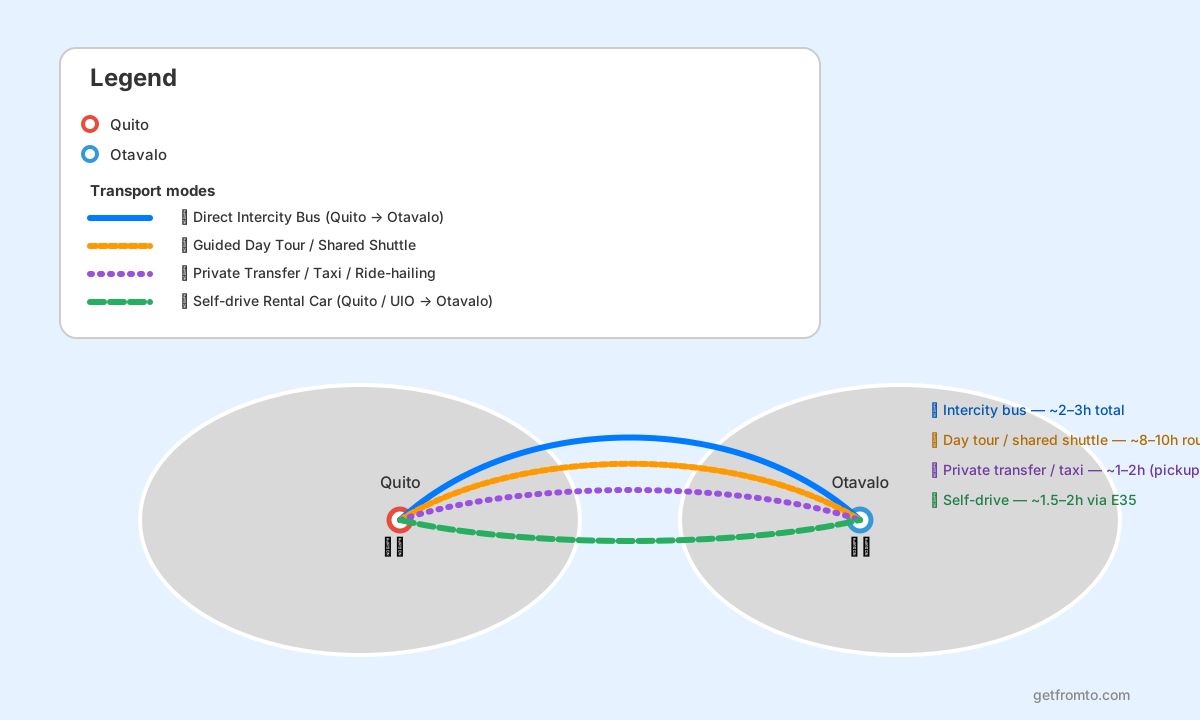
| Mode | Duration | Best For |
|---|---|---|
| 🚌 Direct Intercity Bus (Quito → Otavalo) | ~2–3h total (city transfer + highway bus) | Budget travelers, independent explorers |
| 🏷️ Cost: ~US$3–5 one-way from Terminal Carcelén + local transport in Quito » compare buses | ||
| 🧭 Guided Day Tour / Shared Shuttle | ~8–10h round trip (including sightseeing) | First-time visitors, market day trips, worry-free logistics |
| 🏷️ Cost: ~US$50–110 per person for full-day tours with guide and transport » see day tours | ||
| 🚕 Private Transfer / Taxi / Ride-hailing | ~1–1.5h from Quito Airport (UIO) or ~1.5–2h from city hotels | Comfort, small groups, late-night or early-morning arrivals |
| 🏷️ Cost: ~US$45–80 per vehicle depending on pickup point and size » pre-book airport transfer | » compare private rides | ||
| 🚗 Self-drive Rental Car (Quito / UIO → Otavalo) | ~1.5–2h driving via E35 (Pan-American Highway) | Road-trippers, those continuing to other Andean towns |
| 🏷️ Cost: ~US$40–70/day rental + fuel and tolls » search car rentals | ||
Which Option or Route Should You Choose?
- Fastest / Most Convenient: If you are landing at Quito Mariscal Sucre International Airport and want to go straight to Otavalo, a private transfer or taxi is usually the quickest and most straightforward, especially if you are tired, carrying bulky luggage, or arriving after dark.
- Cheapest / Most Economical: The direct intercity bus from Terminal Carcelén is by far the most budget-friendly option, with frequent departures and low fares. It suits backpackers and independent travelers who are comfortable navigating local bus terminals.
- Best for Classic Market-Day Experience: If your main goal is to enjoy Otavalo’s famous Plaza de los Ponchos market and nearby sights in a single day without worrying about logistics, choose a guided day tour with hotel pickup in Quito.
- Most Scenic & Flexible: Travelers who like to stop at viewpoints, lagunas, or small Andean villages along the way will appreciate the freedom of a self-drive rental car, which also makes it easy to combine Otavalo with Cotacachi, Cuicocha Lagoon, or Ibarra.
How to Book and Practical Tips
- Booking buses: For local buses, you usually buy tickets at Terminal Carcelén shortly before departure, but it can be helpful to check approximate departure times and operators in advance on aggregators like 12Go or on local schedule pages. On busy Saturdays (market day) and during holidays, arrive early.
- Booking tours: To secure a spot on a guided day trip, pre-book online with platforms such as GetYourGuide, where you can compare itineraries, inclusions, and reviews for Otavalo tours.
- Private transfers and ride-hailing: If you prefer door-to-door service, consider pre-booking a private car from Quito or directly from the airport using services like Welcome Pickups or GetTransfer. Within Quito, ride-hailing apps such as Uber are widely used as an alternative to street taxis.
- Rental cars: For self-drive trips, compare rates and rental conditions at Quito city branches or at Mariscal Sucre Airport via Booking.com Cars. Check insurance coverage, one-way fees, and whether you are allowed to drive on unpaved roads if you plan to explore beyond the main highway.
- Luggage solutions: If you are checking out of your Quito stay in the morning but only traveling to Otavalo later, you can leave bags in your accommodation or use city luggage storage services like Radical Storage so you can sightsee hands-free.
- Bikes and local exploration: Short stays in Quito before or after your Otavalo trip are perfect for a city ride; look at options on BikesBooking or check local bike-share options if you are comfortable with the altitude and traffic.
- Safety and timing: Daytime travel is recommended on mountain roads. If your flight arrives at night, seriously consider a hotel night in Quito or a pre-booked private transfer rather than navigating buses and terminals in the dark.
🚌 Option #1 — Direct Bus (Most Popular, Good Value)
Low cost Frequent departures More local experience
- Overview: Travel from your accommodation in Quito to Terminal Terrestre Carcelén in the north of the city, then board a direct intercity bus to Otavalo. Buses run roughly every 20–30 minutes during the day with companies like Flota Imbabura and Cooperativa Los Lagos. The ride to Otavalo usually takes around 1.5–2 hours, plus 30–60 minutes to reach Carcelén from central Quito.
- How to book (with price): At Carcelén, buy your ticket at the counters marked for Otavalo; fares are typically around US$2.50–3.50 one-way, plus a small terminal fee. For an idea of schedules, you can check Otavalo departures on sites like 12Go. Many travelers simply show up 30–45 minutes before they want to leave.
- Pros: Cheapest option, very frequent, and a chance to travel alongside locals. Good flexibility if you decide last-minute. Cons: Requires navigating a busy terminal, buses can be crowded at peak times (especially Saturdays), and there is less space for very large luggage.
- Good to know: Keep valuables on your lap or in a small daypack you can watch, and avoid leaving bags in overhead racks unattended. If you want more space, try to travel outside of peak rush hours and major holidays.
Step-by-step: Direct Bus from Quito to Otavalo
- From your hotel or hostel in Quito, decide how you will reach Terminal Terrestre Carcelén: you can take a licensed taxi, request a ride via an app like Uber, or use Quito’s public transport (for example, the Trole/Ecovía or Metro plus a short taxi for the last stretch).
- Plan to arrive at Carcelén at least 30 minutes before your ideal departure, and a bit earlier on Saturdays or holidays when Otavalo Market is busiest.
- Inside the terminal, pay the small terminal fee if required, then go to the counters or platforms for buses to Otavalo. Ask for the next departure time and buy your ticket; if you have flexibility, choose a bus that looks less crowded.
- Board the bus, keep your small valuables with you, and place larger luggage either in the overhead rack (within sight) or in the under-bus compartment with a luggage tag if the company offers it.
- Enjoy the scenic ride through the Andean highlands. On arrival at Otavalo’s bus terminal, you can walk (about 10–15 minutes) or take a short taxi ride to the main plaza, Plaza de los Ponchos, or directly to your accommodation.
Getting to the main embarking points (Quito & Terminal Carcelén)
- From Quito Historic Center / La Mariscal: The simplest way is to take a licensed city taxi or an Uber straight to Terminal Terrestre Carcelén. If you prefer public transport, you can ride the Trole or Ecovía north and then transfer to a feeder bus or taxi for the final leg.
- From Quito Metro stations: If you are staying near a Line 1 Metro station, ride to a northern station (such as El Labrador) and then continue by taxi or rideshare to Carcelén.
- From Quito Airport (UIO): The airport sits east of the city. If you land early and want to use the bus, you can first transfer to Quito (for example with an airport bus or a pre-booked car) and then continue to Carcelén, or book a direct transfer to Carcelén if your accommodation is nearby.
- Locations/Trip Planner: 🔗 Google Map / 🔗 OpenStreetMap
🧭 Option #2 — Guided Day Tour / Shared Shuttle
Door-to-door Guided experience Less flexible schedule
- Overview: Guided tours from Quito bundle round-trip transport with a local guide and a planned itinerary. Typical stops include Otavalo Market, the town of Cotacachi (leather goods), viewpoints over San Pablo Lake, and sometimes Cuicocha Lagoon. Expect a full day of around 8–10 hours.
- How to book (with price): Most group tours cost roughly US$50–80 per person, while private tours can be US$80–110+ per person depending on group size and inclusions. You can compare itineraries and reserve online via platforms like GetYourGuide, which lists multiple Otavalo and Cuicocha day trips with hotel pickup.
- Pros: Zero logistics, hotel pickup in many cases, and a guide to explain culture, history, and bargaining tips. Great if you have only one free day. Cons: Less freedom to wander on your own schedule; time in the market may feel short on packed itineraries.
- Good to know: Confirm whether lunch, entrance fees, and hotel pickup/drop-off are included. On Saturdays the market is at its largest, but also at its busiest; weekdays are calmer but still colorful.
Step-by-step: Guided Day Tour
- Choose your preferred itinerary (for example, Otavalo Market plus Cuicocha Lagoon) and compare group vs private tour options on GetYourGuide or similar platforms.
- Check the pickup policy: many tours include pickup from selected hotels in Quito’s main tourist areas; others use a central meeting point. Make sure the pickup point works with where you are staying.
- Book your date, specifying the number of travelers. Read recent reviews to confirm that the operator is reliable and that the tour pace matches your style.
- On the day of your trip, be ready at the pickup point 10–15 minutes early with comfortable clothing, a light jacket or sweater, sun protection, water, and cash for the market.
- Enjoy the ride and guided commentary. Back in Quito, your driver will either drop you at your hotel or at the original meeting point.
Getting to the main embarking points (Tour Meeting Spots)
- Hotel pickup zones: Many tour companies focus on the Historic Center and La Mariscal / La Carolina areas. If your accommodation is outside these zones, you may be asked to meet at a nearby hotel or plaza that is easier for a bus or minivan to access.
- Central meeting points: Some tours use easy-to-find landmarks (for example, around La Mariscal or main avenues) as their meeting spots. Your booking confirmation will usually include a Google Maps link—save it offline so you can find it even without mobile data.
- Getting there: Use a licensed taxi, Uber, or other rideshare to reach the meeting point in the early morning, allowing extra time for weekday traffic.
- Locations/Trip Planner: 🔗 Google Map / 🔗 OpenStreetMap
🚕 Option #3 — Private Transfer / Taxi / Ride-hailing
Door-to-door Time-efficient Higher cost
- Overview: A private transfer takes you directly from Quito city or Mariscal Sucre International Airport (UIO) to your hotel in Otavalo. The journey is roughly 80 km and typically takes 1–1.5 hours from the airport or up to 2 hours from central Quito, depending on traffic.
- How to book (with price): Expect fares of about US$45–80 per vehicle for up to 3–4 passengers, more for larger vans. You can pre-book an airport or city transfer with services such as Welcome Pickups or compare quotes and vehicle sizes on GetTransfer. Many Quito hotels can also arrange a trusted driver if you prefer to book locally.
- Pros: Fastest and easiest option, especially with heavy bags, children, or late-night/early-morning flights. No need to change vehicles or manage luggage across terminals. Cons: More expensive than the bus and less social than traveling with locals.
- Ride-hailing in Quito: Within the city, Uber is widely used and can often be cheaper than street taxis for reaching the bus terminal or returning from Otavalo if you split costs among several travelers. For long-distance rides to Otavalo, always confirm the fare and whether the driver is comfortable with the route before starting.
Step-by-step: Private Transfer or Taxi
- Decide whether you need pickup from the airport or from a Quito hotel. If you are arriving late at night, a pre-booked transfer from UIO to Otavalo is usually the safest and most comfortable choice.
- Compare offers on Welcome Pickups and GetTransfer, paying attention to vehicle type, luggage allowance, cancellation policy, and estimated travel time.
- Enter your flight details or hotel address and the exact drop-off point in Otavalo (for example, your hotel or a specific landmark near the market). Book and keep the confirmation accessible offline.
- On the day of travel, meet your driver at the agreed location—inside the airport arrivals hall with a name sign, or at your hotel lobby—and confirm the destination and approximate arrival time.
- Relax and enjoy the views along the Pan-American Highway. When you reach Otavalo, your driver will drop you directly at your accommodation or chosen point.
Getting to the main embarking points (Hotel / Airport Pickup)
- Airport arrivals (UIO): If you booked a transfer, your driver usually waits in the arrivals hall after customs. If you are using a ride-hailing app like Uber, follow the in-app instructions to the designated pickup area.
- City hotel pickups: Most transfer companies and taxi drivers will collect you directly from major hotels and guesthouses in Quito. Confirm any extra fees if you are staying outside central areas.
- Back-up plan: If your flight is delayed or you miss your pickup, contact the transfer company through their app or emergency phone number; many offer flexible rescheduling for flight disruptions.
- Locations/Trip Planner: 🔗 Google Map / 🔗 OpenStreetMap
🚗 Option #4 — Self-drive Rental Car (Most Flexible)
Maximum flexibility Great for side trips You do the driving
- Overview: Pick up a rental car in Quito or at Mariscal Sucre Airport and drive yourself along the Pan-American Highway (E35) north to Otavalo. The road is paved and generally in good condition, with mountain scenery and the possibility to stop at viewpoints, miradores, and small towns.
- How to book (with price): Daily rates typically start around US$40–70 for a small car, plus insurance and fuel. Use aggregators such as Booking.com Cars or airport-specific listings at Quito Airport (UIO) to compare rental companies, vehicle types, and deposit requirements.
- Pros: Freedom to choose your departure time, detours, and photo stops. Easy to combine Otavalo with nearby attractions like Peguche Waterfall, Cuicocha Lagoon, or Cotacachi. Cons: Driving in Quito traffic can feel hectic, and mountain weather can change quickly; you also need to be comfortable driving at altitude and in unfamiliar conditions.
- Good to know: Always carry your passport, driver’s license (and International Driving Permit if required), and rental documents. Fill up on fuel before leaving the city and watch for changing speed limits on the highway.
Step-by-step: Self-drive Quito / UIO → Otavalo
- Reserve your car online in advance through a Quito car rental search, choosing pickup and drop-off locations and checking mileage and insurance terms.
- Pick up the vehicle at your chosen branch or at Quito Airport. Inspect it carefully, take photos of any existing scratches, and confirm emergency numbers and roadside assistance coverage.
- Set your GPS or map app to Otavalo (or directly to your accommodation). Most routes will take you north along E35; plan extra time for traffic when leaving Quito.
- Drive carefully through the mountains, leaving extra space for buses and trucks, and be prepared for fog or rain. Consider stopping at viewpoints over San Pablo Lake or at small roadside towns for snacks and photos.
- On arrival in Otavalo, locate your hotel’s parking or use secure parking areas near the center if your accommodation does not have its own lot.
Getting to the main embarking points (Rental Offices)
- Airport rentals: If you are landing in Quito and heading straight out, picking up your car at Mariscal Sucre Airport can save time and avoid driving through the densest city traffic. Many international brands have desks in the arrivals area.
- City-center rentals: If you are spending a few days in Quito first, it may be easier to rent a car only for the Otavalo portion of your trip. That way you can rely on public transport and taxis within the city before collecting your vehicle.
- Returning the car: Check opening hours and whether out-of-hours drop-off is possible if you plan to return late in the evening after your Otavalo visit.
- Locations/Trip Planner: 🔗 Google Map / 🔗 OpenStreetMap
FAQ (Quito to Otavalo)
How long does it take to get from Quito to Otavalo?
Most travelers should budget around 2–3 hours door-to-door. The direct bus from Terminal Carcelén usually takes 1.5–2 hours, while a private car or taxi can be as fast as 1–1.5 hours from the airport and about 1.5–2 hours from central Quito, depending on traffic.
Is there a train from Quito to Otavalo?
No. There is currently no regular passenger train service between Quito and Otavalo. The standard options are intercity buses, guided tours, private transfers, or self-drive rental cars.
Is it safe to travel between Quito and Otavalo?
By day, the route is commonly used by locals and travelers and is generally considered safe when using reputable bus companies or licensed drivers. As with any trip, keep valuables out of sight, use official terminals, and avoid isolated areas after dark. If you arrive late at night, a private transfer or a night in Quito before continuing is usually the safest choice.
Which day is best to visit the Otavalo Market?
The market runs daily, but Saturday is the biggest and most famous day, when stalls spill into surrounding streets and the atmosphere is at its liveliest. Weekdays offer a quieter experience with fewer crowds and more time to browse and negotiate.
Can I go directly from Quito Airport (UIO) to Otavalo?
Yes. You can book a private transfer or taxi directly from Mariscal Sucre International Airport to Otavalo, which takes roughly 1–1.5 hours depending on conditions. If you prefer to travel by bus, you will first need to reach Quito and then continue from Terminal Carcelén.





Related Tours/Services
Popular Routes
Recent Routes
- How to get from PortMiami Cruise Terminal to Miami International Airport
- How to get from Samarkand to Bukhara
- How to get from Bell Tower (Xi’an) to Xi’an North Railway Station
- How to get from Canal City Hakata to Hakata Station
- How to get from Rialto Bridge (Venice) to Venezia Santa Lucia Station
- How to get from Florence Cathedral (Duomo) to Firenze Santa Maria Novella Station
- How to get from Nice to Paris
- How to get from Ribeira District (Porto) to Porto Campanhã Station
- How to get from Anne Frank House to Amsterdam Sloterdijk Station
- How to get from Buckingham Palace to London Victoria Station
Top Travel Gears

DUDE Wipes Unscented Pocket Packs, Adult Flushable Travel Wipes, 48 Count

zelin Anti Theft Zipper Clips, Travel Essentials, Carabiner, 4Pcs Grey

INIU 10000mAh 45W Fast Charging Portable Charger, Smaller Travel Power Bank | Flight-Safe, Detachable USB C Cable, Travel Essential, External Battery Phone Pack for iPhone 18 17 Samsung iPad etc
travel inspira Luggage Scale Digital Suitcase Weight Scale for Travel
2026 Travel Essentials for Apple Watch Charger,Cruise Vacation Camping Essentials,iPhone Charger,Multi Charging Cable,3 in 2 Charging Docks for iWatch Series 12 11-2/Ultra,iPhone 18 17-12,Car