
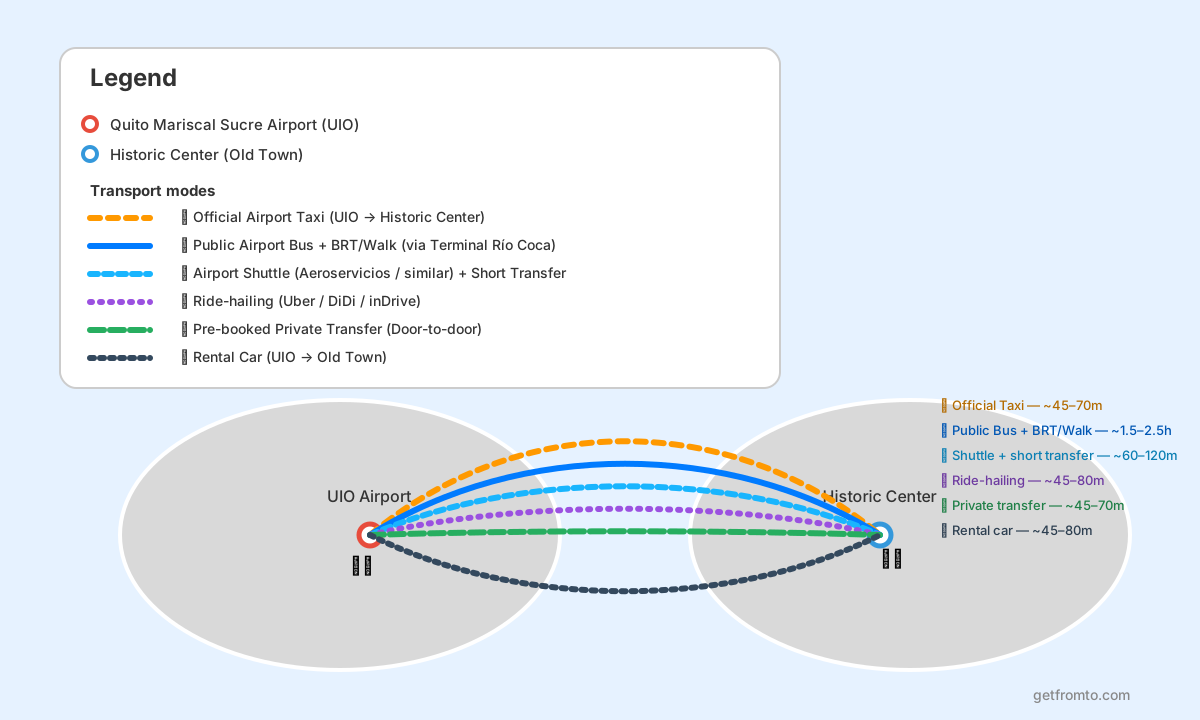
How to get from Quito Mariscal Sucre Airport to Historic Center

Landing at Quito’s Mariscal Sucre International Airport (UIO) in Tababela, you’re about 40–50 km from the Historic Center (Centro Histórico). This guide breaks down the fastest, cheapest, and easiest ways to reach Old Town—plus booking links, step-by-step directions, and practical tips for a smooth arrival.
At A Glance (Quito Mariscal Sucre Airport to Historic Center)
| Mode | Duration | Best For |
|---|---|---|
| 🚖 Official Airport Taxi (UIO → Historic Center) | ~45–70m (traffic-dependent) | Fastest without apps, families, late arrivals |
| 🏷️ Cost: ~USD 25–35+ (sector/traffic dependent) | » airport taxi info | ||
| 🚍 Public Airport Bus + BRT/Walk (via Terminal Río Coca) | ~1.5–2.5h total (connections + walking) | Lowest cost, light luggage, daytime travel |
| 🏷️ Cost: ~USD 2–5 total (bus + city transit) | » public bus operators | ||
| 🚐 Airport Shuttle (Aeroservicios / similar) + Short Transfer | ~60–120m total | More comfort than public bus, luggage-friendly |
| 🏷️ Cost: ~USD 8–16 for shuttle + USD 3–10 taxi add-on | » shuttle details | ||
| 📱 Ride-hailing (Uber / DiDi / inDrive) | ~45–80m | Cashless option, price estimates, solo travelers |
| 🏷️ Cost: Often ~USD 18–35 (surge and distance dependent) | » airport pickup guidance | ||
| 🧳 Pre-booked Private Transfer (Door-to-door) | ~45–70m | Hassle-free arrivals, groups, fixed planning |
| 🏷️ Cost: Commonly ~USD 30–70+ depending on vehicle/coverage | » pre-book a pickup | ||
| 🚗 Rental Car (UIO → Old Town) | ~45–80m (plus pickup time) | Road trips after Quito, flexible schedules |
| 🏷️ Cost: Varies by day/season + fuel/parking | » compare rentals | ||
Which Option or Route Should You Choose?
- Fastest/Most Convenient: Choose official airport taxi or pre-booked private transfer for the simplest door-to-door ride.
- Cheapest/Most Economical: Take the public airport bus via Terminal Río Coca and connect by BRT/walk to Old Town.
- Best for Late-Night/Early-Morning Flights: Book a private transfer or use official taxis (24/7 availability is most reliable).
- Most Flexible (stop for a SIM, ATM, groceries): Use ride-hailing or a rental car to add quick detours.
- Best with Big Luggage: Avoid peak-hour city buses; pick the shuttle option or private transfer.
How to Book and Practical Tips
- Currency: Ecuador uses US dollars. Keep small bills/coins for buses and tips.
- Address tip: For Historic Center, share a landmark like Plaza Grande / Plaza de la Independencia or your hotel name; streets can be one-way and GPS may route differently.
- Traffic: Quito peaks are commonly 06:00–09:00 and 15:00–19:00; plan extra time.
- Safety basics: Use official taxi ranks or app-based rides, avoid showing valuables at the curb, and keep bags zipped and on your lap/feet in crowded buses.
- Phone + data: If you need connectivity before leaving the terminal, grab airport Wi-Fi first, then book rides/transfers.
- Where to stay: Compare Old Town stays in Centro Histórico if you want to be walking-distance to churches, plazas, and museums.
- Day tours once you arrive: Browse top-rated Quito Old Town experiences in Quito Historic Center.
- Storing bags for a few hours: If your check-in is later, consider luggage storage in Quito so you can explore hands-free.
🚌 Option #1 — Public Airport Bus + BRT/Walk (Cheapest)
Lowest cost Good coverage Not ideal with big luggage
- Overview: Take the airport public bus to Terminal Río Coca (north-side terminal) and then connect toward the Historic Center via city transit (BRT) and a short walk.
- Typical time: ~60–75m airport bus + ~30–60m connections/walking = ~1.5–2.5h total.
- How to ride (with price): Expect roughly ~USD 2 for the airport bus and small change for city transit (prices can vary). The airport lists public bus operators and terminals on Transportation.
- Pros: Cheapest way to reach Quito. Cons: Transfers, crowding, slower at peak times.
Step-by-step: Airport bus via Terminal Río Coca
- Follow airport signs for public transport buses (“transporte colectivo”).
- Board the bus bound for Terminal Río Coca (north route).
- At Río Coca, connect by BRT/trolleybus toward Old Town (ask for the route to La Marín / San Francisco / Centro Histórico) or take a short taxi from the terminal if you prefer a simpler final leg.
- Get off near the Historic Center and walk to your final destination (many Old Town streets are best explored on foot).
Getting to the main embarking points (Airport bus stops)
- Where to board: Use airport signage for public buses; staff/guards can point you to the correct bay.
- Best time to use: Daytime and early evening when connections are frequent and you’re traveling lighter.
- Navigation tip: If your hotel is deep in Old Town’s narrow streets, end your transit at a major landmark then walk the last 5–15 minutes.
- Locations/Trip Planner: 🔗 Google Map / 🔗 OpenStreetMap
🚐 Option #2 — Airport Shuttle (Aeroservicios / Similar) + Short Transfer (Good Value)
Luggage-friendly Simple pickup point One extra hop
- Overview: Take a dedicated airport shuttle toward the city (often to the old-airport area / Parque Bicentenario), then finish by taxi or Metro/BRT to the Historic Center.
- Typical time: ~45–75m shuttle + ~10–30m last-mile transfer = ~60–120m total.
- How to book (with price): Shuttle pricing often sits around USD 8–16 (adult return vs one-way varies by operator). Check shuttle details on Quito Airport Shuttle.
- Pros: More comfortable than public bus; clearer luggage space. Cons: You still need a final taxi/Metro ride into Old Town.
Step-by-step: Shuttle to the city + last mile into Old Town
- After arrival, find the shuttle desk/meeting instructions for your chosen operator.
- Ride the shuttle into the city (commonly toward the old-airport area / Parque Bicentenario).
- From the shuttle drop-off, take a short taxi, ride-hailing, or connect to the Metro de Quito if it’s convenient from your drop-off point.
- In Old Town, plan to be dropped at a main street/landmark, then walk to your hotel for easier navigation.
Getting to the main embarking points (Shuttle pickup)
- Where to board: Follow your booking instructions; most shuttles meet at or near Arrivals.
- Ticketing: Some operators sell at a desk; others require advance booking.
- Best for: Travelers who want a clear, luggage-friendly option without paying full private-transfer prices.
- Locations/Trip Planner: 🔗 Google Map / 🔗 OpenStreetMap
🚖 Option #3 — Official Airport Taxi (Fastest, No App Needed)
Fast 24/7 availability Costs more than buses
- Overview: Official taxis queue at the terminal and operate 24/7. It’s the most straightforward ride to the Historic Center, especially if you have luggage.
- Typical time: ~45–70m (can be longer in heavy traffic).
- How to take it (with price): Expect roughly USD 25–35+ depending on your exact Old Town address and traffic. The airport lists official taxi cooperatives and contact numbers on Transportation.
- Pros: Door-to-door, minimal effort. Cons: Pricier than public transport; some Old Town streets are narrow—walking the final block or two may be easier.
Step-by-step: Official taxi from UIO
- Exit Arrivals and follow signs for the taxi rank.
- Tell the dispatcher or driver: Centro Histórico and your hotel/landmark (e.g., Plaza Grande).
- Confirm the approximate fare and the best drop-off point for Old Town access (some streets may be restricted or congested).
- Pay in USD; tips are optional—rounding up is common for good service.
Getting to the main embarking points (Taxi rank)
- Where to board: Official taxis are at the terminal entrance/exit area (use the marked taxi line).
- Safety tip: Avoid unsolicited offers inside the terminal; use the official rank for traceable service.
- Locations/Trip Planner: 🔗 Google Map / 🔗 OpenStreetMap
📱 Option #4 — Ride-hailing (Uber / DiDi / inDrive) (Flexible, Often Competitive)
Price estimate in-app Cashless possible Pickup coordination needed
- Overview: Ride-hailing can be convenient and sometimes cheaper than taxis, especially off-peak. It’s best if you have mobile data and prefer in-app tracking and payment.
- Typical time: ~45–80m depending on traffic and driver availability.
- How to use (with price): Fares vary by demand; check the in-app estimate before confirming. For pickup guidance at UIO, see Uber pickup at UIO.
- Pros: Transparent routing and trip tracking. Cons: May involve waiting, surge pricing, or finding the exact meeting point.
Step-by-step: Ride-hailing from UIO
- Connect to airport Wi-Fi or your data plan, then request your ride after baggage claim.
- Set destination as your hotel name or a major landmark (e.g., Plaza Grande) to reduce navigation issues.
- Follow the in-app map to the pickup point; message the driver if the curb area is busy.
- If your hotel is inside a pedestrian-heavy lane, ask the driver to drop you at the nearest accessible street and walk the final minutes.
Getting to the main embarking points (App pickup areas)
- Where to meet: Use your app’s airport pickup instructions and stand in a well-lit, clearly marked pickup zone.
- Best times: Off-peak hours for quicker pickups and fewer surge price spikes.
- Alternative if you prefer pre-arranged rides: Use private transfers to avoid pickup uncertainty.
- Locations/Trip Planner: 🔗 Google Map / 🔗 OpenStreetMap
🧳 Option #5 — Pre-booked Private Transfer (Most Hassle-Free)
Meet-and-greet Great for groups Higher cost
- Overview: Pre-book a driver to meet you after arrival and take you straight to Old Town. Ideal for first-time visitors, families, or anyone arriving late.
- Typical time: ~45–70m door-to-door.
- How to book (with price): Compare transfer styles and inclusions (meet-and-greet, waiting time, child seats). One option is Welcome Pickups in Quito. If you want to compare multiple providers, check marketplaces like GetTransfer (availability and quotes vary).
- Ride-hailing alternative: If you’d rather not pre-book, use Uber/DiDi for on-demand rides.
- Pros: Minimal hassle, clear plan. Cons: More expensive than taxis/buses.
Step-by-step: Private transfer pickup
- Book your transfer in advance and enter your flight number and destination in Centro Histórico.
- On arrival, keep your phone on and look for your driver/meeting instructions (some services use a name sign or messaging).
- Confirm the destination and best drop-off for Old Town’s narrow streets.
- Save the driver contact and booking details until you’ve checked in.
Getting to the main embarking points (Arrivals meeting area)
- Where to meet: Typically just outside Customs/Arrivals, based on your provider’s instructions.
- Tip: If you land late, choose a provider that monitors flights and includes waiting time.
- Locations/Trip Planner: 🔗 Google Map / 🔗 OpenStreetMap
🚗 Option #6 — Rental Car (Best for Road Trips After Quito)
Freedom to explore Good for multi-stop trips Old Town parking/traffic
- Overview: Renting a car makes sense if Quito is the start of a broader Ecuador itinerary (e.g., Otavalo, Cotopaxi, Mindo). For Old Town-only stays, taxis/transfers are usually easier.
- Typical time: ~45–80m driving, plus rental pickup time.
- How to book: Compare rates and policies on Booking.com Car Rentals; if you’re still planning flights, check Booking.com Flights as well.
- Pros: Total flexibility for day trips. Cons: City traffic, limited parking, and some one-way streets in the Historic Center.
Step-by-step: Rental car from UIO
- Reserve your vehicle (automatic cars can be limited; book early if you need one).
- Pick up at the airport arrivals area and inspect the car for existing scratches before leaving.
- Navigate to your hotel parking (confirm parking availability in Old Town before committing).
- Drive cautiously in the Historic Center—tight streets and pedestrians are common.
Getting to the main embarking points (Rental desks)
- Where to go: Rental desks are in/near the public arrivals hall.
- Parking tip: If your Old Town hotel has limited vehicle access, consider parking in a nearby garage and walking in.
- Optional add-on: For two-wheel exploring later, compare rentals at bike rentals in Quito (best used outside the tightest Old Town lanes).
- Locations/Trip Planner: 🔗 Google Map / 🔗 OpenStreetMap
FAQ (Quito Mariscal Sucre Airport to Historic Center)
What’s the easiest way to get from Quito Airport to the Historic Center?
For most travelers, an official airport taxi is the easiest (no apps, door-to-door). If you prefer everything arranged before landing, use a pre-booked private transfer.
What’s the cheapest way?
The lowest-cost route is the public airport bus to Terminal Río Coca and then city transit toward Old Town. It takes longer and works best with light luggage.
How long does it take from UIO to Old Town?
By car (taxi/ride-hailing/transfer), plan ~45–70 minutes in normal conditions. By public bus + connections, plan ~1.5–2.5 hours depending on wait times and traffic.
Is ride-hailing available at Quito Airport?
Yes—apps like Uber (and other alternatives) operate in Quito. Use the app’s airport pickup guidance (for Uber, see pickup instructions) and expect longer waits at peak times.
Where should I set my destination if my hotel is inside the Historic Center?
Use a major landmark such as Plaza Grande or your hotel’s exact name, then walk the final block or two if streets are narrow or congested.
Should I book tours in the Historic Center in advance?
If you’re traveling in peak season or have limited time, it helps to reserve ahead. Browse options under Quito Historic Center.





Related Tours/Services
Popular Routes
Recent Routes
- How to get from PortMiami Cruise Terminal to Miami International Airport
- How to get from Samarkand to Bukhara
- How to get from Bell Tower (Xi’an) to Xi’an North Railway Station
- How to get from Canal City Hakata to Hakata Station
- How to get from Rialto Bridge (Venice) to Venezia Santa Lucia Station
- How to get from Florence Cathedral (Duomo) to Firenze Santa Maria Novella Station
- How to get from Nice to Paris
- How to get from Ribeira District (Porto) to Porto Campanhã Station
- How to get from Anne Frank House to Amsterdam Sloterdijk Station
- How to get from Buckingham Palace to London Victoria Station
Top Travel Gears

DUDE Wipes Unscented Pocket Packs, Adult Flushable Travel Wipes, 48 Count

zelin Anti Theft Zipper Clips, Travel Essentials, Carabiner, 4Pcs Grey

INIU 10000mAh 45W Fast Charging Portable Charger, Smaller Travel Power Bank | Flight-Safe, Detachable USB C Cable, Travel Essential, External Battery Phone Pack for iPhone 18 17 Samsung iPad etc

travel inspira Luggage Scale Digital Suitcase Weight Scale for Travel

2026 Travel Essentials for Apple Watch Charger,Cruise Vacation Camping Essentials,iPhone Charger,Multi Charging Cable,3 in 2 Charging Docks for iWatch Series 12 11-2/Ultra,iPhone 18 17-12,Car