

How to get from Toronto Pearson Airport to Downtown Toronto
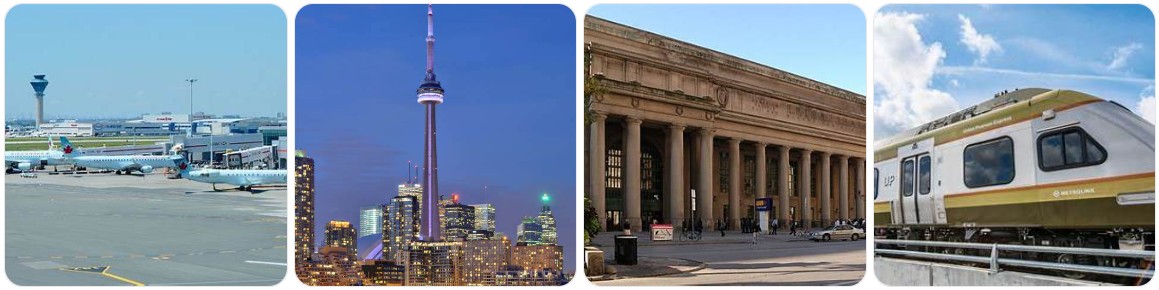
Traveling from Toronto Pearson International Airport to Downtown Toronto is simple and convenient, with several transportation options available including the Union Pearson Express train, public buses and subways operated by Toronto Transit Commission, airport taxis and rideshare services, airport shuttle buses, and private transfers. For most travelers, the best option is the Union Pearson Express (fastest and most direct connection to downtown), while budget travelers may prefer TTC buses and subway combinations, and families or travelers with lots of luggage often choose taxis, rideshare, or private transfers for door-to-door convenience.
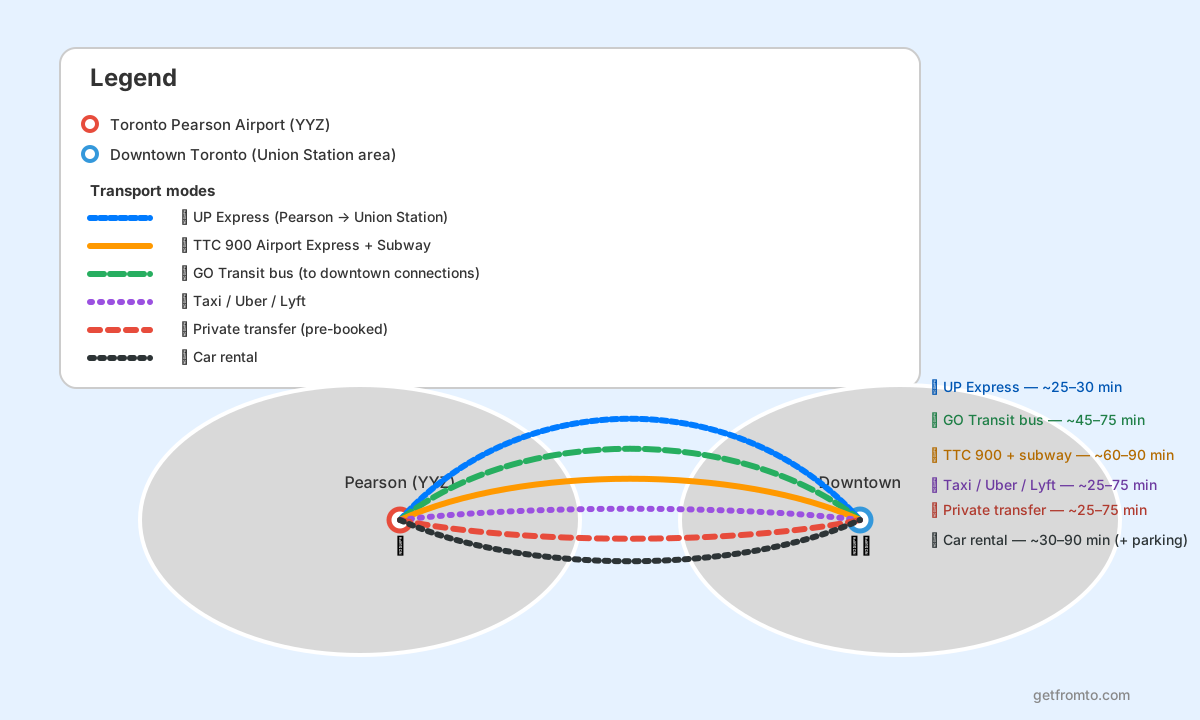
At A Glance (Toronto Pearson Airport to Downtown Toronto)
| Mode | Duration | Best For |
|---|---|---|
| 🚆 UP Express (Pearson → Union Station) | ~25–30m on train (+ walking to/from platforms) | Fastest, most reliable timing, most downtown stays |
| 🏷️ Cost: ~CAD 9.25 with PRESTO or ~CAD 12.35 standard adult one-way » fare & station info | fare details | ||
| 🚌 TTC 900 Airport Express + Subway (cheapest) | ~60–90m (connection-dependent) | Budget travel, light luggage, frequent service |
| 🏷️ Cost: ~CAD 3.30 adult fare with tap-to-pay/PRESTO for TTC trips » TTC fare info | Pearson TTC stops | ||
| 🚌 GO Transit bus (good for some downtown/Union connections) | ~45–75m (route + traffic dependent) | Specific corridors, connections beyond downtown |
| 🏷️ Cost: Distance-based GO fare (tap PRESTO / credit/debit) » GO fare rules | Pearson GO bus stops | ||
| 🚕 Taxi / Uber / Lyft (door-to-door) | ~25–75m (traffic-dependent) | Families, late arrivals, lots of luggage |
| 🏷️ Cost: Usually ~CAD 50–70-ish for downtown (zone/flat-rate systems exist) » official taxi/limo estimate | ||
| 🚘 Private transfer (pre-booked) | ~25–75m | Meet & greet, fixed quote, business travel |
| 🏷️ Cost: Fixed quote by provider » transfer overview | alt. quotes | Klook transfers | ||
| 🚗 Car rental (only if you’ll road-trip) | ~30–90m (+ parking) | Niagara / Muskoka / multi-stop itineraries |
| 🏷️ Cost: Daily rental + fuel + parking » compare car rentals | ||
Which Option or Route Should You Choose?
- Fastest & most predictable: UP Express (especially in rush hour and winter weather).
- Cheapest: TTC 900 Airport Express + Subway.
- Most convenient door-to-door: Taxi / Uber / Lyft or Private transfer.
- Best if you’re not staying downtown: GO Transit can be great for Mississauga, York Region, or transfers across the region.
How to Book and Practical Tips
- Define “downtown” for your trip: If you’re staying near Union Station, the Entertainment District, CN Tower, or the Financial District, UP Express is usually ideal. If you’re staying on the subway line (e.g., Bloor-Yonge, St. George), TTC can be the best value.
- Terminal basics: Pearson has Terminal 1 and Terminal 3. UP Express is directly connected at the airport, and public buses are signed at ground transportation areas (see the airport’s public transit buses page).
- Pay smart with PRESTO: PRESTO typically gives the best fare on UP Express and streamlines tapping across regional transit.
- Watch the clock: Late-night and early-morning service patterns vary by mode. If you land very late, have ride-hailing/taxi as a backup.
- Traveling with luggage: UP Express is luggage-friendly; TTC is doable but can be crowded during peaks and involves more stairs/escalators.
- Hands-free hours downtown: If you arrive before check-in, store bags near Union Station using luggage storage Toronto Union Station.
- Where to stay: Compare stays in central neighborhoods via Toronto hotels and filter by “Downtown Toronto” landmarks you care about.
🚆 Option #1 — UP Express (Fastest & Most Reliable)
Fast Luggage-friendly Not door-to-door
- Overview: Union Pearson Express runs between Pearson and Union Station in about 28 minutes. From Union, you can walk, take the TTC subway, streetcar, or a short taxi/Uber to your hotel.
- How to book (with price): Buy at machines, online, or tap with PRESTO/contactless (see Ways to Pay). Pearson publishes a quick fare snapshot on its UP Express page; UP Express keeps the detailed fare rules on UP Express fares.
- Pros: Predictable timing, frequent service, lots of luggage space. Cons: You still need a last-mile plan from Union Station.
Step-by-step: UP Express to Union Station
- Follow signs to UP Express: At Pearson, look for “UP Express” signs from arrivals. The airport’s UP Express page shows where to enter from Terminal 1 and how to connect from Terminal 3.
- Pay your fare: Tap PRESTO/contactless or buy a ticket (details at Ways to Pay).
- Ride to Union Station: Stay on until the final stop (Union). Keep valuables with you; luggage racks are on board.
- Last mile from Union: Walk to nearby hotels, connect to TTC, or call a rideshare for a short hop.
Getting to the main embarking points (UP Express Pearson Station)
- Terminal 1: Follow the in-terminal signs for UP Express.
- Terminal 3: Use the inter-terminal connection to Terminal 1 first if required; Pearson provides wayfinding on the UP Express page.
- Locations/Trip Planner: 🔗 Google Map / 🔗 OpenStreetMap
🚌 Option #2 — TTC 900 Airport Express + Subway (Cheapest)
Lowest cost Frequent More transfers
- Overview: Take the 900 Airport Express bus to Kipling Station (Line 2), then continue by subway into downtown (transfer to Line 1 if needed).
- How to book (with price): Pay a standard TTC fare (tap-to-pay/PRESTO/cash rules vary). TTC lists fare details on Fares and passes. Pearson summarizes TTC options on TTC.
- Pros: Cheapest way to downtown. Cons: Slower; can be crowded; more stairs with luggage.
Step-by-step: TTC 900 + Subway into downtown
- Find the 900 Airport Express stop: Use Pearson’s TTC page for terminal stop details.
- Ride to Kipling Station: The bus runs to Kipling (Line 2) where you can enter the subway.
- Take Line 2 east: Ride toward downtown; transfer to Line 1 at Bloor-Yonge or St. George if your destination is on Line 1.
- Exit near your hotel: Downtown stations are walkable to many areas, or take a streetcar/bus for the last mile.
Getting to the main embarking points (TTC bus stops at Pearson)
- Where: Ground transportation areas at Pearson; use Pearson’s TTC guide for exact columns/levels.
- Fare tip: Tap-to-pay/PRESTO is usually simplest; TTC fare rules are outlined on Fares and passes.
- Locations/Trip Planner: 🔗 Google Map / 🔗 OpenStreetMap
🚌 Option #3 — GO Transit Bus (Good Regional Connector)
Regional links Comfortable Fare varies
- Overview: GO Transit buses connect Pearson to regional hubs (e.g., Square One, Highway 407 Station, York Region) and can be useful depending on where you’re staying and which transfers you prefer.
- How to book (with price): No reservation—tap PRESTO or pay by contactless (fare is distance-based). Start with GO’s Plan your trip and read Fare Information. Pearson’s GO Transit page shows exactly where buses depart at Terminal 1.
- Pros: Great for non-downtown destinations and regional transfers. Cons: Not always the simplest for first-time visitors going straight to central downtown.
Step-by-step: GO Transit bus strategy
- Check departures: Use Pearson’s GO page for the terminal stop location and next-departure board.
- Plan your transfer: If you’re ultimately going downtown, compare against UP Express for speed/simplicity.
- Tap on/off where required: Follow GO’s fare rules and tap instructions.
Getting to the main embarking points (GO bus stops at Terminal 1)
- Where: Terminal 1, ground level columns (shown on Pearson’s GO Transit page).
- From Terminal 3: Use Pearson’s inter-terminal connection to reach Terminal 1 for GO buses.
- Locations/Trip Planner: 🔗 Google Map / 🔗 OpenStreetMap
🚕 Option #4 — Taxi / Uber / Lyft (Door-to-Door Convenience)
Door-to-door Good with bags Traffic-dependent
- Overview: Taxis and app rides take you directly to your hotel or apartment. This is the easiest option after a long flight or with kids and luggage.
- How to book (with price): For taxis/limos, Pearson provides a zone/flat-rate estimator on Taxi and limo estimate. For a pre-booked pickup alternative, see Private transfer.
- Pros: Simple, available 24/7. Cons: Variable travel time; surge pricing for rideshare during peaks.
Step-by-step: Taxi or rideshare to downtown
- Choose your pickup: Follow airport signage to the official taxi/limousine stands or rideshare pickup areas.
- Confirm the total price: If using taxi/limo, check the official estimator first; if using Uber/Lyft, confirm in-app estimate before requesting.
- Plan for traffic: If congestion looks severe and you’re headed near Union Station, UP Express may be faster.
Getting to the main embarking points (Taxi ranks / rideshare pickup)
- Where: Arrivals-level ground transportation zones (terminal signage).
- Tip: For guaranteed rates regardless of traffic/weather, start with Pearson’s estimate tool.
- Locations/Trip Planner: 🔗 Google Map / 🔗 OpenStreetMap
🚘 Option #5 — Private Transfer (Pre-Booked, Meet & Greet)
Fixed quote Meet & greet Costs more
- Overview: A driver meets you at arrivals and takes you directly downtown. Best for late flights, business travel, or anyone who hates negotiating pickup logistics.
- How to book (with price): Compare inclusions like waiting time, cancellations, and vehicle type. Options include airport transfer to downtown services, quote marketplaces like GetTransfer, and listings on Toronto Pearson International Airport transfers. You can also browse Toronto Pearson International Airport transfers for comparable options.
- Pros: Smoothest arrival; clear instructions. Cons: Usually pricier than UP Express or TTC.
Step-by-step: Private transfer to downtown
- Pick your drop-off: Use a full hotel address or a specific downtown landmark.
- Choose vehicle size: Sedan for 1–2, SUV/van for more people or lots of bags.
- Add flight info: Include your flight number so providers can handle delays.
- Meet your driver: Follow the provider’s arrivals meeting instructions exactly.
Getting to the main embarking points (Arrivals meeting point)
- Where: Arrivals hall meeting area or curbside pickup (provider-specific).
- Ride-hailing alternative: Uber and Lyft are widely available in Toronto and can be used instead of pre-booked transfers.
- Locations/Trip Planner: 🔗 Google Map / 🔗 OpenStreetMap
🚗 Option #6 — Car Rental (Only If You’ll Travel Beyond Toronto)
Flexible Good for day trips Parking cost
- Overview: Renting a car to go straight downtown is rarely worth it (traffic + parking). It makes sense if you’re continuing to Niagara, cottage country, or doing a multi-city Ontario loop.
- How to book (with price): Compare companies, pickup terminals, and insurance options via car rental search tools.
- Pros: Total flexibility for onward travel. Cons: Downtown parking is expensive and can be limited.
Step-by-step: Drive into downtown
- Set your route: Use your hotel address (not just “Downtown Toronto”).
- Plan parking: Prefer hotel parking or a secured garage; avoid street parking with luggage.
- Time it: If you can, avoid weekday rush hours to reduce stress and time.
Getting to the main embarking points (Car rental desks)
- Where: Follow airport signs for car rentals; some companies are on-site while others use shuttles.
- Locations/Trip Planner: 🔗 Google Map / 🔗 OpenStreetMap
FAQ (Toronto Pearson Airport to Downtown Toronto)
What’s the easiest way to get from Pearson (YYZ) to downtown Toronto?
For most travelers, UP Express is the easiest balance of speed and simplicity. If you want door-to-door and you’re arriving late, use taxi/ride-hailing or a private transfer.
What’s the cheapest way to get downtown?
Take the TTC 900 Airport Express + subway and pay a standard TTC fare (details on TTC fares).
Is UP Express worth it?
If you value time and predictability, yes—especially at peak traffic times. It also has generous space for luggage and drops you at Union Station, a central hub.
Where does UP Express drop you off?
At Union Station. From there, most downtown hotels are a short walk or quick TTC ride away.
Do I need cash for TTC or UP Express?
Not necessarily. UP Express supports tapping and tickets (see Ways to Pay). TTC supports tap-to-pay and PRESTO (see Fares and passes).
Any quick things to do downtown after I arrive?
If you have time and want an easy first activity, browse Toronto experiences and filter by the CN Tower, Harbourfront, or walking tours.





Related Tours/Services
Popular Routes
Recent Routes
- How to get from PortMiami Cruise Terminal to Miami International Airport
- How to get from Samarkand to Bukhara
- How to get from Bell Tower (Xi’an) to Xi’an North Railway Station
- How to get from Canal City Hakata to Hakata Station
- How to get from Rialto Bridge (Venice) to Venezia Santa Lucia Station
- How to get from Florence Cathedral (Duomo) to Firenze Santa Maria Novella Station
- How to get from Nice to Paris
- How to get from Ribeira District (Porto) to Porto Campanhã Station
- How to get from Anne Frank House to Amsterdam Sloterdijk Station
- How to get from Buckingham Palace to London Victoria Station
Top Travel Gears

LISEN Airplane Travel Essentials for Flying Airplane Phone Holder for Desk | Phone Stand Hands Free MagSafe Travel Accessories Flying Long Flight International Travel Must Haves Gifts for Men

INIU 10000mAh 45W Fast Charging Portable Charger, Smaller Travel Power Bank | Flight-Safe, Detachable USB C Cable, Travel Essential, External Battery Phone Pack for iPhone 18 17 Samsung iPad etc
2026 Travel Essentials for Apple Watch Charger,Cruise Vacation Camping Essentials,iPhone Charger,Multi Charging Cable,3 in 2 Charging Docks for iWatch Series 12 11-2/Ultra,iPhone 18 17-12,Car

zelin Anti Theft Zipper Clips, Travel Essentials, Carabiner, 4Pcs Grey | Elegant Zinc Alloy Zipper Pull Locks, Airplane Gadgets and Travel Accessories for Backpacks, Commuting and Outdoor Safety

travel inspira Luggage Scale Digital Suitcase Weight Scale for Travel | Blue Backlight, Rubber Paint Handle, Tare & Data Lock, Auto-Off, Battery Included, 110 Pounds, Travel Essentials
