

How to get from Yokohama Daikoku Cruise Terminal to Tokyo Station

Traveling from Yokohama Daikoku Cruise Terminal to Tokyo Station takes approximately 50–90 minutes, depending on transportation and port access arrangements. The terminal is located in a restricted waterfront area without a nearby railway station. Travelers can use local buses and JR trains, cruise-organized shuttles, taxis, or private transfers. This guide covers practical routes, estimated fares, booking options, and pickup locations.
At A Glance (Yokohama Daikoku Cruise Terminal to Tokyo Station)
| Mode | Duration | Best For |
|---|---|---|
| 🚌 Bus 109 + JR Tokaido Line (Daikoku → Yokohama → Tokyo) | ~65–100 min including walking & waiting | Budget travelers, direct JR connection |
| 🏷️ Cost: ~¥750 one-way per adult (bus ¥220 + JR ~¥530). » city bus route planner | JR East trains | ||
| 🚆 Bus 17 + JR Keihin-Tohoku Line (Daikoku → Tsurumi → Tokyo) | ~75–105 min including walking & transfers | Economical alternative, Tsurumi connections |
| 🏷️ Cost: ~¥600–750 one-way per adult, including city bus and JR train. » terminal transport information | ||
| 🚕 Taxi to Shin-Koyasu + JR Keihin-Tohoku Line | ~50–75 min including taxi & train | Avoiding infrequent port buses |
| 🏷️ Cost: Budget ~¥2,500–4,500+ per taxi to Shin-Koyasu, plus ~¥500–650 per person for JR. » GO Taxi information | ||
| 🚐 Cruise Shuttle + JR Train (Via Yokohama) | ~50–90 min, shuttle-dependent | Cruise passengers, organized port transfers |
| 🏷️ Cost: Shuttle may be included, complimentary, or separately charged; JR Yokohama → Tokyo ~¥530. Confirm with your cruise line. | ||
| 🚘 Direct Taxi / Private Transfer (Daikoku → Tokyo Station) | ~35–70 min, traffic-dependent | Fast door-to-door travel, luggage, families |
| 🏷️ Cost: Budget ~¥15,000–25,000+ one-way per vehicle; tolls and larger vehicles may cost more. » compare transfers | ||
| 🚐 Private Tokyo Shore Excursion / Driver | ~5–8h round-trip with sightseeing | Cruise day trips, guided Tokyo sightseeing |
| 🏷️ Cost: Budget ~¥45,000–100,000+ per group for an arranged excursion, depending on inclusions. » search tours | other tours | ||
Which Option or Route Should You Choose?
- Best Budget Route: Choose Yokohama City Bus 109 and the JR Tokaido Line. The combination is inexpensive and reaches Tokyo Station directly from Yokohama Station, although bus departures can be limited.
- Cheapest Alternative: The Bus 17 and JR Keihin-Tohoku Line route via Tsurumi is another economical option, particularly when its timetable works better than Bus 109.
- Best Balance of Cost and Convenience: Take a short taxi ride to Shin-Koyasu Station followed by a JR train. This avoids waiting for a port bus while keeping the overall cost below a full private transfer for many travelers.
- Best for Cruise Passengers: If your ship offers a shuttle to Yokohama Station or another connected railway station, use it before transferring to JR for Tokyo.
- Fastest Door-to-Door: A direct taxi or private transfer is the most convenient option if you have luggage or prefer to avoid stations and transfers.
- Best for Families / Groups: A private minivan or car can offer convenient shared transportation, particularly when traveling with children or older passengers.
- Best for Sightseeing: A private shore excursion can combine Tokyo Station and Marunouchi with attractions such as the Imperial Palace area, Ginza, Asakusa, or Tokyo Skytree.
How to Book and Practical Tips
- Understand the terminal location: Daikoku Pier Cruise Terminal is at 13 Daikoku-Futo, Tsurumi-ku, Yokohama. It is a working logistics port with restricted access and no railway station within walking distance. Confirm the approved passenger exit before planning a bus or taxi transfer.
- Check your ship’s transport arrangements: Cruise lines may organize shuttles or transfers to Yokohama, but arrangements vary by ship and sailing date. Confirm the destination, fare, pickup point, and return schedule with cruise staff before disembarking.
- Plan around port bus frequency: Yokohama City Bus 109 connects Daikoku with Yokohama Station, while Bus 17 connects the area with Tsurumi. Service frequency can be limited, and buses may be crowded on cruise days. Check Yokohama’s official bus journey planner.
- Use an IC transportation card: Suica and PASMO are generally accepted on Yokohama municipal buses and JR East local trains. Paper tickets and supported cash payments are alternatives.
- Choose the correct Tokyo Station exit: The Marunouchi side is convenient for the historic station building and Imperial Palace area, while Yaesu is useful for shopping, Shinkansen connections, and many intercity bus services.
- Allow time for security and immigration: Daikoku is an active cruise terminal with controlled access. Disembarkation, immigration, customs, vehicle loading, and port gate procedures can extend your total journey.
- Book longer transfers in advance: If using a taxi or hired car, provide the exact terminal name, ship name, and luggage requirements. GO Taxi and Uber may provide licensed taxi booking options, but pickup inside the restricted terminal and acceptance of long-distance trips are not guaranteed.
- Plan for your arrival in Tokyo: If staying overnight, compare hotels near Tokyo Station. Travelers exploring the city with luggage can also check luggage storage options in Tokyo.
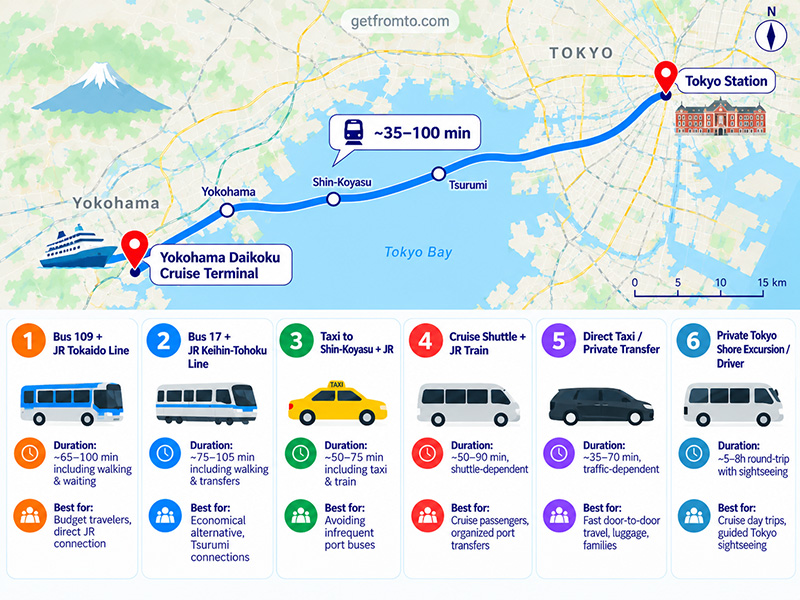
🚌 Option #1 — Yokohama City Bus 109 + JR Tokaido Line (Best Budget Route)
Low cost Direct JR connection Limited bus frequency
- Overview: Leave Daikoku Pier using the approved passenger route, walk to the Daikoku Zeikan Seimon-mae bus stop, take Yokohama Municipal Bus 109 to Yokohama Station, then board a JR Tokaido Line train directly to Tokyo Station.
- Travel time: Bus 109 takes approximately 25–40 minutes to Yokohama Station on suitable services. The JR Tokaido Line generally takes around 25–30 minutes to Tokyo Station. Allow approximately 65–100 minutes overall including the port-area walk, waiting, and station transfer.
- How to book (with price): Yokohama City Bus 109 generally costs ¥220 per adult. The ordinary JR fare from Yokohama Station to Tokyo Station is approximately ¥530, making the combined fare approximately ¥750 one-way. Check the Yokohama City Bus timetable and JR East train information.
- Bus departure point: Daikoku Zeikan Seimon-mae (大黒税関正門前), approximately an 8-minute walk from the terminal along the approved access route.
- Bus arrival: Yokohama Station East Exit bus terminal. Bus 109 commonly uses the eastern bus terminal area, with boarding arrangements depending on direction.
- Train departure: JR Yokohama Station, using the Tokaido Line toward Tokyo.
- Train arrival: Tokyo Station, with convenient access to Marunouchi, Yaesu, and connecting JR services.
- Important port restriction: The cruise terminal operates within a controlled logistics area. Do not attempt to walk through restricted cargo gates. Follow the route approved for disembarking passengers and use a cruise shuttle or licensed pickup if pedestrian access is not permitted.
- Pros: Economical, ordinary JR service to Tokyo Station, and no need to book intercity train seats. Cons: Infrequent buses, possible crowding with cruise passengers, and walking near an industrial port.
Step-by-step: Bus 109 + JR Tokaido Line from Daikoku Pier to Tokyo Station
- Disembark at Daikoku Cruise Terminal: Complete any immigration, customs, and cruise procedures before leaving the terminal.
- Confirm pedestrian access: Ask terminal staff whether you can reach the public bus stop via the approved passenger walking route. If not, use a permitted shuttle or taxi.
- Find Daikoku Zeikan Seimon-mae: Follow the designated route to the bus stop near the port customs entrance. The walk is approximately 8 minutes when the pedestrian route is available.
- Check Bus 109 departures: Use the official Yokohama bus route planner and select Daikoku Zeikan Seimon-mae to Yokohama Station. Confirm that your bus is traveling toward Yokohama Station.
- Pay the bus fare: Use a compatible Suica or PASMO card or another accepted payment method. The ordinary adult city bus fare is approximately ¥220.
- Travel to Yokohama Station: Ride Bus 109 toward Yokohama’s East Exit transportation hub.
- Walk to the JR railway platforms: Enter Yokohama Station and follow signs marked JR Lines and Tokaido Line.
- Purchase your train fare: Use your IC card or buy a ticket to Tokyo Station. Ordinary JR Tokaido Line trains do not require a seat reservation.
- Board a Tokyo-bound train: Take the JR Tokaido Line heading toward Tokyo Station. The railway journey generally takes around 25–30 minutes.
- Arrive at Tokyo Station: Follow signs toward the Marunouchi or Yaesu exits, depending on your next destination.
- Continue your journey: If you plan to stay near the station, search Tokyo Station hotels. If continuing to another city by Shinkansen, check Japan rail ticket options on Klook.
Getting to the main embarking points (Daikoku Zeikan Seimon-mae / Yokohama Station)
- Daikoku Pier Cruise Terminal: Located at 13 Daikoku-Futo, Tsurumi-ku, Yokohama. Access is controlled, particularly on cruise arrival days.
- Daikoku Zeikan Seimon-mae Bus Stop: The port’s officially listed access stop for Yokohama Municipal Bus 109. Use the approved passenger walking route.
- Yokohama Station East Exit: Bus 109 connects with the large bus terminal serving Yokohama Station.
- JR Yokohama Station: Follow Tokaido Line signs and choose a train heading toward Tokyo.
- Tokyo Station: Arrive at the main railway hub and choose the correct exit for Marunouchi, Yaesu, or your onward train.
- Locations/Trip Planner: 🔗 Google Map / 🔗 OpenStreetMap
🚆 Option #2 — Yokohama City Bus 17 + JR Keihin-Tohoku Line (Budget Alternative via Tsurumi)
Economical Direct JR train Bus schedule-dependent
- Overview: Travel from the Daikoku Pier area to JR Tsurumi Station using Yokohama Municipal Bus 17, then take a direct JR Keihin-Tohoku Line train toward Tokyo Station. This is an alternative when a suitable Bus 17 departure is available.
- Travel time: The bus generally takes approximately 25–40 minutes to Tsurumi, depending on the service. The JR train takes roughly 30–40 minutes to Tokyo. Allow 75–105 minutes overall with walking and waiting.
- How to book (with price): The ordinary city bus fare is approximately ¥220 per adult. Budget another ¥380–530 for the JR journey, giving an approximate total of ¥600–750 one-way. Check the official Yokohama bus journey planner and JR East services.
- Bus departure: The Daikoku Zeikan-mae / Daikoku Zeikan Seimon-mae area, using the correct stop for Bus 17 toward Tsurumi Station.
- Bus destination: Tsurumi Station East Exit, where JR Tsurumi and Keikyu Tsurumi stations are located nearby.
- Train line: JR Keihin-Tohoku Line, heading north toward Tokyo and Omiya. Some trains operate through services on the Negishi Line at the southern end.
- Tickets: An IC card is convenient for both the municipal bus and JR railway journey.
- Pros: Affordable, direct train from Tsurumi to Tokyo, and a useful alternative to Bus 109. Cons: Infrequent port buses, local-train journey time, and required walking between the bus terminal and railway platforms.
Step-by-step: Bus 17 + JR Keihin-Tohoku Line to Tokyo Station
- Exit the cruise terminal: Complete disembarkation procedures and ask staff for the approved passenger route to the municipal bus stop.
- Locate Bus 17: Find the appropriate bus stop serving Tsurumi Station and confirm the bus is heading toward Tsurumi rather than continuing around the port.
- Check the timetable: Use the Yokohama Municipal Bus journey planner to search Daikoku Zeikan-mae to Tsurumi Station.
- Pay your fare: Use an accepted IC card or other supported payment method when boarding.
- Ride to Tsurumi Station: Stay onboard until the bus reaches the Tsurumi Station area.
- Enter JR Tsurumi Station: Follow signs for JR Lines rather than Keikyu Railway, which operates from a separate nearby station.
- Find the Tokyo-bound platform: Look for the JR Keihin-Tohoku Line heading toward Tokyo, Ueno, or Omiya.
- Purchase your train ticket: Use an IC transport card or buy a paper ticket to Tokyo Station.
- Board the train: Remain onboard until Tokyo Station. The line runs through Kawasaki, Shinagawa, and other central Tokyo stations.
- Arrive at Tokyo Station: Follow signs to the Marunouchi or Yaesu exits.
- Plan onward travel: For a longer railway journey beyond Tokyo, check Japanese train booking options on Trip.com. Ordinary Keihin-Tohoku Line services themselves do not require advance tickets.
Getting to the main embarking points (Daikoku Bus 17 / JR Tsurumi Station)
- Daikoku Cruise Terminal: Ask port personnel whether you can leave via the approved public bus access route.
- Daikoku Zeikan-mae / Seimon-mae: Check the current stop location and correct Bus 17 direction.
- Tsurumi Station East Exit: The main destination of the municipal bus service from Daikoku Pier.
- JR Tsurumi Station: Follow signs for the Keihin-Tohoku Line toward Tokyo.
- Tokyo Station: Get off at the central JR station and use station signs for your onward destination.
- Locations/Trip Planner: 🔗 Google Map / 🔗 OpenStreetMap
🚕 Option #3 — Taxi to Shin-Koyasu + JR Train (Best Balance of Convenience & Cost)
Avoids bus waiting Direct JR train Taxi fare extra
- Overview: Take a taxi from Daikoku Cruise Terminal to JR Shin-Koyasu Station, then use the JR Keihin-Tohoku Line directly to Tokyo Station. Yokohama’s official cruise terminal information identifies Shin-Koyasu as one of the nearest practical railway stations by taxi.
- Travel time: Approximately 15 minutes by taxi from the pier to Shin-Koyasu in normal conditions, followed by approximately 30–40 minutes by JR train. Allow 50–75 minutes overall including station access and waiting.
- How to book (with price): Budget approximately ¥2,500–4,500+ for the taxi to Shin-Koyasu, plus about ¥500–650 per person for JR. Actual taxi fares depend on the pickup location, traffic, and operator. You can check GO Taxi or ask cruise staff for the approved terminal taxi arrangements.
- Departure: Daikoku Pier Cruise Terminal, using the authorized passenger taxi pickup area.
- Train station: JR Shin-Koyasu Station on the Keihin-Tohoku Line. Do not confuse it with Keikyu Shin-Koyasu Station, which belongs to a separate railway operator.
- Train destination: Tokyo Station, using the direct northbound Keihin-Tohoku Line service.
- Group value: Splitting the taxi fare among two to four passengers may make this option more affordable than booking a private vehicle all the way to Tokyo.
- Pros: Short taxi ride, no dependence on infrequent port buses, and a direct JR connection. Cons: Additional taxi expense, port pickup restrictions, and possible difficulty finding a taxi immediately after a large ship disembarks.
Step-by-step: Taxi to Shin-Koyasu + JR Keihin-Tohoku Line
- Complete disembarkation: Collect your luggage and follow the cruise terminal’s exit procedures.
- Find the authorized taxi pickup area: Ask terminal staff where taxis can collect passengers. Daikoku is a restricted port, so ordinary roadside pickups are not appropriate.
- Request a taxi to Shin-Koyasu: Tell the driver you want JR Shin-Koyasu Station (新子安駅), not a similarly named station on a different railway.
- Consider app booking: Check GO Taxi for available service, but confirm whether your driver is permitted to enter the terminal pickup area.
- Confirm the fare: Ask about the approximate metered fare and any booking surcharges before leaving.
- Travel to Shin-Koyasu Station: The drive usually takes around 15 minutes in ordinary conditions.
- Enter the JR station: Follow signs for the Keihin-Tohoku Line and the Tokyo-bound platforms.
- Pay the JR fare: Use Suica, PASMO, or an ordinary paper ticket. A reserved train ticket is not required.
- Take the train to Tokyo: Board a northbound Keihin-Tohoku Line train and remain onboard until Tokyo Station.
- Exit at Tokyo Station: Select the Marunouchi or Yaesu side based on your destination.
- Continue to your hotel: If traveling with luggage, compare hotels in Marunouchi or choose accommodation near the station for easy onward connections.
Getting to the main embarking points (Daikoku Taxi Pickup / Shin-Koyasu Station)
- Daikoku Pier Cruise Terminal: Use the cruise terminal’s designated passenger pickup zone rather than unauthorized logistics roads.
- JR Shin-Koyasu Station: Approximately 15 minutes from the terminal by taxi in normal traffic, according to the city’s visitor access guidance.
- Keikyu Shin-Koyasu Station: A separate station nearby. Make sure you use JR Shin-Koyasu for the direct Keihin-Tohoku Line route.
- Tokyo Station: The direct railway destination, providing access to Marunouchi, Yaesu, and long-distance rail platforms.
- Locations/Trip Planner: 🔗 Google Map / 🔗 OpenStreetMap
🚐 Option #4 — Cruise Shuttle + JR Train (Best for Organized Port Transfers)
Cruise-friendly Simpler port exit Ship-dependent
- Overview: Some cruise lines or port-call organizers arrange passenger shuttle services between Daikoku Pier and a transport hub in Yokohama. If your ship provides a shuttle to Yokohama Station, you can continue directly to Tokyo Station on the JR Tokaido Line.
- Travel time: Allow approximately 50–90 minutes overall when a convenient shuttle is operating, including shuttle travel, waiting, station access, and the JR train.
- How to book (with price): Confirm shuttle availability directly with your cruise operator. The service may be complimentary, included in a transfer package, or separately charged. A regular JR train from Yokohama Station to Tokyo Station costs approximately ¥530 one-way per adult. Check JR East for onward train information.
- Shuttle destinations: The exact destination depends on the cruise line. Yokohama Station is a useful transfer point, but do not assume every ship shuttle stops there.
- Departure location: Usually a designated cruise bus or coach boarding area within the approved passenger terminal zone.
- Ticketing: A cruise shuttle may require a boarding ticket, reservation, voucher, or proof of cruise passenger status.
- Return arrangements: If returning to your ship from Tokyo, confirm the shuttle’s last departure from Yokohama and the cruise all-aboard deadline.
- Pros: Convenient port access, less need to navigate industrial roads, and potentially inexpensive if the shuttle is included. Cons: Not guaranteed, variable destinations, and possible waits during large disembarkations.
Step-by-step: Cruise Shuttle + JR Train from Daikoku Pier to Tokyo Station
- Check with the cruise line: Before disembarking, ask whether a shuttle to Yokohama Station or another railway hub will operate.
- Confirm the destination: Find out whether the service ends at Yokohama Station, another city-center location, or a different transport terminal.
- Check shuttle tickets: Ask if the shuttle is free, requires a reservation, or is included in a paid cruise transfer package.
- Leave your ship: Complete the arrival procedures and proceed to the designated shuttle boarding area.
- Board the shuttle: Keep your cruise ticket or shuttle voucher available and place your luggage in the designated storage area.
- Travel to Yokohama: If your shuttle serves Yokohama Station, follow the passenger instructions and disembark at the correct stop.
- Enter JR Yokohama Station: Find the platforms for the JR Tokaido Line traveling toward Tokyo.
- Purchase your train ticket: Use a compatible IC card or an ordinary JR ticket. You can check JR East passenger information for the train service.
- Take the JR train to Tokyo Station: Travel directly to Tokyo, generally around 25–30 minutes from Yokohama.
- Arrive in Tokyo: Follow signs to the correct station exit. You can search for luggage storage in Tokyo if you plan to explore before checking into your hotel.
- Plan your return if necessary: Check the last available cruise shuttle and allow enough time for the train ride, shuttle transfer, and terminal security.
Getting to the main embarking points (Daikoku Cruise Shuttle / Yokohama Station)
- Daikoku Cruise Terminal Shuttle Area: Follow your cruise line’s boarding instructions to the approved coach pickup zone.
- Yokohama Station: A major railway interchange with direct JR services to Tokyo Station. Use this route only if your cruise shuttle actually stops there.
- Alternative Shuttle Destinations: If the cruise operator uses another drop-off location, check local rail or taxi connections before departing.
- JR Yokohama Station: Follow signs for the JR Tokaido Line toward Tokyo.
- Tokyo Station: Arrive at the main railway hub and use the appropriate exit for your onward destination.
- Locations/Trip Planner: 🔗 Google Map / 🔗 OpenStreetMap
🚘 Option #5 — Direct Taxi or Private Transfer (Fastest Door-to-Door)
Direct transportation Best for luggage Higher cost
- Overview: Reserve a taxi, private car, or minivan directly from Yokohama Daikoku Cruise Terminal to Tokyo Station. This is suitable for passengers carrying several suitcases, groups, families, or travelers who prefer to avoid public transportation transfers.
- Distance: Approximately 30–40 km by road, depending on the expressway route and Tokyo Station entrance.
- Travel time: Approximately 35–70 minutes under normal traffic conditions. Congestion around the Shuto Expressway and central Tokyo can increase travel time.
- How to book (with price): Budget approximately ¥15,000–25,000+ one-way per vehicle, including potential tolls, as a broad estimate. Private minivans or luxury vehicles can cost more. Compare Yokohama private transfers on GetTransfer or arrange a licensed operator through your cruise line.
- Taxi alternatives: GO Taxi is widely used in Japan, while Uber provides taxi-booking services in supported locations. Confirm whether a driver can access the restricted Daikoku pickup zone.
- Pickup location: Daikoku Cruise Terminal’s authorized taxi or pre-booked vehicle area. Drivers may need to show passenger booking documentation at the port gate.
- Drop-off: Tokyo Station Marunouchi or Yaesu side, depending on your next destination and available vehicle access.
- Fixed-price arrangement: Ask whether the quote includes expressway tolls, port pickup, waiting time, luggage, and any nighttime surcharges.
- Pros: Minimal transfers, direct travel, flexible pickup, and convenient luggage handling. Cons: Expensive for solo travelers, traffic-dependent, and limited pickup space during major cruise disembarkations.
Step-by-step: Direct Taxi or Private Transfer from Daikoku to Tokyo Station
- Choose a vehicle: Decide whether a standard taxi, sedan, or minivan is appropriate for your passengers and luggage.
- Compare quotes: Check private transfers from Yokohama or ask your cruise line for a recommended provider.
- Specify the correct terminal: Enter Daikoku Pier Cruise Terminal, 13 Daikoku-Futo, Tsurumi-ku, Yokohama. Do not confuse it with Osanbashi or Shinko Pier.
- Provide cruise details: Include your ship name, disembarkation time, passenger count, and any special accessibility requirements.
- Choose the destination: Select Tokyo Station Marunouchi, Tokyo Station Yaesu, or the precise entrance near your hotel.
- Confirm all charges: Check whether the quote includes highway tolls, waiting time, parking, and port access arrangements.
- Complete your booking: Save the driver contact details and meeting instructions.
- Meet the driver: After clearing the cruise terminal, follow the operator’s instructions to the authorized vehicle pickup area.
- Travel toward Tokyo: The driver will typically use the expressway network along Tokyo Bay or another route based on traffic.
- Arrive at Tokyo Station: Disembark at the agreed entrance and collect your luggage.
- Continue your trip: If staying overnight, compare hotels near Tokyo Station. For sightseeing, search walking tours around central Tokyo.
Getting to the main embarking points (Daikoku Taxi Area / Tokyo Station)
- Daikoku Cruise Terminal: Located in a restricted port area; only authorized passengers, workers, and permitted vehicles can enter.
- Passenger Taxi Pickup: Follow terminal staff directions to the temporary taxi pool or approved hired-car pickup location.
- Tokyo Station Marunouchi: Useful for the historic station frontage, Imperial Palace area, and hotels on the western side.
- Tokyo Station Yaesu: Useful for east-side hotels, commercial buildings, and intercity bus connections.
- Hotel Pickup Alternative: If your accommodation is near Tokyo Station, request direct hotel drop-off rather than carrying luggage through the station.
- Locations/Trip Planner: 🔗 Google Map / 🔗 OpenStreetMap
🚐 Option #6 — Private Tokyo Shore Excursion or Driver (Best for Sightseeing)
Guided sightseeing Flexible itinerary Higher cost
- Overview: Arrange a private shore excursion from Daikoku Cruise Terminal to Tokyo, using Tokyo Station or Marunouchi as a starting point for sightseeing. Tours may also include the Imperial Palace area, Ginza, Asakusa, or other central attractions before returning to Yokohama.
- Travel time: Approximately 35–70 minutes each way by vehicle, depending on traffic.
- Total duration: Usually around 5–8 hours for an organized round-trip sightseeing excursion, depending on the number of stops and your cruise schedule.
- How to book (with price): Budget approximately ¥45,000–100,000+ per group for a privately arranged excursion, with actual prices depending on guiding, vehicle type, admissions, and duration. Search Yokohama-to-Tokyo private tours on GetYourGuide or Tokyo private tours on Klook. Confirm that Daikoku port pickup is specifically included.
- Tokyo Station stop: Marunouchi is a useful starting point for photos of Tokyo Station’s historic red-brick building and the nearby Imperial Palace district.
- Possible attractions: Marunouchi, Imperial Palace East Gardens, Ginza, Asakusa, Senso-ji Temple, or Tokyo Skytree, depending on tour length.
- Port arrangements: Confirm the ship name, actual docking location, vehicle access permission, and pickup documentation with your operator.
- Return journey: Book your return with enough time before the cruise all-aboard deadline. Independent excursion providers may not guarantee that the ship will wait for late passengers.
- Pros: Organized pickup, efficient sightseeing, less navigation, and flexible group itineraries. Cons: Higher cost, traffic delays, and potential additional charges for attraction tickets or extended guiding.
Step-by-step: Private Shore Excursion from Daikoku Cruise Terminal to Tokyo
- Check your cruise schedule: Confirm your ship’s arrival time, earliest possible disembarkation, and final all-aboard deadline.
- Search for tours: Browse Yokohama and Tokyo private tours or Tokyo sightseeing excursions on Klook.
- Confirm port pickup: Make sure the tour operator can pick you up directly at Daikoku Pier Cruise Terminal, not only at central Yokohama or Tokyo hotels.
- Choose your itinerary: Select Tokyo Station, Marunouchi, the Imperial Palace area, or other attractions you want to visit.
- Review the total cost: Check whether the fare includes a driver, licensed guide, attraction admission, highway tolls, parking, and return transportation.
- Complete your reservation: Provide your ship name and cruise terminal information, then save the confirmation.
- Meet your driver or guide: After disembarking, proceed to the approved tour coach or private vehicle meeting point.
- Travel to Tokyo: Drive toward Tokyo Station or the first sightseeing stop in your itinerary.
- Explore central Tokyo: Visit Marunouchi and other attractions. If you prefer additional independent sightseeing, compare Tokyo walking tours that fit your schedule.
- Manage luggage if necessary: If your tour ends in Tokyo rather than returning to the ship, check luggage storage in Tokyo before continuing independently.
- Return to Daikoku: If you are rejoining your cruise ship, travel back with a substantial time buffer for traffic and port security.
Getting to the main embarking points (Daikoku Cruise Excursion Pickup / Tokyo Attractions)
- Daikoku Pier Cruise Terminal: The meeting point must be coordinated with your operator because the port is restricted to authorized visitors and vehicles.
- Tour Coach and Private Vehicle Area: Follow terminal signs and crew directions to the assigned departure area.
- Tokyo Station Marunouchi: A convenient place for photographing the historic station frontage and beginning central Tokyo sightseeing.
- Imperial Palace Area: Located near Marunouchi and often included in central Tokyo private tours.
- Ginza: A nearby shopping and dining district that can be included in a longer excursion.
- Asakusa: A further sightseeing destination known for Senso-ji Temple, suitable when your schedule allows.
- Return to Daikoku: Confirm the departure time from your final Tokyo stop and arrange direct transport back to your cruise terminal.
- Locations/Trip Planner: 🔗 Google Map / 🔗 OpenStreetMap
FAQ (Yokohama Daikoku Cruise Terminal to Tokyo Station)
How far is Tokyo Station from Yokohama Daikoku Cruise Terminal?
Tokyo Station is approximately 30–40 km by road from Daikoku Pier Cruise Terminal, depending on the route. A direct taxi generally takes around 35–70 minutes, while public transport combinations typically take approximately 50–105 minutes including transfers, walking, and waiting.
What is the cheapest way to get from Daikoku Cruise Terminal to Tokyo Station?
Using a Yokohama municipal bus followed by a JR train is generally the cheapest option. Bus 109 to Yokohama Station costs approximately ¥220, followed by a JR ticket of around ¥530 to Tokyo Station, making the combined fare approximately ¥750 one-way. Bus 17 through Tsurumi can be similarly economical, depending on the JR fare and the service available.
Is there a train station at Daikoku Pier Cruise Terminal?
No. The terminal is located in an industrial port area without an adjacent railway station. Travelers must first reach a suitable station by bus, taxi, or cruise shuttle. JR Shin-Koyasu, JR Tsurumi, and JR Yokohama are useful transfer stations, depending on the chosen route.
Is there a direct bus from Daikoku Cruise Terminal to Tokyo Station?
There is no regular direct public bus service from Daikoku Cruise Terminal to Tokyo Station that visitors should rely on. The practical public transport route uses Yokohama City Bus 109 or Bus 17 to a JR railway station, followed by a train. A cruise line may arrange special shuttle services, but availability and destinations vary.
Can I walk from Daikoku Cruise Terminal to the nearest railway station?
Walking to a railway station is not practical. Daikoku Pier is an extensive industrial area, and cruise terminal access is controlled. The nearest useful stations are approximately 15 minutes away by taxi, depending on the station and traffic. A public bus stop is located closer to the terminal, but passengers must follow the approved walking route and port access instructions.
What is the best way to reach Tokyo Station with heavy luggage?
A direct taxi or pre-booked private transfer is generally the most convenient option because it avoids bus waiting, luggage transfers, and navigating busy railway stations. For a less expensive alternative, take a short taxi ride to JR Shin-Koyasu Station and continue by direct JR Keihin-Tohoku Line train to Tokyo Station.





Related Tours/Services
Popular Routes
Recent Routes
- How to get from Dubrovnik Gruz Cruise Port to Dubrovnik Old Town
- How to get from Dublin Dun Laoghaire Cruise Port to Dublin City Centre
- How to get from Yokohama Daikoku Cruise Terminal to Tokyo Station
- How to get from Puerto Princesa Cruise Port to Underground River
- How to get from Adelaide Outer Harbor Cruise Terminal to Adelaide City Centre
- How to get from Port Louis Cruise Terminal to Flic en Flac
- How to get from Durban Cruise Terminal to uShaka Marine World
- How to get from Walvis Bay Cruise Port to Swakopmund
- How to get from PortMiami Cruise Terminal to Miami International Airport
- How to get from Samarkand to Bukhara
Top Travel Gears

LISEN Airplane Travel Essentials kitchen Tool Airplane Phone Holder Desk | Home & Kitchen Tools (Cookbook Stands) Phone Stand MagSafe Travel Accessories Flying Long Flight Travel Tech Gifts for Men

zelin Anti Theft Zipper Clips, Travel Essentials, Carabiner, 4Pcs Grey | Elegant Zinc Alloy Zipper Pull Locks, Airplane Gadgets and Travel Accessories for Backpacks, Commuting and Outdoor Safety
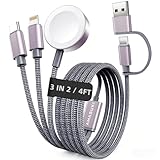
2026 Travel Essentials for Apple Watch Charger,Cruise Vacation Camping Essentials,iPhone Charger,Multi Charging Cable,3 in 2 Charging Docks for iWatch Series 12 11-2/Ultra,iPhone 18 17-12,Car

FYY Electronic Organizer, Travel Tech Pouch Bag, Cable Organizer Black | Wrist Strap, Waterproof, Double Layers Portable Electronics Travel Carrying Case for Cord, Charger, Daily Business Trips Use
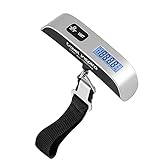
travel inspira Luggage Scale Digital Suitcase Weight Scale for Travel | Blue Backlight, Rubber Paint Handle, Tare & Data Lock, Auto-Off, Battery Included, 110 Pounds, Travel Essentials
