

How to get from Osaka to Tokyo
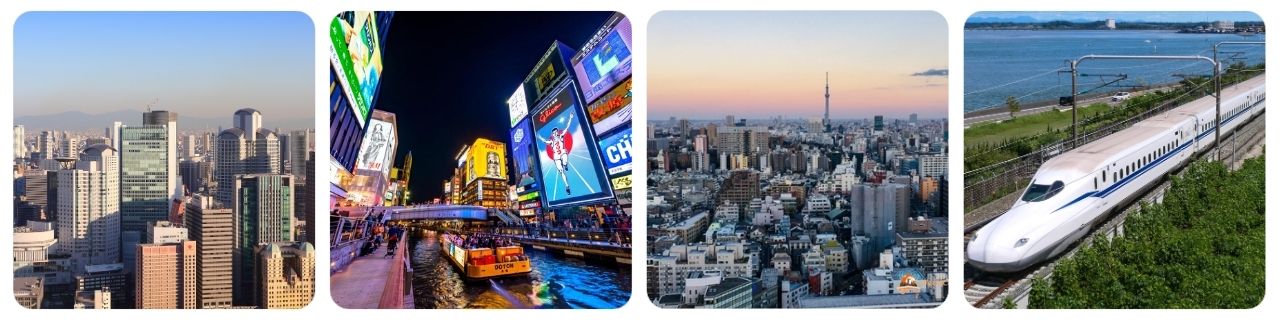
Osaka and Tokyo are linked by some of Japan’s fastest trains, busiest highways, and most convenient flights, so choosing how to travel between them mostly comes down to your budget, schedule, and luggage needs.
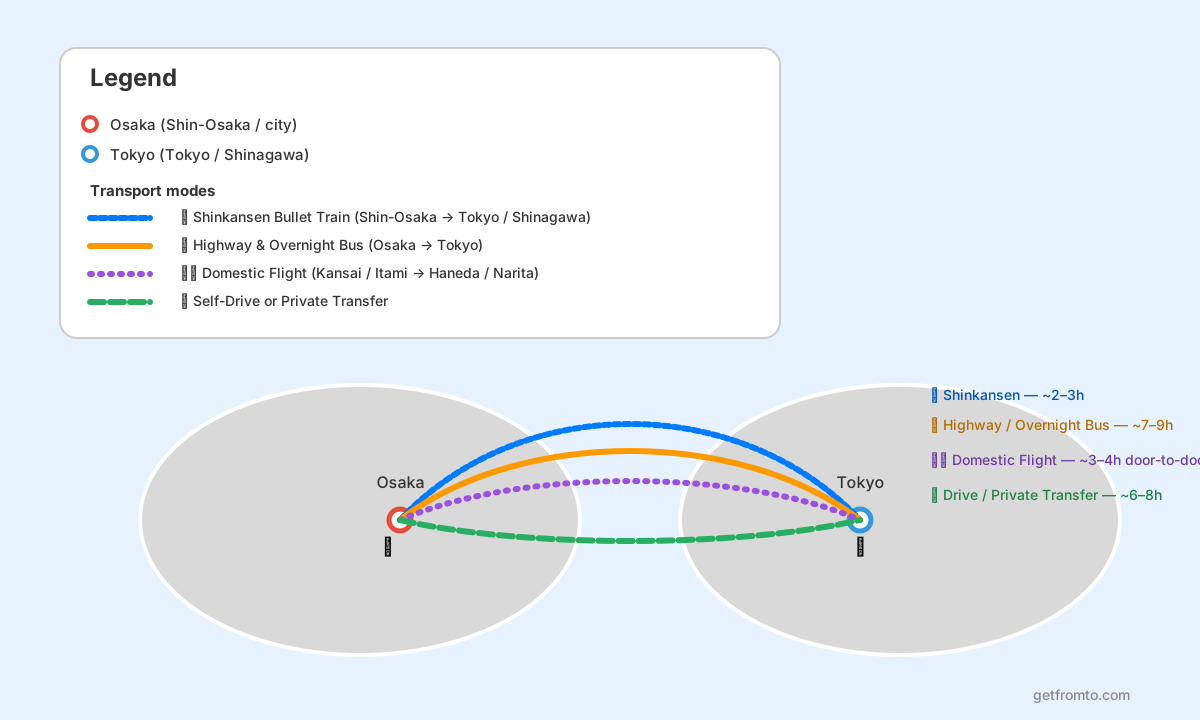
At A Glance (Osaka to Tokyo)
| Mode | Duration | Best For |
|---|---|---|
| 🚅 Shinkansen Bullet Train (Shin-Osaka → Tokyo/Shinagawa) | ~2–3h station-to-station | Most travelers, fast & comfortable |
| 🏷️ Cost: ~¥14,000–¥17,000 one-way (ordinary seat) » check trains | Tokaido Shinkansen options | ||
| 🚌 Highway & Overnight Bus (Osaka → Tokyo) | ~7–9h (often overnight) | Tight budgets, saving a hotel night |
| 🏷️ Cost: ~¥4,000–¥10,000 one-way depending on comfort class » compare buses | alt. listings | ||
| ✈️ Domestic Flight (Kansai/Itami → Haneda/Narita) | ~1h flight (~3–4h door-to-door) | Those connecting to other flights, points/miles users |
| 🏷️ Cost: ~¥5,000–¥20,000 one-way economy (wide range by season) » search flights | Trip.com OSA→TYO | ||
| 🚗 Self-Drive or Private Transfer | ~6–8h (traffic & stops dependent) | Road-trippers, families, lots of luggage |
| 🏷️ Cost: Tolls + fuel ~¥18,000–¥25,000 per car + rental/driver fees » compare car rentals | Osaka→Tokyo private transfers | ||
Which Option or Route Should You Choose?
- Fastest / Most convenient: For most trips, the Shinkansen bullet train wins – it’s fast, punctual, and connects city center to city center with minimal stress.
- Cheapest / Most economical: If you’re watching your budget and don’t mind sleeping on the move, the highway or overnight bus is usually the lowest-cost option and can save you one night of accommodation.
- Best with flight connections: If you’re arriving or departing on an international flight anyway, a short domestic hop between Osaka and Tokyo can make sense, especially when bundled with your long-haul ticket.
- Most scenic / flexible schedule: Travelers who love road trips and off-the-beaten-path stops will enjoy self-driving or booking a private transfer, with detours via Kyoto, Nagoya, Hakone, or Mt Fuji area.
How to Book and Practical Tips
- Reserve Shinkansen seats online: Use the official SmartEX online reservation system for Tokaido Shinkansen tickets, or compare third-party options on 12Go and Klook if you prefer English interfaces and credit-card payment.
- Check passes and deals: If you’re riding multiple long-distance JR trains in one trip, look into nationwide or regional rail passes via official JR channels or comparison tools such as 12Go’s Osaka–Tokyo overview before you commit to single tickets.
- Book buses early in peak seasons: Popular overnight buses sell out around Golden Week, Obon, and New Year. Use 12Go or bus listings on Klook to compare seat classes (standard vs. premium/”3-row” seats).
- Use flight aggregators smartly: Compare domestic fares on Booking.com Flights and Trip.com; then check whether ANA/JAL have special tourist passes or campaigns that might beat those prices.
- Stay near stations for easy departures: If you have an early train or bus, consider hotels near Shin-Osaka, Osaka/Umeda or Namba, and near Tokyo or Shinjuku stations – you can compare options on Booking.com or Trip.com.
- Luggage logistics: Japanese trains and buses have limited space for large suitcases. Consider coin lockers plus services like Radical Storage in Osaka and Radical Storage in Tokyo if you want to explore baggage-free.
- Last-mile & late-night rides: For early/late trips or lots of luggage, combine trains with taxis or ride-hailing apps like Uber or GO (JapanTaxi). You can also prebook fixed-price transfers with Welcome Pickups in Osaka or intercity rides via GetTransfer.
- Plan sightseeing days around your travel: Schedule Osaka or Tokyo city tours (for example via GetYourGuide Osaka or attractions on Klook) for the days before or after your intercity move so you’re not rushing between activities and long-distance travel.
- Consider bikes and scooters for side trips: If you like exploring neighborhoods or nearby countryside under your own power, browse two-wheel rentals on BikesBooking (bicycles, scooters, motorbikes) around Osaka, Tokyo, or stopover towns.
🚅 Option #1 — Shinkansen Bullet Train (Fastest & Most Convenient)
City-center to city-center Very reliable Higher cost than bus
- Overview: Travel the Tokaido Shinkansen line from Shin-Osaka Station to Tokyo or Shinagawa Station. The fastest Nozomi services take about 2h 20m; Hikari is slightly slower, and Kodama makes more stops but can be cheaper with some passes.
- How to book (with price): A standard ordinary-car ticket from Shin-Osaka to Tokyo typically costs around ¥14,000–¥17,000 one-way depending on train type and seat (unreserved vs. reserved vs. Green car). Reserve directly via the official SmartEX online system, or compare options on 12Go and Klook which often show multiple departure times and seat classes in English.
- Pros: Fastest land route; extremely punctual; frequent departures from early morning to late evening; comfortable seats with power outlets on most trains; easy transfers to local JR and subway lines in both Osaka and Tokyo.
- Cons: More expensive than buses; you need to keep your large luggage in designated racks or at the back of cars; peak dates (holidays, weekends) can sell out reserved seats, so advance booking is wise.
- Who it suits: First-time visitors, families, business travelers, and anyone who values time and comfort over absolute lowest price.
Step-by-step: Shinkansen Bullet Train
- Get to Shin-Osaka Station: From Umeda/Osaka Station area, ride the Osaka Metro Midosuji Line north one stop to Shin-Osaka, or take local JR trains that call at both Osaka and Shin-Osaka. From Namba, the Midosuji Line runs directly to Shin-Osaka. Check the Osaka Metro route map if you’re unsure of lines.
- Buy or pick up your ticket: At Shin-Osaka, follow signs for “Shinkansen” and use the JR ticket machines or the staffed “Midori no Madoguchi” counters to purchase. If you booked via SmartEX, 12Go, Klook, or another service, follow their instructions to issue the physical ticket or scan the QR code at the gates.
- Choose your train: Check departure boards for Nozomi, Hikari, or Kodama services bound for Tokyo or Shinagawa. Aim for a departure that matches your hotel check-in or onward connection.
- Boarding and onboard tips: Line up at the car number printed on your ticket. Place large luggage in the racks at car ends or in the oversized-luggage area if you reserved it. You can buy snacks and drinks at station kiosks; some trains also have trolley service.
- Arriving in Tokyo or Shinagawa: At Tokyo Station, transfer easily to JR Yamanote or Chuo lines, or to the subway using the Tokyo Metro subway map. Shinagawa can be more convenient if your hotel is in south Tokyo or if you’re heading straight to Haneda Airport.
Getting to the main embarking points (Shin-Osaka, Tokyo & Shinagawa)
- From central Osaka (Umeda/Osaka Station) to Shin-Osaka: Take the Osaka Metro Midosuji Line north (about 5 minutes) or a local JR train. Allow 20–30 minutes including walking and navigation.
- From Namba to Shin-Osaka: Ride the Midosuji Line directly from Namba Station to Shin-Osaka; it’s one simple subway ride with clear English signage.
- Within Tokyo: From Tokyo Station, JR’s Yamanote Line loops around key areas like Shinjuku, Shibuya, and Ueno; from Shinagawa, Yamanote and Keikyu lines connect quickly to south/central Tokyo and Haneda Airport.
- Taxi & ride-hailing: If you have heavy luggage or arrive late, taxis are plentiful at all three stations, and you can also use apps such as Uber or GO to request a ride.
- Locations/Trip Planner: 🔗 Google Map / 🔗 OpenStreetMap
🚌 Option #2 — Highway & Overnight Bus (Cheapest, Good Value)
Low cost Sleeper-style seats Longer travel time
- Overview: Long-distance buses connect Osaka (Umeda/Osaka Station area, Namba/OCAT, etc.) with Tokyo (often Shinjuku, Tokyo Station, or Ikebukuro). Travel time is usually 7–9 hours, and many services run overnight so you sleep on the move and wake up in Tokyo.
- How to book (with price): Basic seats can start around ¥4,000–¥6,000, while more spacious “3-row” or premium buses run closer to ¥7,000–¥10,000. Compare multiple operators and seat types on 12Go or search “Osaka to Tokyo bus” on Klook.
- Pros: Cheapest overall; saves one hotel night on overnight routes; direct point-to-point drop-offs in central Tokyo; some buses offer Wi‑Fi, power outlets, footrests, and privacy curtains.
- Cons: Less legroom than trains or planes; sleep quality varies; traffic can cause delays; large suitcases may be limited to one per person in the luggage hold.
- Who it suits: Budget travelers, backpackers, and anyone comfortable sleeping on buses who wants to maximize daytime sightseeing.
Step-by-step: Highway & Overnight Bus
- Pick your route and operator: Decide whether you’d like to depart from Umeda/Osaka Station area or from Namba (often via OCAT). Use 12Go’s Osaka–Tokyo bus listings to compare departure times, arrival terminals, and seat layouts.
- Book tickets: Reserve online with your preferred operator or via platforms such as 12Go or Klook. You’ll receive an e-ticket or booking confirmation – screenshot or print this in case you lose connectivity.
- Arrive at the terminal early: Aim to be at the meeting point at least 20–30 minutes before departure. Larger terminals like Umeda and OCAT have several bus bays, so allow time to find the correct one.
- Board and stow luggage: Check in with staff, place large luggage in the underfloor hold (they may tag your bags), and bring essentials (water, jacket, earplugs, eye mask) onboard with you.
- Overnight ride & rest stops: Buses typically stop at highway service areas every 2–3 hours for bathroom breaks. Use these to stretch and stay comfortable.
- Arrival in Tokyo: Common arrival points include Shinjuku, Tokyo Station, and Ikebukuro. From there, use JR or subway lines to reach your accommodation, or switch to a taxi or ride-hailing app if you’re traveling with heavy bags.
Getting to the main embarking points (Osaka Bus Terminals)
- Umeda / Osaka Station area: Many buses depart from around Osaka Station or nearby Umeda terminals. From most city areas you can ride JR or Osaka Metro to Osaka/Umeda, then follow signs to the appropriate highway-bus stop.
- Namba / OCAT: OCAT (Osaka City Air Terminal) is a major bus hub near JR Namba Station. Reach Namba by subway (Midosuji, Yotsubashi, or Sennichimae lines) or Nankai Railway, then follow signs to OCAT.
- Local transfers: If you arrive with lots of luggage or late at night, short hops by taxi or ride-hailing app (Uber, GO) to the terminal can be worth it to avoid crowded trains.
- Locations/Trip Planner: 🔗 Google Map / 🔗 OpenStreetMap
✈️ Option #3 — Domestic Flight (Best With Airport Connections)
Short flight time Good for onward flights More airport transfers
- Overview: Flights between Osaka and Tokyo typically use Kansai International Airport (KIX) or Osaka Itami (ITM) on the Osaka side, and Haneda (HND) or Narita (NRT) on the Tokyo side. Flight time is about 1 hour, but check-in, security, and transfers usually make the total journey 3–4 hours door-to-door.
- How to book (with price): One-way fares can range roughly from ¥5,000–¥20,000 depending on airline, time, and how early you book. Compare options via Booking.com Flights, Trip.com, or multi-modal searches like 12Go’s flight listings.
- Pros: Ideal if you’re already at an airport (e.g., connecting from an international flight); can be cheaper than Shinkansen when flights are on sale; good use of airline miles or regional tourist air passes.
- Cons: Airports are outside city centers; you must budget time for security and boarding; weather-related delays are more likely than with trains; you’ll need to manage luggage weight limits.
- Who it suits: Travelers with tight international connections, people collecting airline miles, and those staying near airports or in areas with easy airport access.
Step-by-step: Flight via Osaka & Tokyo Airports
- Choose your airport pair: For most travelers, ITM↔HND and KIX↔HND are the most convenient pairs. Haneda is closer to central Tokyo than Narita; Itami is closer to central Osaka than Kansai.
- Book your ticket: Use Booking.com Flights or Trip.com to compare airlines, then confirm directly with your chosen carrier if you want to manage seats and changes via the airline’s app.
- Reach the airport in Osaka: From central Osaka, reach Kansai Airport by JR Kansai Airport Rapid, Nankai Railway, or airport limousine buses; Itami is accessible by bus or monorail from Umeda/Osaka. For maximum comfort, consider a prebooked transfer with Welcome Pickups or a private transfer via GetTransfer.
- Check in & security: Arrive about 2 hours early for domestic flights. Many airlines offer online check-in; you can then drop bags at dedicated counters and proceed to security.
- Arrival in Tokyo: From Haneda, use the Tokyo Monorail or Keikyu Line to central Tokyo; from Narita, use Narita Express or other limited-express services. Once you reach Tokyo Station, connect to JR or subway lines for your final destination.
Getting to the main embarking points (Osaka & Tokyo Airports)
- From central Osaka to Kansai Airport (KIX): JR’s Kansai Airport Rapid and Nankai’s airport trains run regularly from the city; airport buses are a comfortable alternative from major hotel districts.
- From central Osaka to Itami Airport (ITM): Limousine buses serve Umeda/Osaka Station, Namba, and other hubs; you can also ride the monorail from Hotarugaike.
- From Haneda to central Tokyo: The Tokyo Monorail connects to JR lines at Hamamatsucho, while Keikyu Line connects to Shinagawa and beyond.
- From Narita to central Tokyo: Narita Express, Keisei Skyliner, and other limited-express trains link the airport with Tokyo, Ueno, and other key stations.
- Taxi & ride-hailing: Taxis and ride-hailing apps (Uber, GO) are available at all airports, though they’re significantly more expensive than rail – best for late-night arrivals, groups, or heavy luggage.
- Locations/Trip Planner: 🔗 Google Map / 🔗 OpenStreetMap
🚗 Option #4 — Self-Drive or Private Transfer (Scenic Road Trip)
Maximum flexibility Great with lots of luggage Tolls & parking costs
- Overview: Driving between Osaka and Tokyo covers roughly 500 km via expressways (often the Meishin + Tomei or Shin-Meishin + Shin-Tomei routes). Expect 6–8 hours including rest stops, with chances to detour via Kyoto, Nagoya, Shizuoka, Hakone, or Mt Fuji area.
- How to book (with price): Standard rental cars typically start around ¥8,000–¥15,000 per day depending on size and season; expressway tolls and fuel can add another ¥18,000–¥25,000 for the full trip. Compare rental deals on Booking.com Car Rentals or Trip.com car rentals. If you prefer not to drive, book a door-to-door private transfer on GetTransfer.
- Pros: Freedom to stop at viewpoints and onsen towns; easy to manage bulky luggage or shopping; ideal for families or friends sharing the cost.
- Cons: Expressway tolls are high; driving in dense urban traffic and finding parking in Tokyo can be stressful; you’ll need an appropriate license (often an International Driving Permit) and must be comfortable driving on the left.
- Who it suits: Confident drivers who enjoy long-distance road trips, photographers chasing scenic views, and groups who prefer private transport over trains and buses.
- Side-trip ideas: Use the flexibility of a car to stop at Lake Biwa, Nagoya, Hamamatsu, Shizuoka’s tea fields, or Hakone for hot springs and Mt Fuji views. For shorter explorations around these areas, you can also look at motorcycles or scooters via BikesBooking.
Step-by-step: Self-Drive or Private Transfer
- Confirm your license & insurance: Make sure your home-country license plus any required International Driving Permit are valid in Japan, and verify insurance coverage with your rental company.
- Pick up the vehicle: Rent from locations near Shin-Osaka, Osaka/Umeda, or the airports. When booking through Booking.com, Trip.com, or directly with major Japanese rental companies, choose ETC (electronic toll) options to simplify expressway payments.
- Plan your route & stops: Use Google Maps or a car navigation system to plan expressway segments and service areas. Build in regular breaks every 1–2 hours, especially if you’re driving after a long flight.
- Drive safely to Tokyo: Keep to speed limits, watch for variable limits in tunnels and urban stretches, and be prepared for congestion near big cities and on holiday weekends.
- Parking & drop-off: In Tokyo, pre-check your hotel’s parking options or look for coin parking near your accommodation. If your rental plan allows, return the car at a Tokyo branch to avoid driving in the densest central districts.
Getting to the main embarking points (Rental Depots & Pickup Spots)
- Osaka city depots: Many major rental brands have offices near Osaka Station/Umeda and Shin-Osaka; you can walk or take a short subway ride to pick up your car.
- Airport depots: Kansai and Itami airports both offer multiple rental counters; this can be convenient if you’re starting the drive straight after landing.
- Drop-off in Tokyo: Popular drop-off areas include Tokyo Station, Shinjuku, Shibuya, and airport branches at Haneda and Narita – choose the one that best matches your onward plans.
- Locations/Trip Planner: 🔗 Google Map / 🔗 OpenStreetMap
FAQ (Osaka to Tokyo)
Is the Shinkansen or a flight better between Osaka and Tokyo?
For most visitors, the Shinkansen is the smoother option: you travel directly between city centers in around 2–3 hours, with minimal security hassle and very reliable timings. Flights can be faster in the air and may be cheaper on sale, but once you add travel to/from airports and check-in time, the overall journey is often longer and more tiring.
Do I need to book Shinkansen tickets in advance?
Outside of major holidays you can often buy tickets on the day, but for peace of mind – especially if you want specific seats or are traveling as a group – booking a reserved seat a few days ahead is wise. During Golden Week, Obon, and New Year, try to reserve as early as your schedule allows via SmartEX, JR ticket offices, or trusted platforms like Klook and 12Go.
Is a Japan Rail Pass worth it just for Osaka ↔ Tokyo?
A nationwide JR Pass is usually only good value if you’re making multiple long-distance trips (for example Tokyo–Osaka–Hiroshima–Fukuoka) within 7–21 days. For a simple Osaka–Tokyo return with limited extra JR rides, individual Shinkansen tickets or smaller regional passes are often cheaper – compare the pass price to your full itinerary value before deciding.
How much luggage can I bring on trains and buses?
On Shinkansen, you may bring standard suitcases, but very large or multiple bags should be placed in designated spaces or booked as oversized luggage on certain cars. Buses typically allow one large suitcase per person plus a small cabin bag. If you’re carrying more than that – or just want to travel light – use coin lockers and services like Radical Storage near Osaka and Tokyo stations.
Is it easy to get around Osaka and Tokyo stations in English?
Yes. Major stations such as Shin-Osaka, Osaka/Umeda, Tokyo, Shinagawa, and Shinjuku have extensive English signage, platform numbers, and color-coded lines. Station staff are used to helping international visitors, and official route maps and tourist information centers make navigation much easier than many first-time visitors expect.
What’s the safest option if I’m arriving late at night?
Shinkansen services finish around late evening, so if you arrive very late, an overnight bus into Tokyo (arriving at dawn), or a domestic flight plus late-night rail transfer, might work. If you’ll be arriving at a station or airport after most trains have stopped, plan ahead for a taxi or prebooked ride via Welcome Pickups or GetTransfer, especially if you’re carrying large luggage or traveling with children.
Related Tours/Services
Popular Routes
Recent Routes
- How to get from Cancún Airport to Playa del Carmen
- How to get from Cape Town Airport to Table Mountain
- How to get from Beijing Capital Airport to Summer Palace
- How to get from Shanghai Pudong Airport to Nanjing Road
- How to get from Hong Kong International Airport to Disneyland Hong Kong
- How to get from Reykjavik Keflavík Airport to Blue Lagoon
- How to get from Gold Coast Airport to Surfers Paradise
- How to get from Honolulu Airport to Pearl Harbor
- How to get from Los Angeles Airport to Santa Monica Pier
- How to get from San Francisco Airport to Fisherman’s Wharf
Top Travel Gears

Travel Utensils with Case, Quatish Portable Silverware Set for Work, Stainless Steel Reusable Travel Cutlery Set, Fork and Spoon Set for Camping, Picnic, Gadgets, Lunch Box for Men, Black

zelin Anti Theft Zipper Clips Double Opening Small Carabiner Clips, 4Pcs Elegant Zinc Alloy Zipper Pull Replacement for Travel, Commuting and Camping (Space Grey)

Gillette Venus Extra Smooth Travel Razor Kit for Women, Mini Handle + Refill + Case

TakeToday Collapsible Water Bottles 21oz (600mL), Foldable Platinum Silicone Travel Water Bottle with Straw & Carry Strap, Leak-Resistant Screw Lid, Wide Mouth, BPA-Free for Hiking, Camping, Travel

Zuihug 1Pack Travel Pill Organizer - 10 Compartments Pill Case, Compact and Portable Pill Box, Perfect for On-The-Go Storage, Pill Holder for Purse Gray
