

How to get from Puerto Natales to Torres del Paine
Chile · Mountains & Hiking Regions · Nature & Outdoors · Patagonia · Puerto Natales · Torres del Paine National Park
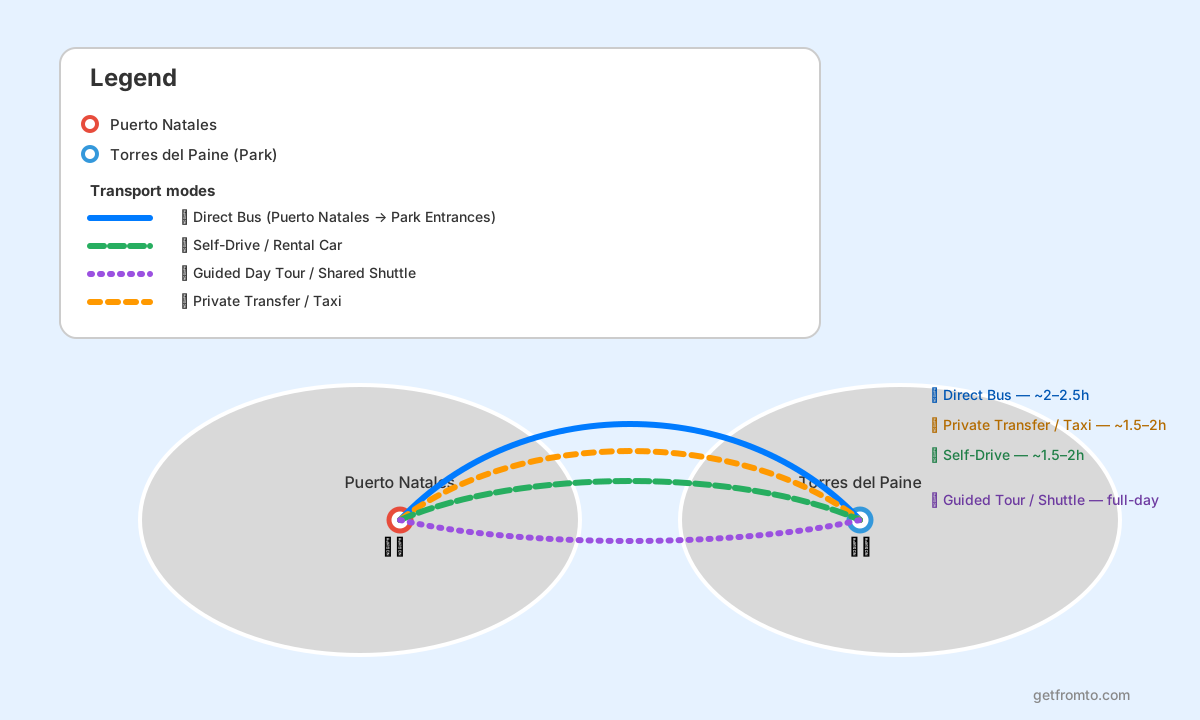
Getting from Puerto Natales to Torres del Paine is usually a straightforward 2-hour trip, but the best route for you depends on your budget, comfort level, and how much freedom you want once you are inside the park.
At A Glance (Puerto Natales to Torres del Paine)
| Mode | Duration | Best For |
|---|---|---|
| 🚌 Direct Bus (Puerto Natales → Park Entrances) | ~2–2.5h by road (one-way) | Most travelers, simple & budget-friendly |
| 🏷️ Cost: ~CLP 12,000–20,000 one-way, depending on season and company » compare bus & taxi options | Bus Sur route info | ||
| 🚗 Self-Drive / Rental Car | ~1.5–2h drive to main entrances | Maximum flexibility, photographers, early starts |
| 🏷️ Cost: Rental cars from ~CLP 40,000–80,000 per day + fuel » compare rental cars | ||
| 🚐 Guided Day Tour / Shared Shuttle | ~10–12h round trip (full-day tour) | One-day visits, stress-free sightseeing, first-timers |
| 🏷️ Cost: ~CLP 70,000–120,000+ per person, depending on inclusions » see popular day tours | Trip.com options | Klook Torres del Paine tours | ||
| 🚖 Private Transfer / Taxi | ~1.5–2h door-to-door | Small groups, lots of luggage, tight schedules |
| 🏷️ Cost: From ~CLP 120,000+ per vehicle (varies by group size and season) » search private transfers | Puerto Natales transfers | ||
Which Option or Route Should You Choose?
- Fastest / most convenient overall: For most travelers, Option #1 – Direct Bus is the sweet spot of price, comfort, and reliability. Buses run most of the year, connect the main entrances (Laguna Amarga, Pudeto, Administración), and are timed to popular hiking and catamaran schedules.
- Best if you want full flexibility inside the park: Choose Option #2 – Self-Drive / Rental Car. You can leave Puerto Natales at sunrise, stop at viewpoints, and move between trailheads without depending on fixed bus times.
- Best for one intense sightseeing day: If you only have one day and prefer not to worry about logistics, Option #3 – Guided Day Tour / Shared Shuttle wraps transport, guiding and main viewpoints into one package.
- Best for groups with heavy luggage or tight schedules: Option #4 – Private Transfer / Taxi gives you hotel-to-hotel service and full control over departure times, useful if you are connecting with flights or arriving late to Puerto Natales.
- Active travelers who like two wheels: Confident cyclists or motorbikers sometimes ride from Puerto Natales towards the park or nearby valleys; you can look at bicycle or motorbike rentals in town via bicycle hire in Puerto Natales or motorcycle rentals, but Patagonian winds and changeable weather mean this is only for very experienced riders.
How to Book and Practical Tips
- Reserve bus seats in advance in high season (Oct–Apr). Popular morning buses can sell out. Book directly with local companies such as Bus Sur, or use comparison platforms like 12Go for Puerto Natales → Torres del Paine.
- Buy your park entry online before you go. Torres del Paine requires advance purchase of tickets; you can get them via the official PasesParques Torres del Paine page. Take a screenshot or PDF of your ticket and keep your passport handy.
- Check seasonality and schedules. In winter (roughly May–Sep) there are fewer buses and tours, and some services (like the Pudeto–Paine Grande catamaran) operate on limited timetables. Always confirm times a few days before travel.
- Plan around hiking or catamaran departures. If you are catching the Pudeto–Paine Grande boat or tackling the Base Torres hike, choose bus times that let you start early. Midday arrivals can feel rushed.
- Use Puerto Natales as your logistics hub. Spend at least one night before and after your trek in town. Compare hotels, guest houses and refugio-style stays on Booking.com Puerto Natales hotels, and consider a post-trek splurge night to recover.
- Sort flights and rental cars from your gateway city. Most visitors fly via Santiago and Punta Arenas. You can search multi-leg flights on Booking.com Flights, then arrange a car for your Patagonian days via Booking.com Car Rentals.
- Consider secure luggage storage. If you are heading into the park with only trekking gear, store excess luggage at your hotel or at dedicated services; global networks like Radical Storage often list partners in major gateways.
- Weather can change fast. Even if the road is clear when you leave Puerto Natales, strong Patagonian winds, snow, or heavy rain can slow travel. Build in buffer time, especially if you need to be back in town for an evening bus or flight.
🚌 Option #1 — Direct Bus (Most Popular, Good Value)
Low cost Direct to gates Fixed schedule
- Overview: Several bus companies connect the Terminal Rodoviario in Puerto Natales with the main park entrances (Laguna Amarga, Pudeto, Administración). Travel time is usually around 2–2.5 hours each way, on mostly paved but sometimes windy roads.
- Typical schedule & seasonality: In peak trekking season (roughly Oct–Apr), there are normally morning departures (often 7:00–7:30 and 11:30) from Puerto Natales and afternoon returns from the park. In winter, there may be just one daily bus or only certain days of the week.
- How to book (with price): Expect to pay around CLP 12,000–20,000 per person one-way, depending on company, season and whether it is a straight transfer or a flexible ticket. You can book directly with companies such as Bus Sur or other local operators, or compare options via 12Go’s Puerto Natales–Torres del Paine listings. Some agencies in town also sell tickets for a small fee.
- Pros: Cheapest comfortable option; you do not need to drive; buses stop at the main entrances; schedules are tailored to popular treks and catamaran connections.
- Cons: Fixed departure times; limited flexibility once you are inside the park; buses can be full in high season if you do not book ahead; if the weather is wild, buses may be delayed.
- Good to know: Keep your park ticket and passport handy for checks at the gate. From Laguna Amarga, you can connect to the Las Torres shuttle for the Base Torres trail; from Pudeto you can catch the catamaran across Lago Pehoé to Paine Grande. Buses often allow large backpacks underneath but keep valuables in a small daypack with you.
- Official info: The municipality’s Torres del Paine information page lists the main bus companies on this route, and the Bus Sur route page gives current schedules and stops.
Step-by-step: Direct Bus from Puerto Natales
- Book your bus ticket. Reserve online with a specific company (for example via their website or agency in town) or compare options and times on 12Go. In peak season, book several days ahead for the earliest departures.
- Buy your park pass. Before your travel day, purchase your entrance on the official PasesParques Torres del Paine page. Download or print the QR code.
- Get to the Terminal Rodoviario early. Aim to arrive 20–30 minutes before departure at Terminal Rodoviario Puerto Natales (Av. España 1455). Find your company’s desk or boarding bay and check if you need to exchange an online voucher for a printed ticket.
- Board and stow your luggage. Your main backpack or suitcase goes in the luggage hold; keep warm layers, water, snacks and documents with you. Ask the driver which stop to use (Laguna Amarga for Las Torres, Pudeto for the catamaran, Administración or Grey for other areas).
- Park entrance procedure. At the gate (often Laguna Amarga), staff will scan your park pass, check your ID and sometimes give a brief safety talk. From here, either disembark or stay on the bus if you are continuing to another entrance.
- Onward connections inside the park. Connect to the Las Torres shuttle from Laguna Amarga, the Pudeto–Paine Grande catamaran for the W trek, or continue to Administration/Lago Grey if that is your final stop.
Getting to the main embarking points (Puerto Natales Terminal Rodoviario)
- On foot: Many central accommodations are 15–25 minutes’ walk from the terminal; check your hotel’s location on the map and allow extra time in case of wind or rain.
- By local taxi: Taxis are usually available in town and at the waterfront; you can also use ride-hailing apps that operate in Chile, such as Uber, DiDi or Cabify, though availability in a small town like Puerto Natales can vary by time of day. Always confirm the price before you set off.
- From the airport: If you land at Puerto Natales airport, either take a pre-booked shuttle or transfer into town (many can be booked via agencies or platforms like GetYourGuide airport transfers), then head to the terminal.
- Locations/Trip Planner: 🔗 Google Map / 🔗 OpenStreetMap
🚗 Option #2 — Self-Drive / Rental Car (Most Flexible)
Flexible stops Great for photographers Weather-dependent
- Overview: Driving yourself from Puerto Natales to Torres del Paine takes about 1.5–2 hours, depending on which entrance you choose and road conditions. Routes are a mix of paved and gravel roads with sweeping Patagonian views, guanacos and mountains along the way.
- Typical route: Most travelers take Ruta 9 north out of Puerto Natales towards Cerro Castillo, then turn towards Laguna Amarga or Río Serrano. Signs for “Parque Nacional Torres del Paine” are clear, but always download offline maps in case of patchy signal.
- How to book (with price): Small cars usually start around CLP 40,000–80,000 per day in high season, plus fuel and insurance. Compare offers and pick-up locations in Puerto Natales or Punta Arenas using Booking.com Car Rentals. Consider adding full insurance because of gravel roads and strong winds.
- Pros: Complete freedom to stop at lookouts, visit multiple trailheads in one day, and adjust plans to the weather. Very convenient for sunrise/sunset missions or photographers with lots of gear.
- Cons: Driving in strong Patagonian wind can be tiring; some stretches are unpaved; fuel stations are mainly in Puerto Natales (none inside the park). You must be comfortable driving in remote conditions and checking road/park status.
- Good to know: Park at the Welcome Center/Hotel Las Torres for the Base Torres hike (shuttles connect to Laguna Amarga), or at Pudeto for the catamaran. Check the latest park and road updates via the official CONAF Torres del Paine page before you drive.
Step-by-step: Self-Drive from Puerto Natales
- Arrange your rental car. Decide whether to pick up the car in Puerto Natales or at Punta Arenas airport and drive north. Use Booking.com Car Rentals to compare suppliers, choose a vehicle with good clearance, and include an additional driver if needed.
- Reserve park tickets and accommodations. Buy your park pass online via PasesParques and make sure your campsites, refugios or hotel stays inside/outside the park are confirmed. You can look for hotels and lodges in the area on Booking.com Magallanes region stays.
- Stock up in Puerto Natales. Fuel up the car, buy snacks and water, and rent any last-minute gear (trekking poles, gas canisters, etc.) in Puerto Natales before leaving.
- Drive to your chosen entrance. Follow Ruta 9 out of town and then the signed turn-offs for Laguna Amarga, Río Serrano, or other entrances. Keep speeds moderate; guanacos and sheep often cross the road.
- Check in at the park gate. At the entrance, staff will scan your pass, verify your ID, and may provide a map and safety information. Ask about any closed trails or weather alerts.
- Park and shuttle if needed. For the Base Torres hike, park at the Welcome Center/Hotel Las Torres area and use the shuttle service to/from Laguna Amarga timed with buses and hikers.
Getting to the main embarking points (Rental Offices & Park Entrances)
- Rental offices in Puerto Natales: Many agencies cluster near the center and waterfront. Confirm whether your pick-up point is in town or at the airport, and note their opening hours, especially on Sundays.
- Entrances by car: Laguna Amarga and Río Serrano are the principal access points; both have ranger stations where you show your pass and get orientation. Drive slowly near gates as hikers often walk along the roadside.
- Navigation: Download offline maps for the Magallanes region. Set waypoints for Puerto Natales, the relevant park gate, and your first night’s accommodation.
- Locations/Trip Planner: 🔗 Google Map / 🔗 OpenStreetMap
🚐 Option #3 — Guided Day Tour / Shared Shuttle (Hassle-Free)
Guided Hotel pickup Limited time on trails
- Overview: Full-day tours from Puerto Natales bundle transport, a guide and key viewpoints into one long day (often 10–12 hours). They are ideal if you are short on time or prefer to let someone else handle driving and logistics.
- What a typical tour includes: Many itineraries visit the Milodón Cave, Laguna Amarga, various lakes and viewpoints, plus short walks and photo stops. Some tours also include the Pudeto area and Lago Grey viewpoints.
- How to book (with price): Expect prices from around CLP 70,000–120,000+ per person, depending on group size and whether park entrance or lunch is included. You can compare options and read reviews on GetYourGuide’s full-day tours, via Trip.com’s Torres del Paine day tours, or through local operators listed on TorresDelPaine.com.
- Pros: No driving or navigation; in-depth commentary from local guides; efficient loop of viewpoints in one day; easy hotel pickup and drop-off.
- Cons: Fixed schedule with limited time for long hikes; potentially crowded stops; you need to follow group timings even if the weather shifts.
- Good to know: Most tours do not include the longer treks like the full Base Torres hike, which usually requires an early start and full hiking day. Check whether your park entrance ticket is included or must be purchased separately.
Step-by-step: Joining a Full-Day Tour
- Choose your tour style. Decide whether you want a small-group minivan tour, a larger bus, or a private guided excursion. Read recent reviews on GetYourGuide and Trip.com to see how much walking vs. driving is involved.
- Confirm what is included. Check if the tour includes hotel pickup, lunch, entrance fees, or extras like a boat trip. For anything not included (usually park tickets and meals), bring cash or a card.
- Book your date. Reserve online with instant confirmation, or book via a local agency in Puerto Natales. High-season dates and small groups fill up quickly, so secure your spot early if you have fixed travel dates.
- Prepare for a long day. Wear layers, bring a windproof jacket, hat, gloves, sunscreen, and a refillable water bottle. Even if you are mostly in a vehicle, you will be getting in and out frequently in changeable weather.
- Meet your pickup. Be ready in your hotel lobby at the time given by the operator (often around 6:30–7:30). Keep your passport, park pass and camera handy for the day.
Getting to the main embarking points (Hotel Pickup & Meeting Points)
- Hotel pickup: Most tours include pickup from central Puerto Natales hotels and hostels. Make sure your accommodation address is correctly listed on your booking and that reception knows you are expecting an early pickup.
- Central meeting points: If your accommodation is outside the pickup zone, the operator may specify a central meeting point (often near the plaza or certain hotels). Double-check this on your voucher and use a local taxi to get there.
- From outside Puerto Natales: If you are staying in the countryside, consider booking a tour that offers rural pickups or plan to spend the night before in town so you can easily join the group.
- Locations/Trip Planner: 🔗 Google Map / 🔗 OpenStreetMap
🚖 Option #4 — Private Transfer / Taxi / Ride-Hailing
Door-to-door Great for groups Higher cost
- Overview: Private transfers and taxis provide door-to-door service between your accommodation (or airport) and key park entrances. Travel time is similar to self-drive, but you avoid renting a car and navigating yourself.
- When it makes sense: This option is best if you have a lot of luggage, are traveling in a group that can share the cost, or are arriving on a tight schedule (for example from a late flight into Puerto Natales or Punta Arenas).
- How to book (with price): Prices vary widely by group size and operator but often start from around CLP 120,000–200,000 per vehicle for a one-way transfer. You can check options with local agencies or via global platforms like GetTransfer. For airport legs to or from Punta Arenas or Santiago, services like Welcome Pickups Punta Arenas or Welcome Pickups Santiago can be paired with your domestic flights.
- Ride-hailing apps: In Chile, popular ride-hailing apps include Uber, DiDi and Cabify. Availability in Puerto Natales can be limited compared with large cities, but they are useful for short hops around town (for example, between your hotel, bus terminal and airport).
- Pros: Very convenient; pick your departure time; can include intermediate stops for photos or short walks; cost-effective for families or groups.
- Cons: More expensive than buses; you still rely on road and weather conditions; last-minute booking may not be possible in peak season.
Step-by-step: Using a Private Transfer
- Gather your group and luggage. Decide how many people and bags you will have so you can choose the right vehicle size (car, van, minibus).
- Request quotes. Contact local Puerto Natales agencies or use platforms like GetTransfer to compare prices and vehicle types. For airport legs, look at options through Welcome Pickups if your route includes larger Chilean cities.
- Confirm details in writing. Make sure pickup time, location, total price, included luggage and route (which park entrance) are clearly confirmed by email or in-app chat.
- Prepare for the drive. Have your park pass and passports accessible, and pack snacks and water. Ask the driver in advance if short photo stops are possible along the way.
Getting to the main embarking points (Hotels, Airport & Park Entrances)
- Hotel pickup: Most private transfers pick you up directly from your accommodation in Puerto Natales. Be ready 10–15 minutes before the arranged time.
- Airport pickup: If you are arriving by plane, coordinate your transfer so the driver waits at arrivals with a sign or clear meeting point. Many airport transfers can be booked as part of a package on GetYourGuide or similar platforms.
- Drop-off in the park: Clarify whether you will be dropped at Laguna Amarga, Pudeto, Administración, or directly at a lodge (for example in the Río Serrano area). Some lodges can also arrange transfers on your behalf.
- Locations/Trip Planner: 🔗 Google Map / 🔗 OpenStreetMap
FAQ (Puerto Natales to Torres del Paine)
How long does it take to travel from Puerto Natales to Torres del Paine?
Most travelers reach the main park entrances in about 1.5–2.5 hours, depending on the transport mode, weather and which gate you choose (Laguna Amarga, Pudeto or Río Serrano). Buses usually take around 2–2.5 hours with stops, while a direct car or transfer is often closer to 2 hours in good conditions.
Do I need to buy my Torres del Paine park ticket in advance?
Yes. Torres del Paine requires that you purchase your entrance ticket online before arriving at the gates. You can do this through the official PasesParques platform; keep your QR code (printed or on your phone) and your passport ready to show at the entrance.
Which entrance should I use for the Base Torres hike?
For the classic Base Torres trek, most visitors enter via Laguna Amarga. From there you take the shuttle to the Welcome Center/Hotel Las Torres area, where the hiking trail starts. If you are driving, you can park at the Welcome Center and use the shuttle to connect with buses or the Laguna Amarga gate if needed.
Is it safe to drive from Puerto Natales to Torres del Paine in winter?
It is possible, but conditions can be challenging: snow, ice, strong winds and limited daylight are common. If you plan to drive in winter, rent a suitable vehicle (ideally with winter tires), check the latest weather and road conditions, travel with full fuel and emergency supplies, and consider joining organized tours or buses instead if you are not used to winter driving.
Can I visit Torres del Paine as a day trip from Puerto Natales?
Yes. Many people visit on a full-day tour or self-drive day trip. However, travel time plus multiple stops mean it will be a long day with limited time for long treks. If you want to complete iconic hikes like Base Torres or sections of the W, an overnight or multi-day stay in or near the park is recommended.