

How to get from Rio de Janeiro to Ilha Grande
Beaches & Tropical · Brazil · Nature & Outdoors · Angra dos Reis · Ilha Grande · Mangaratiba · Rio de Janeiro
Planning the journey from Rio de Janeiro to car-free Ilha Grande is all about combining an overland ride down the Costa Verde with a short boat hop to Vila do Abraão; this guide walks you through every route, cost, and booking option so you can arrive with zero stress and maximum beach time.
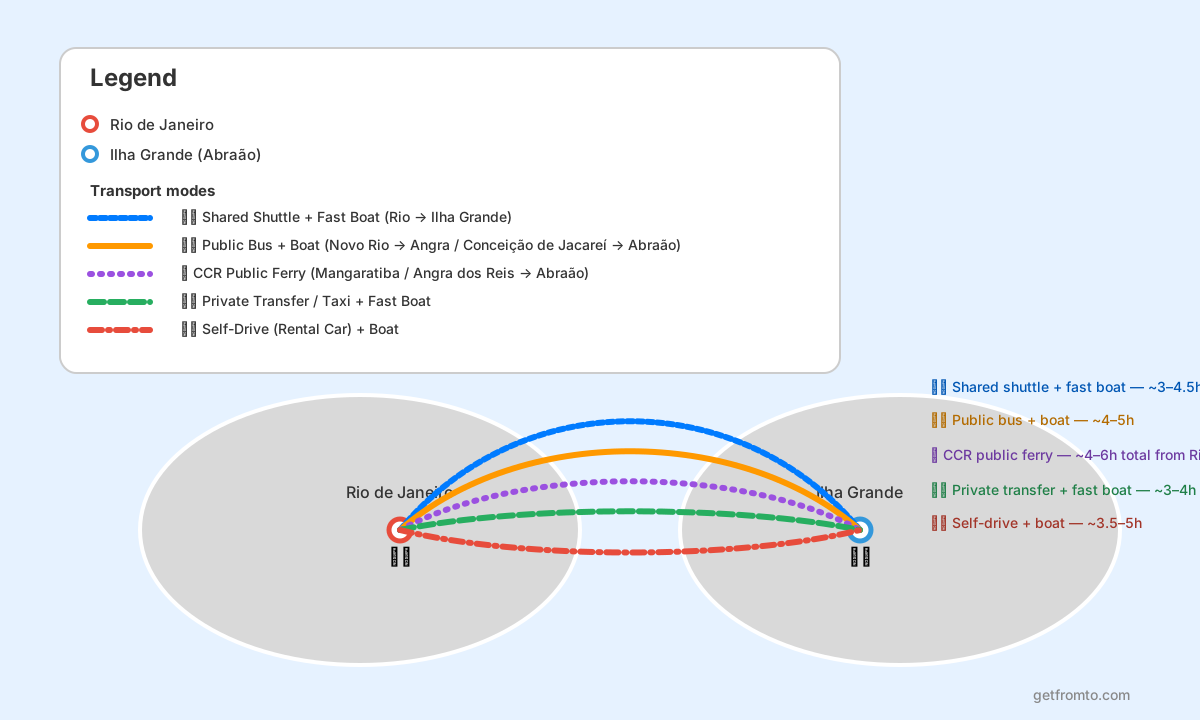
At A Glance (Rio de Janeiro to Ilha Grande)
| Mode | Duration | Best For |
|---|---|---|
| 🚐⛴ Shared Shuttle + Fast Boat (Rio → Ilha Grande) | ~3–4.5h door-to-door (hotel/airport pickup + boat) | Most travelers, simplest & most convenient |
| 🏷️ Cost: ~R$180–350 one-way per person (road + boat bundled) » compare shared transfers | airport options | ||
| 🚌⛴ Public Bus + Boat (Novo Rio → Angra / Conceição de Jacareí → Abraão) | ~4–5h total, connection-dependent | Budget travelers with light luggage |
| 🏷️ Cost: ~R$140–240 total (bus + fast boat) » check bus schedules | fast boat times | ||
| ⛴ CCR Public Ferry (Mangaratiba / Angra dos Reis → Abraão) | ~4–6h total from Rio (incl. bus + ferry) | Cheapest route, travelers on a relaxed schedule |
| 🏷️ Cost: Ferry ~R$20.50 + bus or transfer to port ~R$60–100 | ||
| 🚗⛴ Private Transfer / Taxi + Fast Boat | ~3–4h door-to-door (flexible departure) | Families, groups, late/early arrivals |
| 🏷️ Cost: ~R$700–1,200 per vehicle (Rio → coast) + boat tickets » book private airport transfer | alt. private rides | ||
| 🚙⛴ Self-Drive (Rental Car) + Boat | ~3.5–5h (Rio → coast by car + boat) | Road-trip lovers, flexible itineraries |
| 🏷️ Cost: Car rental from ~R$200–300/day + fuel, tolls, parking & boat tickets » compare rental cars | ||
Which Option or Route Should You Choose?
- Fastest & most convenient overall: 🚐⛴ Shared shuttle + fast boat from your Rio hotel or airport is the easiest plug-and-play option. The company coordinates the road leg to the Costa Verde and the boat to Vila do Abraão, so you just show up with your bags.
- Cheapest (and still fairly quick): 🚌⛴ Public bus + fast boat via Angra dos Reis or Conceição de Jacareí keeps costs low if you are comfortable handling tickets and timing connections yourself.
- Ultra-budget & relaxed schedule: ⛴ CCR public ferry via Mangaratiba or Angra is the lowest-cost route but has limited daily departures and slower crossing times.
- Most comfortable / best with kids or heavy luggage: 🚗⛴ Private transfer or taxi + fast boat gives you flexible departure times, more space, and door-to-door comfort.
- Best for a wider Costa Verde road trip: 🚙⛴ Self-drive (rental car) + boat is ideal if you want to explore beaches and towns like Angra dos Reis or Paraty before or after Ilha Grande.
How to Book and Practical Tips
- Bundle road + boat when possible: If you prefer convenience, choose a shared transfer that includes both legs in one ticket so you do not risk missing the last boat for the day.
- Check seasonality: During Brazilian holidays, Christmas/New Year and Carnival, seats sell out fast. Book buses, transfers and boats a few days in advance, especially Friday afternoons and Saturday mornings.
- Pick your embarkation port wisely: Conceição de Jacareí usually offers the shortest crossing and many fast boats. Angra dos Reis has more city services and parking. Mangaratiba is handy for the CCR public ferry.
- Travel light: Remember that Ilha Grande is car-free. You will carry luggage along piers and cobbled lanes, so backpack-style or rolling luggage with good wheels is best.
- Keep some cash (reais): Smaller boats, snacks around the pier and some parking lots may be cash-only. ATMs can be scarce or unreliable on the island.
- Plan for sea conditions: Crossings can be choppy on windy days. If you get seasick, consider a larger CCR ferry from Mangaratiba/Angra or travel early in the morning when the sea is usually calmer.
- Secure your bags in Rio: If you have hours between checkout and your transfer, consider luggage storage in the city (for example, around Copacabana you can find luggage storage options) and enjoy a last stroll hands‑free.
- Book stays ahead: Accommodation on Ilha Grande is limited and popular. Reserve in advance, especially in high season, using platforms like Booking.com for Ilha Grande stays.
- Arriving by plane first? If you are flying into Rio, compare fares to GIG or SDU using Booking.com Flights and line up your transfer to Ilha Grande for the same or next day.
🚐⛴ Option #1 — Shared Shuttle + Fast Boat (Most Popular, Hassle-Free)
Door-to-door English-friendly Mid-range cost
- Overview: A van or minibus collects you from selected Rio neighborhoods or the airport, drives ~2.5–3h down the Rio–Santos coastal highway to Angra dos Reis or Conceição de Jacareí, then connects you directly to a fast boat (flexboat) to Vila do Abraão on Ilha Grande (20–40 minutes).
- How to book (with price): Expect around R$180–350 per person one way, depending on season and pickup point. You can book online with operators and resellers such as shared transfers from Rio to Ilha Grande or browse more options on the wider Ilha Grande transfers page.
- Pros: Minimal logistics; guaranteed boat connection; good if you do not speak Portuguese; door-to-door from many hotels and both GIG and SDU airports.
- Cons: Slightly pricier than DIY bus + boat; you travel on the company schedule with shared pickups, which can add waiting time in Rio.
- Good to know: Most services allow one larger bag plus hand luggage. Ask in advance if you have surfboards or very large suitcases.
Step-by-step: Shared Shuttle + Fast Boat
- Choose your pickup area: Check if your accommodation lies in the pickup zones (typically Centro, Lapa, Flamengo, Botafogo, Copacabana, Ipanema, Leblon, Barra da Tijuca, plus GIG and SDU). If not, pick the closest meeting point suggested when booking.
- Book your seat: Reserve online, provide your hotel address or flight details, and keep your voucher handy on your phone. Sites like GetYourGuide show multiple departure times per day.
- Be ready on time: On the day, be at the lobby or meeting point a little before the scheduled window. Vans often do several pickups around the city.
- Ride to the coast: The drive down the BR‑101 (Rio–Santos) highway takes around 2.5–3h depending on traffic. Many shuttles make a quick bathroom or snack stop.
- Boat connection: At Angra dos Reis or Conceição de Jacareí pier, staff direct you to the correct fast boat. Your seat is usually pre-reserved and included in the price.
- Arrive in Vila do Abraão: Boats normally dock at Abraão’s main pier. From there, walk to your pousada (most are 5–15 minutes on foot) or take a small handcart service if you have heavy bags.
Getting to the main embarking points (Rio hotel districts & airports)
- From GIG (Galeão Airport): If your shuttle does not pick up directly at GIG, you can pre-book a short airport transfer into the South Zone using a service such as Welcome Pickups in Rio, or use local ride‑hailing apps like Uber and 99.
- From SDU (Santos Dumont Airport): Many shuttles include SDU; otherwise, it is a quick taxi or Uber/99 ride to Centro, Lapa or the beachfront neighborhoods where pickups are offered.
- From other Rio neighborhoods: If you are staying outside the usual zones, aim for a central hotel or metro-accessible pickup point (for example, near Flamengo or Cinelândia), then walk or rideshare to meet the van.
- Locations/Trip Planner: 🔗 Google Map / 🔗 OpenStreetMap
🚌⛴ Option #2 — Public Bus + Fast Boat (Cheapest Easy Route)
Low cost Frequent departures DIY logistics
- Overview: Take a regular bus from Rio’s Novo Rio (Rodoviária do Rio) to either Angra dos Reis or Conceição de Jacareí, then transfer to a fast boat or flexboat to Vila do Abraão. Travel time is usually 3–3.5h by bus plus 20–40 minutes by boat, plus connection time.
- How to book (with price): Buses along the Costa Verde corridor are often operated by companies like Viação Costa Verde. Expect around R$60–90 one way depending on route and time, and R$80–150 for the fast boat. You can compare and pre-book bus tickets online via platforms such as 12Go for Rio → Angra buses. For boats, websites like Travessia Ilha Grande show current schedules and allow reservations.
- Pros: Usually the best value for independent travelers; many departures each day; flexible choice of bus time and boat operator.
- Cons: You must coordinate bus and boat times yourself, and delays can happen. Not ideal if you are landing in Rio the same morning and cutting it close for the last boat.
- Angra vs. Conceição de Jacareí: Angra is a proper city with more services and multiple boat options; Conceição de Jacareí is smaller but offers the shortest, quickest crossing to Ilha Grande.
Step-by-step: Bus + Fast Boat
- Get to Novo Rio bus station: From most tourist areas, take a taxi, Uber/99, or metro + short cab ride to Rodoviária do Rio (Novo Rio). Aim to arrive at least 30–40 minutes before departure if buying tickets on the day.
- Buy or confirm your bus ticket: Choose a departure to Angra dos Reis or Conceição de Jacareí. If you like to plan ahead, you can book seats online using a comparison site such as 12Go and show your voucher at the counter.
- Ride down the Costa Verde: Enjoy the scenery as the bus follows the coastal highway (BR‑101). The ride typically takes about 3 hours, depending on traffic and stops.
- Walk to the pier: In Angra, buses usually arrive near the town center; follow signs or maps to Cais de Santa Luzia for most fast boats. In Conceição de Jacareí, it is just a short walk from the bus stop to the small harbor.
- Board your fast boat: Check in with your chosen operator, show your ticket or reservation, and board for the 20–40 minute crossing to Vila do Abraão.
- Check return times: Before leaving the mainland, confirm the return boat and bus times for your travel day back to Rio.
Getting to the main embarking points (Novo Rio, Angra dos Reis & Conceição de Jacareí)
- Novo Rio bus station: Located in São Cristóvão, Novo Rio is reachable by taxi or ride‑hailing (Uber/99) in ~15–30 minutes from most South Zone neighborhoods. Metro + BRT or local bus combos are also possible if you are traveling light.
- Angra dos Reis bus terminal to pier: From the Angra bus terminal, it is usually a short taxi or 15–20 minute walk to the Santa Luzia pier, where many fast boats and tours depart for Ilha Grande.
- Conceição de Jacareí: Some buses stop right in town; from there it is a few minutes on foot to the boat operators along the waterfront.
- Locations/Trip Planner: 🔗 Google Map / 🔗 OpenStreetMap
⛴ Option #3 — CCR Public Ferry via Mangaratiba or Angra (Cheapest, Limited Schedule)
Very low cost Big, stable boat Fixed timetable
- Overview: State-concession ferries operated by CCR Barcas run from Mangaratiba and Angra dos Reis to Vila do Abraão. Crossings take around 80–110 minutes and usually run once per day in each direction, making this the slowest but cheapest way to reach Ilha Grande.
- How to book (with price): Tickets cost roughly R$20.50 one way per adult. You can check current times and fares directly with the operator via the CCR Barcas website. Buying is normally done at the pier ticket office on the day, so arrive early in high season.
- Pros: Lowest ticket price; large, more stable boat than many speedboats; good if you are sensitive to motion or carrying bulky luggage.
- Cons: Only one or a few departures per day; the crossing is long; services may be affected by weather or maintenance; sitting mostly indoors with fewer scenic stops than smaller tours.
- When this makes sense: Ideal if you are already staying near Mangaratiba/Angra, or if you have a tight budget and do not mind traveling on the ferry’s fixed schedule.
Step-by-step: Public Ferry via Mangaratiba / Angra
- Travel from Rio to Mangaratiba or Angra: Use a Costa Verde bus, rental car, private transfer, or rideshare (Uber/99) to reach one of the ferry ports early in the morning. The drive is roughly 2–3h depending on traffic.
- Buy your ferry ticket: At the pier, look for the CCR Barcas ticket office. Bring an ID and cash or card; in peak periods, lines may form, so allow extra time.
- Boarding: Boarding typically starts 30–40 minutes before departure. Follow staff instructions, choose a seat indoors or on deck, and keep your bags together.
- Enjoy the crossing: The ferry sails past coastal islands and the rainforest-covered hills of the Costa Verde. In rough weather, stay seated and follow crew guidance.
- Arrival at Vila do Abraão: On arrival, disembark via the main pier, then walk to your accommodation or hire a handcart porter on the pier if carrying heavy luggage.
Getting to the main embarking points (Mangaratiba & Angra dos Reis)
- Mangaratiba ferry terminal: The boat leaves from the central pier in Mangaratiba, close to the bus station. From Rio, taxis, private transfers and ride‑hailing apps can drop you near the waterfront.
- Angra dos Reis terminal: In Angra, CCR ferries and some boats to Ilha Grande leave from piers near the town center. Check in advance exactly which pier your ferry uses and allow time to find parking if arriving by car.
- Driving and parking: If you are driving yourself, look for long‑stay parking around the port area; prices vary by season. Do not leave valuables visible in your car.
- Locations/Trip Planner: 🔗 Google Map / 🔗 OpenStreetMap
🚗⛴ Option #4 — Private Transfer / Taxi + Fast Boat (Most Comfortable)
Flexible departure Best with luggage Higher cost
- Overview: A private car or van picks you up at your Rio address (hotel, apartment or airport) and drives directly to your chosen port (often Conceição de Jacareí or Angra). From there you board a pre-booked fast boat or purchase tickets on the spot.
- How to book (with price): For a one‑way private transfer from Rio to the coast, expect roughly R$700–1,200 per vehicle depending on size, time of day and exact destination, plus boat tickets for each passenger. Pre-bookable services like Welcome Pickups airport transfers or GetTransfer rides in Rio let you lock in a fixed price in advance.
- Pros: Completely flexible timing; no sharing with strangers; space for kids and extra luggage; can coordinate with late‑night or very early flights arriving into GIG or SDU.
- Cons: Significantly more expensive than a shuttle or bus; you still need to purchase boat tickets separately unless you buy a road+boat package from a local operator.
- Ride‑hailing alternative: In addition to pre-booked transfers, apps such as Uber and 99 operate in Rio and can sometimes take you as far as Angra or Conceição de Jacareí if drivers accept the long trip.
Step-by-step: Private Transfer / Taxi + Fast Boat
- Book your car: Arrange a private transfer or taxi pickup time that fits your flight or checkout. Confirm whether the price is fixed and which port (Angra, Mangaratiba or Conceição de Jacareí) the driver will use.
- Choose and book your boat: If you want peace of mind, reserve fast boat tickets for a departure around 3–4 hours after your pickup time. Use operators’ websites such as Travessia Ilha Grande, or ask your transfer company if they can include the boat in a package.
- Meet your driver: At the agreed time, meet in your hotel lobby or in the arrivals hall at the airport (look for a sign with your name).
- Drive to the coast: Enjoy the coastal scenery and optional bathroom or snack stops en route. Your driver drops you near the pier or specific boat company’s office.
- Board the fast boat: Check in, show your reservation or buy tickets if you are purchasing on the day, then board for the short crossing to Vila do Abraão.
Getting to the main embarking points (Rio-wide pickups)
- Pickups in Rio: Private transfers usually cover the whole city: South Zone beaches, Centro, Lapa, Santa Teresa, Barra da Tijuca and both GIG and SDU airports. Confirm extra fees for distant neighborhoods.
- Airport coordination: Share your flight number so the company can monitor delays. Many services include a grace period for late arrivals.
- Drop-off at the pier: Clarify whether the driver drops you at the exact boat office or just at the general pier area, as signage can be crowded in high season.
- Locations/Trip Planner: 🔗 Google Map / 🔗 OpenStreetMap
🚙⛴ Option #5 — Self-Drive (Rental Car) + Boat (Most Flexible)
Maximum flexibility Great for road trips Parking needed
- Overview: Rent a car in Rio, drive yourself along the scenic Rio–Santos highway to Angra dos Reis, Mangaratiba or Conceição de Jacareí, park in a secure lot near the pier, then continue by fast boat or ferry to Ilha Grande.
- How to book (with price): Daily rental rates often start around R$200–300 per day for a compact car, plus fuel, tolls and parking. You can compare offers and pick-up locations using Booking.com car rentals in Rio. Boats and ferries are paid separately at the pier or via each operator’s website.
- Pros: You travel on your own schedule, can stop at viewpoints and small beaches, and easily combine Ilha Grande with Paraty or other Costa Verde towns.
- Cons: Brazilian driving and traffic can be intense; navigating out of Rio requires attention; you cannot take your car onto Ilha Grande (the island is car-free), so you must pay for parking while you are away.
- Parking tips: Look for signed long‑stay parking lots near the piers; confirm opening hours and whether they keep keys. Take valuables with you onto the island.
Step-by-step: Self-Drive + Boat
- Reserve your rental car: Choose pickup and drop‑off locations (airport or city) and ensure your rental agreement allows driving along the Rio–Santos highway.
- Plan your route: From Rio, you generally follow Avenida Brasil to enter the BR‑101 (Rio–Santos) towards Angra dos Reis and beyond. Allow 2.5–3h of driving time plus stops.
- Arrive and park: In Angra, Mangaratiba or Conceição de Jacareí, follow local signs for ‘estacionamento’ near the port. Keep your parking ticket safe.
- Buy boat tickets: Choose between a fast boat (more frequent and quicker) or the public CCR ferry (cheaper but slower). Buy tickets at the desk or online in advance.
- Cross to Ilha Grande: Board your chosen boat, then on arrival in Vila do Abraão walk to your pousada. Keep car keys secure and note your parking lot’s phone number for the return.
Getting to the main embarking points (Driving from Rio)
- Road conditions: The Rio–Santos highway is paved and scenic but can have slow sections, especially around holidays or long weekends. Avoid driving at night if you are unfamiliar with the route.
- Fuel & tolls: Fill up before leaving greater Rio and keep some cash or a card handy for toll booths along the way.
- Navigation: Use offline maps or download your route in advance in case of patchy signal; standard GPS apps work well on this corridor.
- Locations/Trip Planner: 🔗 Google Map / 🔗 OpenStreetMap
FAQ (Rio de Janeiro to Ilha Grande)
How long does it take to get from Rio de Janeiro to Ilha Grande?
Most travelers take between 3 and 5 hours door-to-door, depending on traffic, chosen port and boat type. Shared shuttles and private transfers with fast boats are usually on the quicker end (around 3–4 hours), while public buses plus ferries or slower boats can push the total closer to 5–6 hours.
What is the cheapest way to reach Ilha Grande from Rio?
The lowest-cost combination is usually a public bus to Mangaratiba or Angra dos Reis followed by the CCR public ferry. This keeps the total transport cost relatively low but requires you to travel on the ferry’s limited schedule and accept a longer crossing time.
Do I need to book boats to Ilha Grande in advance?
In low season, you can often buy fast boat or ferry tickets at the pier shortly before departure. However, during weekends, school holidays, and especially New Year and Carnival, it is very wise to reserve in advance through boat operators, transfer companies, or booking platforms so you do not miss the last crossing of the day.
Can I take a car onto Ilha Grande?
No. Ilha Grande is effectively car-free; there are no roads for private vehicles and motorized traffic is restricted. You must leave any vehicle on the mainland in an authorized parking lot and move around the island on foot, by boat, or via simple local services such as handcarts for luggage.
Is it safe to travel from Rio to Ilha Grande at night?
Boat schedules to Ilha Grande are concentrated during daylight hours, and night crossings are limited or unavailable. While driving the Rio–Santos highway at night is generally possible, it is not recommended for first-time visitors. Whenever possible, plan your journey so that both your drive and boat crossing happen in daylight.
Can I visit Ilha Grande as a day trip from Rio?
Day tours exist, but they involve several hours of travel in each direction and only a short time on the water or the island. If you want more than a quick snapshot, it is far more enjoyable to stay at least one or two nights on Ilha Grande. You can find a range of pousadas and guesthouses via hotel booking sites, or join organized coastal excursions such as Klook’s Angra dos Reis and Ilha Grande day tours or Trip.com’s Angra dos Reis & Ilha Grande boat trips if you truly only have one day.