

How to get from Seoul to Chuncheon
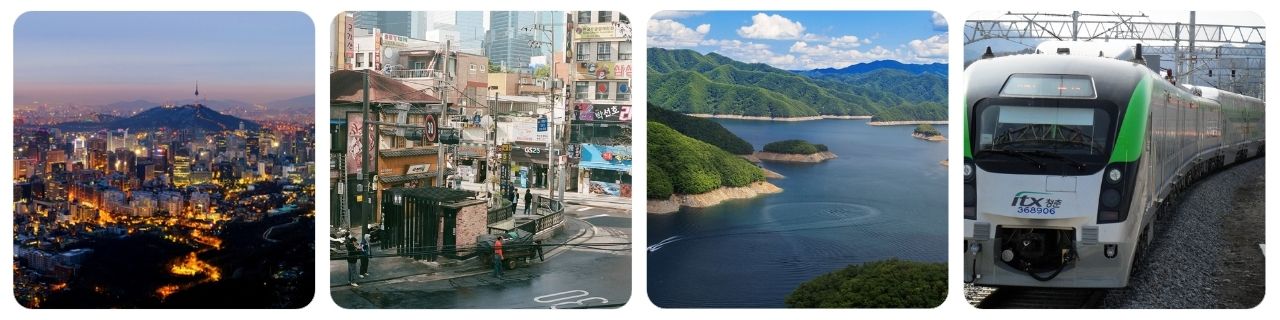
How to travel from Seoul to Chuncheon is straightforward, with fast trains, cheap subways, comfortable buses, self-drive options and even guided tours that work well for both quick day trips and relaxed weekend getaways.
At A Glance (Seoul to Chuncheon)
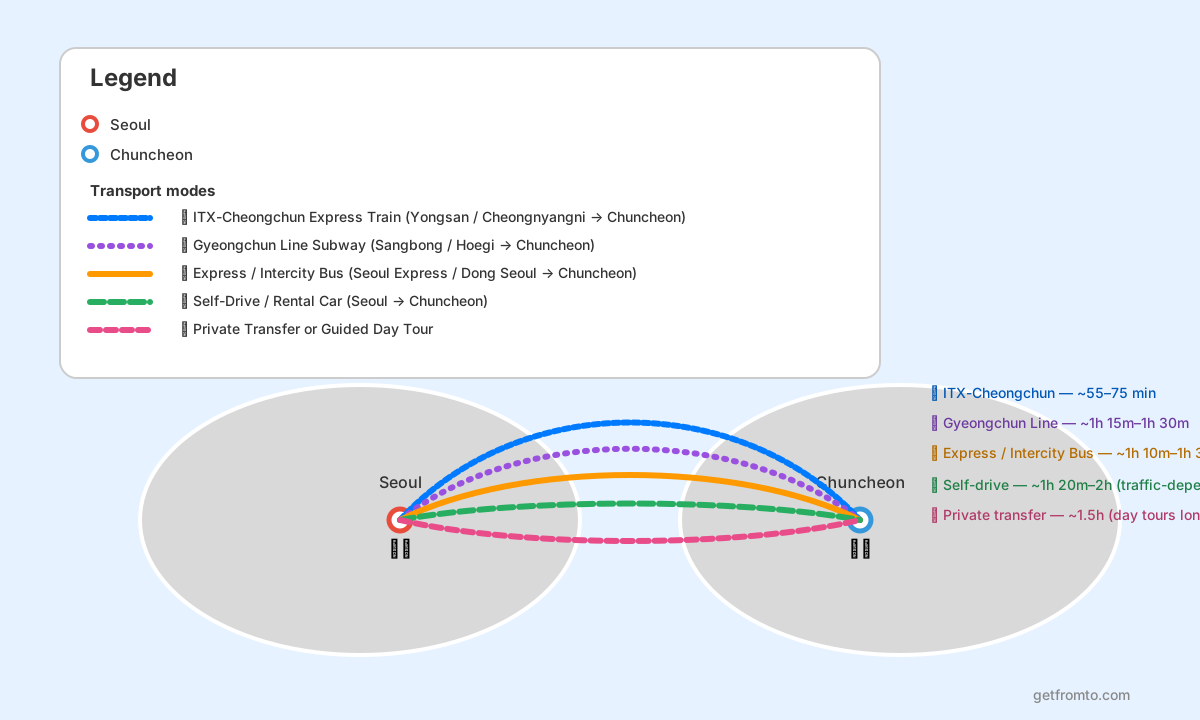
| Mode | Duration | Best For |
|---|---|---|
| 🚆 ITX-Cheongchun Express Train (Yongsan / Cheongnyangni → Chuncheon) | ~55–75 minutes (+ local metro to station) | Fastest, scenic, reserved seats |
| 🏷️ Cost: ~KRW 8,000–17,000 one-way » compare train options | live timetables & e-tickets | ||
| 🚇 Gyeongchun Line Subway (Sangbong / Hoegi → Chuncheon) | ~1h 15m–1h 30m | Cheapest, frequent departures, transit cards |
| 🏷️ Cost: ~KRW 2,500–3,500 with transit card or subway fare integration | ||
| 🚌 Express / Intercity Bus (Seoul Express / Dong Seoul → Chuncheon) | ~1h 10m–1h 30m | Point-to-point to bus terminals, budget travelers |
| 🏷️ Cost: ~KRW 7,000–13,000 one-way » check intercity bus tickets | ||
| 🚗 Self-Drive / Rental Car (Seoul → Chuncheon) | ~1h 20m–2h via expressways (traffic-dependent) | Families, groups, flexible itineraries |
| 🏷️ Cost: Rental cars from ~KRW 70,000+/day » compare rental cars | ||
| 🚐 Private Transfer or Guided Day Tour | ~1.5h direct transfer, 9–12h for full-day tours | Door-to-door comfort, first-time visitors |
| 🏷️ Cost: Private cars from ~KRW 120,000+/vehicle, day tours from ~KRW 60,000–150,000 pp » Klook Chuncheon & Nami tours | GetYourGuide Chuncheon activities | ||
Which Option or Route Should You Choose?
- Fastest & most convenient: Choose the ITX-Cheongchun express train if you want the quickest, most comfortable ride with guaranteed seating and space for luggage.
- Cheapest on a tight budget: Go for the Gyeongchun Line subway, which lets you ride all the way from Seoul to Chuncheon using your regular transit card at standard subway fares.
- Direct to bus terminals: If you are staying near a bus terminal or connecting to other buses, the express or intercity buses from Seoul Express Bus Terminal or Dong Seoul can be very convenient.
- Most flexible & scenic: Travelers planning multiple stops (Gapyeong, Nami Island, Gangchon Rail Park, lakes around Chuncheon) may prefer driving a rental car to explore at their own pace.
- Zero-planning option: If you just want everything handled for you, book a private transfer or full-day tour that bundles transport with popular sights like Nami Island and Samaksan Lake Cable Car.
How to Book and Practical Tips
- Booking trains: Reserve ITX-Cheongchun seats via the official Korail website or apps, or use platforms like Trip.com’s Korail booking page or 12Go Asia to compare departure times and fares.
- Buying subway tickets: For the Gyeongchun Line subway, simply tap in with a T-money or Cashbee transit card. No reservation is needed; just follow signs for Line Gyeongchun (경춘선) towards Chuncheon.
- Bus reservations: Express and intercity buses can usually be booked at terminal counters or machines, or online via Korean platforms like TxBus and T-money apps. If you prefer English interfaces, use Klook’s intercity bus listings for some routes.
- Car rental: If you plan to drive, compare car hire options in Seoul on Booking.com Cars, then use Naver Map, Kakao Map or Google Maps to navigate toward Chuncheon.
- Private transfers & taxis: For door-to-door convenience, prebook a car with Welcome Pickups in Seoul or GetTransfer, or use local ride-hailing apps like Kakao T for on-demand taxis once you’re in Korea.
- Luggage storage: If you’re doing a same-day round trip, you can leave big bags at Seoul Station or city luggage services; for flexible drop-off points around the city, check partners of Radical Storage in Seoul.
- Staying overnight: Consider booking accommodation close to Chuncheon Station or Namchuncheon Station via Booking.com hotels in Chuncheon so you can walk back after evening lakeside strolls or dinners.
- Cycling & outdoor plans: Chuncheon has pleasant riverside bike paths; if you want to incorporate cycling into your trip, compare bicycle or scooter rentals through BikesBooking or local rental shops around Namchuncheon.
🚆 Option #1 — ITX-Cheongchun Express Train (Fastest & Most Comfortable)
Fast travel Reserved seating Scenic route
- Overview: The ITX-Cheongchun is a limited-stop express train running primarily between Yongsan / Cheongnyangni in Seoul and Chuncheon Station. Travel time is usually around 55–75 minutes depending on the departure, and the ride is smooth with large windows over rivers and low mountains.
- How to book (with price): Standard adult fares are typically around KRW 8,000–17,000 one-way depending on time of day and discounts. You can book directly via the Korail official website, at station ticket machines, or through partners like 12Go Asia and Trip.com (Korail tickets).
- Seat classes: Most cars are standard class with reserved seats; some trains also have double-decker coaches that offer extra views. Families often prefer reserving adjacent seats in advance, especially on weekends or holidays.
- Pros: Fastest public transport option, comfortable seating, toilets on board, predictable schedule, minimal transfers.
- Cons: Slightly higher fare than the subway; you must follow a specific departure time, and seats can sell out on busy weekends or cherry-blossom/autumn foliage days.
Step-by-step: Taking the ITX-Cheongchun
- Choose your departure station: Most visitors depart from either Yongsan Station (good if you’re staying in central/Western Seoul) or Cheongnyangni Station (good for Eastern Seoul and easier transfers to the Jungang Line).
- Check schedules & reserve seats: Look up timetables and fares on the Korail English website or via the KorailTalk app. If you prefer using an English booking platform and paying with international cards, compare departures on Trip.com or 12Go Asia.
- Arrive 15–20 minutes early: Reach Yongsan or Cheongnyangni early enough to find your platform (usually clearly labelled “ITX-Cheongchun”). Follow signs for tracks bound for Chuncheon; electronic boards show train numbers and departure times.
- Board the correct car & seat: Each ticket shows your car and seat number. Platform signs indicate car positions; line up on the floor markings and board when the train arrives. Keep your ticket handy for occasional checks.
- Enjoy the ride: Store larger luggage in the racks at car ends or above your seat. Sit back and enjoy views of the Bukhan River and countryside. Many travelers combine Chuncheon with stops at Gapyeong (for Nami Island) on the same line.
- Arrival at Chuncheon Station: Once you arrive, follow station signs to the exit, local buses or taxis. Tourist information counters and maps are usually available, and you can easily connect to city buses, taxis or ride-hailing (Kakao T) for your hotel.
Getting to the main embarking points (Yongsan / Cheongnyangni)
- To Yongsan Station: Take Seoul Subway Line 1 or the Gyeongui-Jungang Line to Yongsan. Inside the station, follow signs for “ITX-Cheongchun” or mainline (Korail) platforms.
- To Cheongnyangni Station: Use Line 1, the Gyeongui-Jungang Line or the Suin-Bundang Line to Cheongnyangni. From the subway concourse, follow the arrows to the Korail concourse, then look for ITX departure boards.
- From central areas (Myeongdong / Hongdae / Gangnam): Connect via the subway to Line 1 or the Gyeongui-Jungang Line for Yongsan or Cheongnyangni; allow at least 30–45 minutes from central neighborhoods, more at rush hour.
- Locations/Trip Planner: 🔗 Google Map / 🔗 OpenStreetMap
🚷 Option #2 — Gyeongchun Line Subway (Cheapest & Frequent)
Budget-friendly No reservation Frequent trains
- Overview: The Gyeongchun Line is part of the Seoul Metropolitan Subway system and runs from eastern Seoul (Mangu / Sangbong area) all the way to Chuncheon Station. Trains stop at many intermediate stations, so the trip takes a bit longer than ITX but is very affordable and straightforward.
- Travel time & frequency: Expect around 75–90 minutes from Sangbong to Chuncheon with frequent departures throughout the day, especially during commuting hours.
- How to pay: Use your regular T-money or Cashbee transit card and tap-in like any other subway ride; the fare is calculated by distance and is usually around KRW 2,500–3,500 from central Seoul, depending on your starting point.
- Pros: Cheapest way to reach Chuncheon, no need to reserve seats, fully integrated with the Seoul subway network, good for flexible schedules and intermediate stops like Gangchon or Gapyeong.
- Cons: More crowded during rush hours, mostly standard seating (often full on weekends), fewer amenities than ITX and slightly longer journey time.
Step-by-step: Using the Gyeongchun Line Subway
- Get to a transfer station: From central Seoul, aim for transfer points such as Hoegi, Sangbong or Mangu Stations, depending on your starting location.
- Follow signs for Gyeongchun Line (경춘선): Once at a transfer station, follow the blue-and-white Gyeongchun Line signage, then board a train heading toward Chuncheon (춘천).
- Tap in with your transit card: Use a T-money/Cashbee card or single-use ticket; if needed, recharge or purchase at the station vending machines before entering the gates.
- Ride to Chuncheon: Stay on the train until the final stop, Chuncheon Station. If you’re visiting attractions along the way (e.g., Gangchon Rail Park), alight at the relevant station and continue later.
- Exit and connect locally: At Chuncheon Station, simply tap out at the gates, then transfer to local buses, taxis, or walk to nearby accommodations.
Getting to the main embarking points (Sangbong / Hoegi)
- To Sangbong Station: Take Line 7 or the Gyeongui-Jungang Line to Sangbong, then transfer to the Gyeongchun Line platforms following station arrows.
- To Hoegi Station: From central Seoul, Line 1 or the Gyeongui-Jungang Line both serve Hoegi; transfer to Gyeongchun Line trains toward Chuncheon.
- From Myeongdong / City Hall: Typically, take Line 4 or Line 1 toward Dongdaemun/Seoul Station and then transfer following signs to a Gyeongchun Line transfer point (Hoegi or Sangbong).
- Locations/Trip Planner: 🔗 Google Map / 🔗 OpenStreetMap
🚌 Option #3 — Direct Express / Intercity Bus (Good Value & Simple)
Low cost Direct routes Terminal-to-terminal
- Overview: Multiple bus companies run express and intercity buses between Seoul and Chuncheon, mostly from Dong Seoul Bus Terminal and Seoul Express Bus Terminal to Chuncheon Intercity / Express Bus Terminal. Buses are clean, air-conditioned and comfortable.
- Travel time & price: The ride usually takes about 1h 10m–1h 30m depending on traffic. Fares are typically in the KRW 7,000–13,000 range one-way, varying slightly by operator and seat class.
- How to book: Most travelers buy tickets at the terminal ticket counters or machines on the day of travel. For some routes you can also prebook online via Korean platforms (TxBus, T-money). In English, check bus options via Klook’s Korea intercity bus booking page if your date and route are supported.
- Pros: Direct to Chuncheon bus terminals, decent luggage space under the bus, generally reliable and frequent departures.
- Cons: Travel time can be affected by highway traffic, especially weekends and holidays. Terminals may be less central than railway stations for some hotels.
Step-by-step: Taking a Direct Bus
- Pick your terminal in Seoul: Choose between Dong Seoul Bus Terminal (East Seoul, convenient from Gangbyeon Station on Line 2) or Seoul Express Bus Terminal (Gangnam area, on Lines 3, 7, 9).
- Check departures: Once at the terminal, look for electronic boards showing destinations (춘천). Alternatively, you can browse available buses on Klook for select dates and times.
- Buy your ticket: Go to the ticket counter or machine, say/write “Chuncheon” and your preferred time, and pay in cash or card. You’ll receive a printed ticket with gate number and seat assignment.
- Board the bus: Arrive at the gate 10–15 minutes before departure. Stow large luggage in the under-floor compartment and take your assigned seat.
- Arrival in Chuncheon: Buses usually terminate at Chuncheon Intercity / Express Bus Terminal. From there it’s a short taxi or local bus ride to central hotels or lakeside areas.
Getting to the main embarking points (Dong Seoul / Seoul Express Bus Terminal)
- Dong Seoul Bus Terminal: Take Seoul Subway Line 2 to Gangbyeon Station. The terminal is directly connected to Exit 4, across the street from the COEX-style Techno Mart building.
- Seoul Express Bus Terminal: Use Lines 3, 7 or 9 to Express Bus Terminal Station and follow signs to the bus terminal concourse; leave extra time, as the complex is large.
- From popular neighborhoods: From Myeongdong, City Hall or Hongdae, ride the subway and transfer toward Gangnam (for Express Bus Terminal) or eastward on Line 2 (for Gangbyeon/Dong Seoul).
- Locations/Trip Planner: 🔗 Google Map / 🔗 OpenStreetMap
🚗 Option #4 — Self-Drive / Rental Car (Flexible Road Trip)
Maximum flexibility Great for groups Scenic stops
- Overview: Driving from Seoul to Chuncheon is straightforward via expressways such as the Seoul-Chuncheon Expressway. This option works well if you want to visit several places in a single day, like Gapyeong, Nami Island, Gangchon Rail Park and various lake viewpoints.
- Travel time & cost: Under normal traffic, expect around 1h 20m–2h one-way. Factor in tolls and fuel. Daily rental rates commonly start from around KRW 70,000+ depending on car size and season.
- How to book a car: Reserve a vehicle in advance via Booking.com’s car rental search for Seoul, then collect it either in the city or at the airport. Local companies often require an International Driving Permit (IDP) plus your home license.
- Navigation: Use Naver Map or Kakao Map (most accurate for Korea) or Google Maps in car mode. Set your destination as Chuncheon Station, Nami Island parking, or your hotel to get real-time traffic routing.
- Pros: Ultimate flexibility for timing and sight selection, easy luggage handling, ideal for families or small groups splitting the cost.
- Cons: Tolls, fuel and parking fees add up; you need to be comfortable driving in Korea and dealing with Korean-language road signs (though major signs use English as well).
Step-by-step: Driving from Seoul to Chuncheon
- Book your rental: Compare offers and secure a booking via Booking.com Cars in Seoul. Choose pickup/drop-off locations that match your accommodation or airport terminal.
- Collect the car: Bring your passport, driver’s license and IDP (if required). Inspect the car, note any existing damage and confirm GPS or smartphone holder availability.
- Plan your route: Plot a course via the Seoul-Chuncheon Expressway, optionally adding intermediate waypoints like Gapyeong or Gangchon. Set your main destination (e.g., Chuncheon Station or hotel) in your navigation app.
- Drive & stop as you like: Enjoy the highway scenery and feel free to pull off at rest areas or viewpoints. Pay tolls via cash/card or the car’s Hi-Pass device if included.
- Park in Chuncheon: Use public parking lots near Chuncheon Station, lakefront parks or your accommodation. Many hotels include free or low-cost parking.
Getting to the main embarking points (Rental Depots in Seoul)
- City-center branches: Many major rental brands have counters near Seoul Station, Gangnam and Jongno. Check your confirmation for the exact branch address and search it in your map app.
- Airport pickups: If you’re arriving at Incheon or Gimpo, you can start your road trip immediately by picking up your car at the airport branch specified on your Incheon Airport car rental booking.
- Combining with cycling: If you want to do a scenic bike ride near Chuncheon, you can park at riverside parks and join local rentals, or search for bike options via BikesBooking and regional providers.
- Locations/Trip Planner: 🔗 Google Map / 🔗 OpenStreetMap
🗡️ Option #5 — Private Transfers & Guided Day Tours (Door-to-Door)
Door-to-door No transfers Guided experiences
- Overview: If you prefer not to navigate trains and buses, you can either reserve a private car transfer between Seoul and Chuncheon or join a guided day tour that combines Chuncheon with nearby highlights like Nami Island, Samaksan Lake Cable Car or Gangchon Rail Park.
- Private transfer pricing: Door-to-door transfers usually start around KRW 120,000–200,000 per vehicle (one-way), depending on group size and pick-up point. Services like Welcome Pickups and GetTransfer let you pre-book a car and driver with fixed, upfront pricing.
- Day tours: Full-day tours typically cost around KRW 60,000–150,000 per person depending on inclusions. Popular itineraries bundle Nami Island, Chuncheon city, cable cars and rail bikes; browse options on Klook or GetYourGuide.
- Ride-hailing alternatives: Within Korea, you can also rely on local taxi and ride-hailing apps like Kakao T for shorter segments (e.g., station to hotel or cable car station), but they are usually more economical for in-city trips rather than door-to-door Seoul–Chuncheon journeys.
- Pros: No need to handle transfers or language barriers; hotel pickup and drop-off; guide commentary and bundled attraction tickets on tours.
- Cons: Highest overall cost; fixed schedule on group tours; less flexibility for spontaneous changes compared with self-drive.
Step-by-step: Using Private Transfers or Tours
- Decide on car-only vs. guided tour: If you just need transportation, a private transfer via Welcome Pickups Seoul or GetTransfer is ideal. If you want commentary and bundled attractions, pick a full-day tour from Klook, GetYourGuide or Trip.com.
- Choose date, route and inclusions: When browsing tours, double-check meeting points (often central Seoul stations or popular tourist areas), included meals, attraction tickets, and whether Chuncheon city itself is visited or mainly nearby sites like Nami Island.
- Book & confirm pickup: Enter your hotel details or agreed pickup point, then confirm via email or app message. Keep the voucher handy (mobile vouchers are widely accepted).
- Meet your driver/guide: Be at the meeting point 10–15 minutes early. The guide or driver will typically hold a sign or contact you via messaging apps.
- Return to Seoul or stay overnight: Most tours return to Seoul in the evening. If you decide to stay in Chuncheon, arrange it beforehand and book accommodation via Booking.com in Chuncheon.
Getting to the main embarking points (Tour Meeting Spots)
- Common meeting areas: Many tours depart from central points like Myeongdong, Hongdae or around Seoul Station. Check your voucher for the exact address and landmark (e.g., a hotel lobby or subway exit).
- Using the subway: Use the subway to reach the nearest station to your meeting point (often Myeongdong Station, Hongik Univ. Station or City Hall) and then walk a few minutes.
- Backup plan: If you’re running late or confused by directions, contact your guide via the booking platform app and send a location pin.
- Locations/Trip Planner: 🔗 Google Map / 🔗 OpenStreetMap
FAQ (Seoul to Chuncheon)
What is the fastest way to travel from Seoul to Chuncheon?
The ITX-Cheongchun express train is usually the fastest regular option, taking roughly 55–75 minutes from Yongsan or Cheongnyangni to Chuncheon. In good traffic, a private car or taxi can be similar in time door-to-door, but road congestion is less predictable than train schedules.
Do I need to reserve ITX-Cheongchun tickets in advance?
It’s not mandatory on all days, but advance reservations are highly recommended on weekends, public holidays and during cherry blossom or autumn foliage seasons, when seats can sell out. You can book up to about a month ahead via Korail’s official site or apps, or through international ticketing partners.
Can I use my T-money card all the way from Seoul to Chuncheon?
Yes, if you ride the Gyeongchun Line subway (not the ITX), you can simply tap in and out with T-money or Cashbee like any regular subway journey. The fare is distance-based and will be deducted automatically when you exit at Chuncheon Station.
Is the route covered by rail passes like the Korail Pass?
Most Korail-operated trains, including ITX-Cheongchun, are covered by the Korail Pass for foreign tourists, though you still need to make a free seat reservation for each journey. Always double-check current conditions on Korail or Korea Tourism Organization pages before purchase.
Is there luggage storage at the stations?
Seoul’s major stations (like Seoul Station and Yongsan) and many subway stops have coin lockers or manned storage counters. At Chuncheon Station, you can usually find coin lockers and tourist information that can point you to additional storage or delivery options. In Seoul, third-party services and platforms like Radical Storage also partner with local cafes and shops where you can drop bags for a few hours.
Is Chuncheon realistic as a day trip from Seoul?
Yes. Thanks to fast ITX trains and the Gyeongchun Line subway, many visitors treat Chuncheon and nearby spots like Nami Island as a classic day trip. Just start early, prioritize 1–2 key activities (for example, Nami Island plus a lakeside dinner in Chuncheon), and aim for an evening train or bus back to Seoul.