

How to get from Shenzhen to Hong Kong
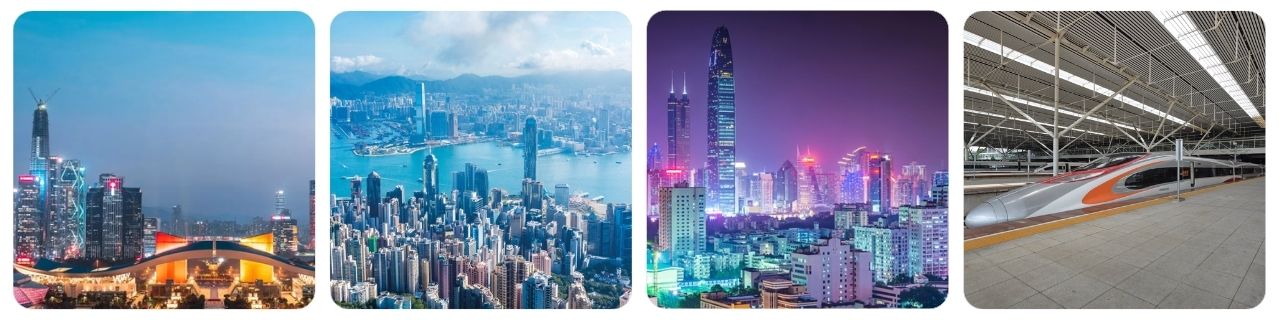
Shenzhen and Hong Kong sit back-to-back across the border, and with high-speed trains, metro links, buses, ferries, and private transfers, you can usually get between the two in under two hours door-to-door.
At A Glance (Shenzhen to Hong Kong)
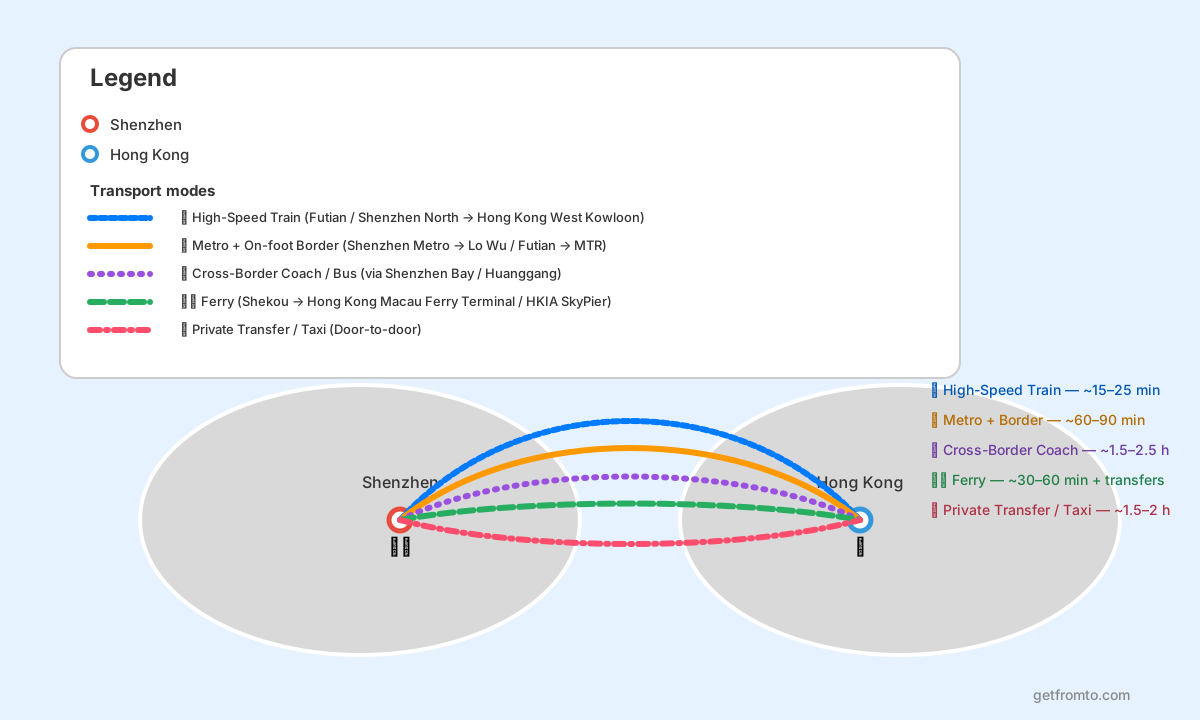
| Mode | Duration | Best For |
|---|---|---|
| 🚄 High-Speed Train (Futian / Shenzhen North → Hong Kong West Kowloon) | ~15–25 minutes on train (+ 30–60 minutes city-side transfers) | Fastest, easiest for most travelers |
| 🏷️ Cost: ~CNY 80–150 / HKD 90–170 one-way depending on train & class » compare high-speed trains | check times & fares | ||
| 🚇 Metro + On-foot Border (Shenzhen Metro → Lo Wu / Futian → MTR) | ~60–90 minutes total (depending on start & Hong Kong destination) | Budget trips, frequent commuters |
| 🏷️ Cost: ~CNY 8–15 + HKD 40–80 per person » border MTR info | ||
| 🚌 Cross-Border Coach / Bus (via Shenzhen Bay / Huanggang) | ~1.5–2.5 hours door-to-door, traffic dependent | Direct routes to Kowloon / New Territories |
| 🏷️ Cost: ~CNY 65–150 / HKD 80–180 » sample coach options | ||
| ⛴️ Ferry (Shekou → Hong Kong Macau Ferry Terminal / HKIA SkyPier) | ~1 hour (Shekou–Central) or ~30 minutes (Shekou–HKIA) + transfers | Avoiding road traffic, airport connections |
| 🏷️ Cost: ~CNY 120–150 to Central; ~CNY 190–280 to HKIA » book Shekou–Hong Kong ferry | ||
| 🚗 Private Transfer / Taxi (Door-to-door) | ~1.5–2 hours, border & traffic dependent | Families, lots of luggage, late-night |
| 🏷️ Cost: from ~CNY 600 / HKD 700+ per vehicle depending on route & size » private Shenzhen–Hong Kong transfers | alt. car options | ||
Which Option or Route Should You Choose?
- Fastest & most convenient: The high-speed train from Futian or Shenzhen North to Hong Kong West Kowloon is usually the quickest and most comfortable, especially if you’re staying near an MTR station in Kowloon or on Hong Kong Island.
- Cheapest / most economical: The metro + on-foot border crossing via Luohu (Lo Wu) or Futian/Lok Ma Chau is typically the lowest-cost option and runs from early morning until late at night.
- Best with luggage or kids: If you want to minimize walking and transfers, choose a private transfer / taxi or a cross-border coach that drops you close to your hotel.
- Most scenic / relaxed: For a more leisurely trip with harbour views, take the ferry from Shekou to Central or HKIA, then connect by MTR or Airport Express into the city.
- For onward flights: If you’re connecting through Hong Kong International Airport, consider the Shekou–HKIA SkyPier ferry or high-speed train plus Airport Express for a smooth transfer.
How to Book and Practical Tips
- Book trains & buses online: For English-friendly booking of high-speed trains and cross-border coaches, use platforms like 12Go Asia, Trip.com, or Klook to compare times and fares in one place.
- Hotels near stations: If you have an early or late departure, consider staying near Futian, Shenzhen North, or West Kowloon; you can compare options around both cities on Shenzhen hotels and Hong Kong hotels.
- Tickets & ID: Always carry your passport (and visa if required). You’ll need it both for train/ferry tickets and for immigration at the border.
- Octopus & transport cards: In Hong Kong, an Octopus card makes MTR, buses, trams, and ferries much easier. On the Shenzhen side you’ll use local payment apps or QR tickets for the metro.
- Border peak hours: Morning and evening rush hours, plus weekends and holidays, can mean long queues at the control points. Allow extra time if travelling via Lo Wu, Futian, or Shenzhen Bay.
- Luggage solutions: If your hotel check-in is late or you’re doing a day trip, store bags at station lockers or third-party services; in central Hong Kong, you can pre-book luggage storage near major spots via Radical Storage.
- Two wheels in the city: Confident riders can explore Hong Kong by scooter or bike – for rentals, compare options on BikesBooking, then use MTR and ferries for longer hops.
- Tours & activities: Once you arrive, you can line up Hong Kong attractions – from Victoria Peak to harbour cruises – through GetYourGuide or Klook experiences.
🚄 Option #1 — High-Speed Train (Fastest, Most Comfortable)
Fastest Comfortable seats Fixed schedule
- Overview: Take the Guangzhou–Shenzhen–Hong Kong Express Rail Link (XRL) from Futian or Shenzhen North to Hong Kong West Kowloon Station. The actual train ride is often just 15–25 minutes; most of your time is getting to/from the stations and passing immigration.
- How to book (with price): Second-class seats usually cost around CNY 80–150 (roughly HKD 90–170) one-way depending on time and train. You can compare departures and reserve e-tickets on Trip.com or 12Go Asia, or use the official high-speed rail system via the MTR’s journey planner and counters at West Kowloon.
- Pros: Fastest overall; modern trains; clear English signage; immigration is handled in a single station complex at each end.
- Cons: Slightly higher cost than metro; you must travel at the exact train time on your ticket; tickets can sell out on peak weekends and holidays.
Step-by-step: High-Speed Train
- Check schedules: Look up live timetables and seat availability from Shenzhen to Hong Kong West Kowloon on Trip.com trains or Klook rail tickets.
- Choose your station: Pick Futian if you’re staying in central Shenzhen (Futian CBD) or Shenzhen North if you’re coming from Longhua, Longgang, or northern districts.
- Buy or collect tickets: Purchase online in advance (recommended during holidays) and either use e-tickets where supported or collect paper tickets at the station with your passport.
- Arrive early: Reach the departure station at least 45–60 minutes before departure to allow time for security checks, ticket inspection, and exit immigration from Mainland China.
- Immigration & boarding: Clear exit formalities, wait in the designated waiting hall, then board when your train is announced. Keep your passport and ticket handy for inspections.
- Arrival at West Kowloon: On arrival, follow signs to Hong Kong immigration, complete entry procedures, then exit into the main hall where you can connect directly to Kowloon MTR or walk to Jordan/Tsim Sha Tsui.
Getting to the main embarking points (Futian / Shenzhen North)
- Futian Railway Station: Directly served by Shenzhen Metro Lines 2, 3, and 11. Follow signage for the high-speed rail concourse once you arrive in the station complex.
- Shenzhen North Railway Station: Served by Shenzhen Metro Lines 4 and 5. Allow extra time to walk from the metro concourse to the high-speed rail departure hall, especially at peak hours.
- From Hong Kong side: If you’re starting in Hong Kong, take the MTR to Kowloon or Hong Kong stations, then follow pedestrian links and signage to West Kowloon Station.
- Locations/Trip Planner: 🔗 Google Map / 🔗 OpenStreetMap
🚇 Option #2 — Metro + On-foot Border (Cheapest & Very Frequent)
Low cost Very frequent More walking & queues
- Overview: Ride the Shenzhen Metro to a border checkpoint (usually Luohu for Lo Wu or Futian Checkpoint for Lok Ma Chau), walk through immigration on both sides, then transfer to the Hong Kong MTR East Rail Line into Kowloon or Hong Kong Island.
- How to book (with price): No advance booking needed. Expect around CNY 3–7 for the Shenzhen Metro segment and HKD 40–80 for the MTR East Rail Line to downtown Hong Kong, depending on distance and whether you use a Tourist Cross-Boundary Travel Pass.
You can review official cross-boundary ticket options on the MTR East Rail tourist ticket page. - Pros: Cheapest option; trains run every few minutes; flexible schedules; good if you’re staying near Luohu, Dongmen, Futian CBD, or Huaqiangbei.
- Cons: Requires more walking; you must carry luggage through crowded border halls; queues can be long at peak times, especially at Lo Wu.
Step-by-step: Metro + Lo Wu / Futian Border
- Pick your checkpoint: Choose Luohu/Lo Wu if you’re in eastern Shenzhen (Dongmen, Luohu district) or Futian/Lok Ma Chau if you’re near Futian CBD – both are linked tightly to the MTR East Rail Line on the Hong Kong side.
- Ride Shenzhen Metro: Use Shenzhen Metro Line 1 to Luohu or Lines 4/10 to Futian Checkpoint, tapping in/out with QR codes or local payment apps.
- Exit Mainland & enter Hong Kong: Follow “To Hong Kong” signs, pass through Mainland exit immigration and customs, cross the pedestrian bridge, then complete Hong Kong immigration checks at Lo Wu or Lok Ma Chau control points.
- Board the MTR: After immigration, you’ll enter the East Rail Line station directly. Use Octopus or a ticket to ride to Hung Hom, Kowloon Tong, or Admiralty, then interchange as needed.
- Pay-as-you-go: In Hong Kong, an Octopus card is the easiest way to pay for the MTR, buses, and trams; in Shenzhen, metro ticket machines and QR codes cover most trips.
Getting to the main embarking points (Luohu / Futian Checkpoints)
- Luohu (Lo Wu) route: Take Shenzhen Metro Line 1 to Luohu Station, then follow signs into the Luohu Port immigration building and across to Lo Wu MTR station.
- Futian (Lok Ma Chau) route: Take Line 4 or 10 to Futian Checkpoint Station, and follow the crowd to Futian Port; after crossing, you’ll enter Lok Ma Chau Spur Line station on the Hong Kong side.
- Late-night considerations: Lo Wu and Lok Ma Chau have limited opening hours, so if you’re crossing very late, confirm the latest times on the Hong Kong Immigration Department’s control point pages and consider Huanggang or Shenzhen Bay instead.
- Locations/Trip Planner: 🔗 Google Map / 🔗 OpenStreetMap
🚌 Option #3 — Direct Cross-Border Bus (Most Popular, Good Value)
Good value Point-to-point Traffic-dependent
- Overview: Cross-border coaches connect key districts in Shenzhen (Futian, Nanshan, Bao’an) with Hong Kong areas like Tsim Sha Tsui, Mong Kok, and New Territories via checkpoints such as Shenzhen Bay Port and Huanggang Port. You stay on (or briefly change) the bus at the border while handling immigration.
- How to book (with price): Typical fares are around CNY 65–150 / HKD 80–180 one-way depending on route, company, and time of day. Many services sell tickets via hotel desks, station counters, or online through aggregators like 12Go Asia or local travel agencies.
- Pros: Convenient if your hotel is near a coach stop; less walking with luggage; some buses are express into Kowloon or New Territories without train changes.
- Cons: More affected by road traffic and border vehicle queues; schedules can be less frequent late at night.
Step-by-step: Cross-Border Coach via Shenzhen Bay / Huanggang
- Find a nearby stop: Check which cross-border coach stop is closest to your hotel or district (Futian CBD, Nanshan/Shekou, or Bao’an often have multiple options heading to Kowloon and Hong Kong Island).
- Confirm checkpoint & route: Decide whether you prefer Shenzhen Bay Port (popular with buses to Hong Kong’s western side) or Huanggang Port (busy 24-hour land crossing), and choose a coach company that uses that route.
- Buy tickets: Purchase at the station or online (where available) for your specific departure. Some companies offer round-trip discounts.
- Border procedures: At the port, you’ll disembark for Mainland exit and Hong Kong entry procedures, then re-board the same or a connecting coach on the other side, following staff instructions.
- Arrival in Hong Kong: Most buses terminate at major hubs (Elements / Kowloon Station, Mong Kok, Prince Edward, Sha Tin, etc.), where you can connect easily to the MTR or local buses.
Getting to the main embarking points (Shenzhen Bay / Huanggang Ports)
- Shenzhen Bay Port: Reachable by taxi, Didi, or Shenzhen Metro Line 2 (Shenzhen Bay Park area plus a short taxi/bus ride). Many malls and residential complexes have coach stops feeding into this port.
- Huanggang Port: Served by multiple bus routes and close to Futian CBD; taxis and Didi ride-hailing are plentiful. This port runs 24 hours for passenger vehicles, making it a useful late-night option.
- From Hong Kong side: Onward MTR and bus connections from Yuen Long, Tuen Mun, or Kowloon are straightforward; use a transit app or MTR route planner for the final leg.
- Locations/Trip Planner: 🔗 Google Map / 🔗 OpenStreetMap
⛴️ Option #4 — Ferry via Shekou (Scenic, Great for Airport Links)
Scenic Avoids road traffic Fixed sailing times
- Overview: High-speed ferries link Shenzhen Shekou Cruise Center with the Hong Kong Macau Ferry Terminal in Central and with SkyPier at Hong Kong International Airport. Trip times are about 60 minutes to Central and 30 minutes to HKIA, plus check-in time at the terminal.
- How to book (with price): Expect around CNY 120–150 one-way to Central and CNY 190–280 to HKIA depending on cabin class and operator. You can check sailings and book online via Klook’s Shekou–Hong Kong ferry tickets or via ferry operators listed on the Hong Kong Airport SkyPier page.
- Pros: Comfortable ride with harbour views; avoids land border traffic; great if you’re heading directly to or from Hong Kong Airport.
- Cons: Less frequent than trains or metro; you must match your sailing time; rough seas can affect comfort in bad weather.
Step-by-step: Shekou Ferry to Central / HKIA
- Check sailing times: Look up the latest Shekou–Hong Kong and Shekou–HKIA timetables on the Shekou terminal information and Hong Kong Airport’s SkyPier ferry page, or via Klook.
- Book your ticket: Reserve online to secure your preferred sailing, especially if connecting to a flight. Choose economy or first-class seats depending on your budget.
- Arrive at Shekou Cruise Center: Be there at least 45–60 minutes before departure to complete check-in, security, and (if heading to HKIA) any airline and baggage formalities.
- Board the ferry: Follow signage for Hong Kong sailings, board when called, and keep tickets and passports handy for checks on arrival.
- Onward connections: From Hong Kong Macau Ferry Terminal in Sheung Wan, transfer directly to the MTR Island Line or trams; from HKIA, follow signs for your onward flight or the Airport Express if you’re entering the city.
Getting to the main embarking points (Shekou Cruise Center / Hong Kong Macau Ferry Terminal)
- Shekou Cruise Center: Reachable by Shenzhen Metro Line 2 (to Shekou Port or nearby stations) plus a short taxi or bus ride; many Nanshan and Shekou hotels are just a quick drive away.
- Hong Kong Macau Ferry Terminal: Located above Sheung Wan MTR Station on Hong Kong Island; follow exit signs to the terminal for ferries arriving from Shekou.
- Airport SkyPier: For airport connections, confirm baggage transfer rules and minimum connection times on the Hong Kong Airport website before you book.
- Locations/Trip Planner: 🔗 Google Map / 🔗 OpenStreetMap
🚗 Option #5 — Private Transfer / Taxi (Door-to-door Comfort)
Most convenient Door-to-door Highest cost
- Overview: A private car or licensed cross-border taxi picks you up at your hotel or the airport in Shenzhen and drops you directly at your accommodation in Hong Kong, usually crossing via Shenzhen Bay Port or Lok Ma Chau. This is the least stressful with kids, elderly travelers, or large luggage.
- How to book (with price): For pre-booked cars with English-language support, compare services such as private Shenzhen–Hong Kong transfers on Klook, ride-hailing-style platforms like Welcome Pickups, or aggregator services like GetTransfer. Expect from roughly CNY 600–1200 / HKD 700–1500 per vehicle depending on distance and vehicle size.
- Local ride-hailing & taxis: Within Shenzhen, you can also use Didi and regular taxis to reach a nearby checkpoint, then continue by MTR or taxi on the Hong Kong side (including Uber and licensed urban taxis).
- Pros: Minimal walking; fully door-to-door; great with bulky luggage or late-night/early-morning departures.
- Cons: Easily the most expensive choice; still subject to road and border traffic; must provide passport details for cross-border vehicle permits where required.
Step-by-step: Private Transfer
- Get a quote: Enter your pickup and drop-off addresses and travel date into platforms like Klook private transfers, Welcome Pickups, or GetTransfer to see vehicle options and prices.
- Share passenger details: Provide passport information and contact numbers as required so the operator can arrange the cross-border permit and confirm pickup.
- Meet your driver: On the day, your driver will usually meet you in the hotel lobby or arrivals hall holding a sign with your name, then drive straight to the chosen checkpoint.
- Border crossing: Follow your driver’s instructions for when to disembark and pass through immigration on each side. Some services use through-vehicles; others require a quick vehicle change after immigration.
- Drop-off in Hong Kong: After entry formalities, continue in the same or a connecting vehicle directly to your hotel or specified address.
Getting to the main embarking points (Hotel / Airport Pickup)
- Hotel pickups: Most central hotels in Shenzhen or Hong Kong are covered; confirm exact pickup time and meeting spot by chat or email with your driver.
- Airport pickups: If you’re flying into Shenzhen or Hong Kong, provide your flight number so your driver can track delays and meet you after customs.
- Locations/Trip Planner: 🔗 Google Map / 🔗 OpenStreetMap
FAQ (Shenzhen to Hong Kong)
Do I need a visa to travel from Shenzhen to Hong Kong?
Most travelers can enter Hong Kong under the Hong Kong SAR’s own entry rules, which are separate from Mainland China’s visa policy. Always check the latest visa requirements for your nationality with an official Hong Kong government or consulate website before travelling.
What is the fastest way to get from Shenzhen to central Hong Kong?
The high-speed train (XRL) from Futian or Shenzhen North to Hong Kong West Kowloon is usually the fastest door-to-door option, often taking under an hour total if you’re staying near a major station.
What is the cheapest way to get between Shenzhen and Hong Kong?
The metro + on-foot border crossing via Luohu/Lo Wu or Futian/Lok Ma Chau is typically the cheapest, using Shenzhen Metro on the Mainland side and the MTR East Rail Line in Hong Kong. It’s ideal for budget-conscious travelers who don’t mind walking and crowds.
How much time should I allow for border formalities?
Outside peak holiday periods, 30–60 minutes is usually enough for immigration and customs, but queues can be significantly longer during Chinese public holidays, long weekends, and evening rush hours. If you have a flight or tour booked in Hong Kong, build in generous buffer time.
Related Tours/Services
Popular Routes
Recent Routes
- How to get from Cancún Airport to Playa del Carmen
- How to get from Cape Town Airport to Table Mountain
- How to get from Beijing Capital Airport to Summer Palace
- How to get from Shanghai Pudong Airport to Nanjing Road
- How to get from Hong Kong International Airport to Disneyland Hong Kong
- How to get from Reykjavik Keflavík Airport to Blue Lagoon
- How to get from Gold Coast Airport to Surfers Paradise
- How to get from Honolulu Airport to Pearl Harbor
- How to get from Los Angeles Airport to Santa Monica Pier
- How to get from San Francisco Airport to Fisherman’s Wharf
Top Travel Gears

Travel Utensils with Case, Quatish Portable Silverware Set for Work, Stainless Steel Reusable Travel Cutlery Set, Fork and Spoon Set for Camping, Picnic, Gadgets, Lunch Box for Men, Black

zelin Anti Theft Zipper Clips Double Opening Small Carabiner Clips, 4Pcs Elegant Zinc Alloy Zipper Pull Replacement for Travel, Commuting and Camping (Space Grey)

Gillette Venus Extra Smooth Travel Razor Kit for Women, Mini Handle + Refill + Case

TakeToday Collapsible Water Bottles 21oz (600mL), Foldable Platinum Silicone Travel Water Bottle with Straw & Carry Strap, Leak-Resistant Screw Lid, Wide Mouth, BPA-Free for Hiking, Camping, Travel

Zuihug 1Pack Travel Pill Organizer - 10 Compartments Pill Case, Compact and Portable Pill Box, Perfect for On-The-Go Storage, Pill Holder for Purse Gray
