

How to get from Singapore to Kuala Lumpur
Heading from Singapore to Kuala Lumpur? This guide walks you through every practical way to get there—by bus, train, flight, or car—so you can pick the route that best fits your time, budget, and travel style.
At A Glance (Singapore to Kuala Lumpur)
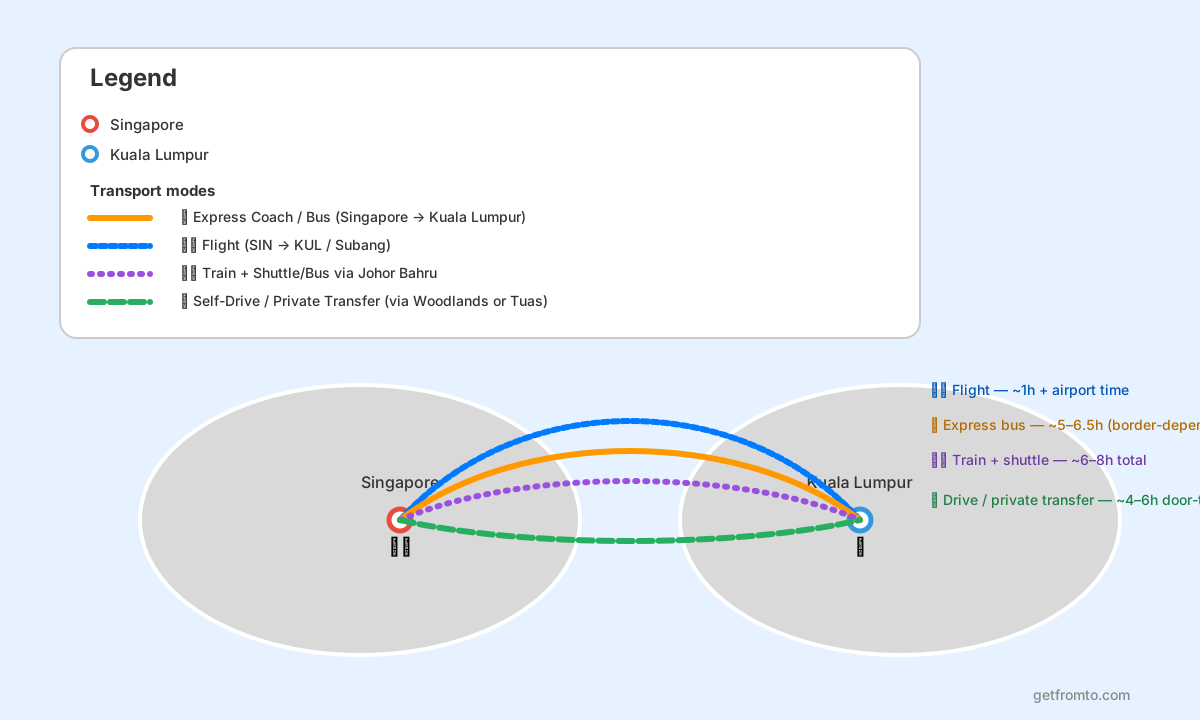
| Mode | Duration | Best For |
|---|---|---|
| 🚌 Express Coach / Bus (Singapore → Kuala Lumpur) | ~5–6.5 hours (traffic & border-dependent) | Budget travelers, simple point‑to‑point travel |
| 🏷️ Cost: ~SGD 25–60 / RM 80–200 one-way depending on bus class and date. You can compare multiple operators on » compare buses or check shared coach options on alt. listings. | ||
| ✈️ Flight (SIN → KUL/Subang) | ~1h flight + 2–3h airport time | Fastest option, tight schedules |
| 🏷️ Cost: Roughly SGD 60–200 one-way in economy if booked in advance. Search and compare on » Booking.com Flights or check deals on Trip.com. | ||
| 🚆🚌 Train + Shuttle/Bus via Johor Bahru | ~6–8 hours total (including transfers) | Train lovers, light luggage, avoiding long bus legs |
| 🏷️ Cost: KTM Shuttle Tebrau + ETS + local buses roughly RM 80–160 total, depending on class and timing. Check current train schedules and fares on KTMB ETS, then look at backup buses on Johor Bahru → KL buses. | ||
| 🚗 Self-Drive / Private Transfer (via Woodlands or Tuas) | ~4–6 hours door-to-door | Families, groups, flexible itineraries |
| 🏷️ Cost: Fuel + tolls if self-driving; private transfers often from ~SGD 250–400 per car depending on vehicle size and date. For quotes, check » GetTransfer or private cross-border services on Klook, and use ride-hailing apps like Grab for local legs. | ||
Which Option or Route Should You Choose?
- Fastest / most convenient: If time is your priority, flying from Singapore to Kuala Lumpur is usually fastest door-to-door, especially if you’re already near Changi Airport or connecting to another flight.
- Cheapest / most economical: For most travelers, the express coach or bus offers the best value. It’s usually cheaper than flying, and you get a city-to-city connection without needing separate airport transfers.
- Most comfortable on a budget: Premium/VIP buses with spacious seats (often bookable via bus operators and platforms) can feel almost like flying business class at a fraction of the price.
- Most scenic / flexible schedule: If you enjoy road trips and want to stop at Johor Bahru, Malacca, or small towns en route, self-driving or hiring a private car gives you maximum flexibility on timing and stops.
- For train fans: If you’d like to experience Malaysia’s modern ETS trains and avoid sitting on a bus the whole way, try the train + bus combo via Johor Bahru, accepting that it needs a bit more planning.
How to Book and Practical Tips
- Compare multiple modes in one place: To quickly see buses, flights, and sometimes trains on the same route, use meta‑search tools like 12Go alongside airline and bus-company sites. This helps you gauge real‑world travel times and prices side by side.
- Use reputable platforms for flights: For SIN → KUL/Subang routes, compare different airlines and times via Booking.com Flights or Trip.com, then book what best fits your schedule and baggage needs.
- Book popular buses in advance, especially weekends: Friday nights, long weekends, and school holidays can sell out. Reserve seats ahead of time via platforms such as 12Go or Klook’s Singapore–KL bus listings, or through local booking apps.
- Take advantage of ride-hailing apps: In both Singapore and Malaysia, Grab is the go‑to mobility app, alongside regular metered taxis. Use it to reach bus terminals, train stations, or your hotel from KLIA or TBS bus terminal. For premium or pre‑scheduled pickups, consider services like GetTransfer as well.
- Store luggage if you have awkward gaps: If you need to check out of your hotel but still have hours before your bus or flight, stash your bags at staffed locations using Radical Storage in Singapore or Radical Storage in Kuala Lumpur so you can explore hands‑free.
- Consider two wheels in Kuala Lumpur: Once you’re in KL, scooters or motorbikes can be a fun way to get around if you’re experienced and licensed. You can compare motorcycle rental options in Kuala Lumpur via BikesBooking.
- Check entry and visa requirements: Before traveling, verify your eligibility for entry into Singapore and Malaysia (including any eVisa or arrival card requirements) using official portals such as Singapore’s immigration website and Malaysia’s online visa system.
🚌 Option #1 — Direct Bus / Express Coach (Most Popular, Good Value)
Low cost Central drop‑off Border‑dependent
- Overview: Direct coaches connect central Singapore with Kuala Lumpur’s main terminals and hotels. Many run via the Tuas Second Link or the Causeway (Woodlands–Johor Bahru). Coaches are usually air‑conditioned with reclining seats, USB charging, and at least one rest stop. Journey time is typically 5–6.5 hours depending on traffic and border queues.
- How to book (with price): Expect prices around SGD 25–60 (roughly RM 80–200) one‑way depending on bus class (standard vs. VIP), date, and operator. You can compare companies, departure points, and onboard amenities on 12Go or book specific routes such as Singapore to KL or Sunway Lagoon on Klook.
- Pros: Great value; no airport hassle; city‑to‑city; frequent departures throughout the day and evening; easy for those with medium luggage. Cons: You remain seated for several hours; travel time can spike during long‑weekend jams at the land borders.
- Official terminals & info: In Kuala Lumpur, many long‑distance buses arrive at Terminal Bersepadu Selatan (TBS), the main integrated bus terminal. For terminal facilities, maps, and services, see the official TBS website.
Step-by-step: Direct Bus Singapore → Kuala Lumpur
- Pick your departure and arrival points: In Singapore, buses often depart from hubs such as Golden Mile Tower or shopping malls/hotels specified by each company. In Kuala Lumpur, many services terminate at TBS, KL Sentral vicinity, or central hotels. When comparing tickets on sites like 12Go and Klook, check exactly where you’ll be picked up and dropped off.
- Choose departure time and bus type: Decide between morning, afternoon, or late‑night departures. VIP or business‑class coaches with 2+1 seating offer more legroom and a quieter ride, ideal if you want to sleep or work.
- Arrive 30–45 minutes early: Bus bays at central terminals can be busy. Arriving early gives you time to locate your platform, check in with the counter (if required), and load luggage into the hold.
- Clear immigration at Singapore–Malaysia border: All passengers must disembark with their passports and valuables to pass through Singapore exit and Malaysian entry checkpoints. Keep your ticket and remember your bus number so you can rejoin the right vehicle afterward.
- Rest stops and arrival: There is usually at least one highway rest stop in Johor or Melaka state. On arrival at TBS or your KL drop‑off point, you can transfer by LRT/Komuter, KLIA Transit, taxi, or Grab to your hotel.
Getting to the main embarking points (Singapore Bus Pick‑ups & KL Terminals)
- Singapore departure points: Many operators use central locations such as Golden Mile Tower or shopping‑mall coach bays. Most spots are near MRT stations; double‑check your ticket for the exact name and directions, then use MRT + a short walk or a Grab ride if you have heavy bags.
- Reaching TBS in Kuala Lumpur: From within KL, TBS is accessible via KTM Komuter, LRT, and KLIA Transit, as well as buses and taxis. The official TBS site has up‑to‑date information on connections and facilities.
- From TBS to central KL: Once you arrive at TBS, you can take city trains to KL Sentral and then connect to areas like Bukit Bintang, Chinatown, or KLCC, or simply book a Grab to your hotel door.
- Locations/Trip Planner: 🔗 Google Map / 🔗 OpenStreetMap
✈️ Option #2 — Direct Flight (Fastest & Most Time-Efficient)
Fastest Frequent flights Great for tight schedules
- Overview: Flights between Singapore Changi Airport (SIN) and Kuala Lumpur International Airport (KUL) or Subang (SZB) take around 1 hour in the air. Including check‑in, security, and airport transfers, total door‑to‑door time is typically 3–4 hours.
- How to book (with price): One‑way fares generally start around SGD 60–200 in economy, depending on airline, time of day, and how early you book. Compare options using Booking.com Flights or Trip.com, then confirm directly with airlines if you prefer.
- Pros: Fastest overall; many flights per day; easy connections if you’re already at the airport. Cons: Airport waiting time; separate transfers at both ends; less eco‑friendly than bus or train.
- Official airport info: For flight status, terminal maps, and transport links, see Changi Airport’s official website and the KL International Airport (KLIA) page.
Step-by-step: Flight Singapore → Kuala Lumpur
- Choose your KL airport: Most international flights use Kuala Lumpur International Airport (KUL), but some regional flights may go to Subang Airport (SZB). Make sure your ticket and airport transfer plans match.
- Reach Changi Airport: Changi is connected to the MRT (East–West Line) and numerous buses. You can also book a taxi or Grab ride, or arrange a premium pickup with a private service if you have lots of luggage or are traveling with young children.
- Check in and clear security: For regional flights, arriving 1.5–2 hours early is usually sufficient, but follow your airline’s guidance. Enjoy Changi’s amenities before heading to your gate.
- Fly SIN → KUL/SZB: The flight is short, though delays can occur in peak hours. Keep arrival cards or e‑gate requirements ready for Malaysia if needed.
- Transfer from KUL/SZB to the city: From KLIA, options include the KLIA Ekspres/KLIA Transit train to KL Sentral, airport buses, taxis, or Grab. From Subang Airport, taxis and Grab are the most common methods.
- Head to your accommodation: From KL Sentral or your drop‑off point, use LRT/MRT/Monorail, buses, or Grab to reach areas like Bukit Bintang, Chinatown, or KLCC.
Getting to the main embarking points (Airports)
- Changi Airport (SIN): Accessible via MRT (Changi Airport station), public buses, and taxis/Grab. Check current transport options and terminal guides on the official Changi Airport site.
- KL International Airport (KUL): Located about 45 km south of Kuala Lumpur, KUL offers express trains, regular trains, buses, and taxis to KL Sentral and beyond. See the Malaysia Airports KLIA information page for updated details.
- Subang Airport (SZB): Closer to central KL; linked by taxis and Grab. It is a smaller airport, so arrival and baggage can be fairly quick.
- Locations/Trip Planner: 🔗 Google Map / 🔗 OpenStreetMap
🚆 Option #3 — Train + Shuttle/Bus via Johor Bahru (For Rail Fans)
Rail experience Breaks up the journey More logistics
- Overview: There is no single through‑train from central Singapore to KL, but you can cross the border by KTM’s Shuttle Tebrau from Woodlands Train Checkpoint to Johor Bahru, then connect to an ETS or Intercity train from Johor Bahru or Gemas up to KL Sentral, sometimes with a short bus link in between. Total travel time is usually 6–8 hours.
- How to book (with price): Shuttle Tebrau tickets are inexpensive (from around RM 5–10), while ETS fares from Johor Bahru/Gemas to KL typically range from about RM 40–100 depending on service and class. Check and book trains on the official KTMB website or its ETS timetable pages. For backup or connecting buses, compare Johor Bahru–KL routes on 12Go.
- Pros: Comfortable rail journey; breaks the trip into shorter segments; scenic in parts; interesting if you’re into trains. Cons: More planning and ticket coordination; can be slower and sometimes pricier than a direct coach.
Step-by-step: Train + Shuttle/Bus via Johor Bahru
- Book the Shuttle Tebrau: Reserve your KTM Shuttle Tebrau ticket from Woodlands Train Checkpoint to JB Sentral early; it often sells out. You can do this via the KTMB online system or official channels.
- Travel to Woodlands Train Checkpoint: Use Singapore’s MRT and buses to reach Woodlands, then follow signs to the train checkpoint. A short taxi or Grab ride can save time if you have luggage.
- Clear both immigrations: At Woodlands Train Checkpoint, you’ll clear Singapore exit and Malaysian entry formalities before boarding the shuttle. Keep your passport, completed forms (if any), and onward train/bus details handy.
- Board Shuttle Tebrau to JB Sentral: The short rail crossing takes only a few minutes. Once in JB Sentral, follow signs to the main concourse and KTM ticket counters/platforms.
- Connect to ETS/Intercity train: Depending on your ticket, you may board directly at JB Sentral or first take a train/bus to Gemas before joining the ETS line toward KL Sentral. Check your departure time carefully and allow buffer time.
- Arrive at KL Sentral: KL Sentral is Kuala Lumpur’s main rail hub, connected to LRT, MRT, Monorail, and airport trains. From here, you can reach most central districts in under 30 minutes.
Getting to the main embarking points (Rail & Bus Hubs)
- Woodlands Train Checkpoint (Singapore): Reachable by MRT/bus, or by taxi/Grab. Follow signs to the train checkpoint (different from regular road checkpoints).
- JB Sentral (Johor Bahru): This is a major transport hub connected directly to the border crossing. Inside you’ll find KTM counters, shops, and links to local buses and taxis.
- KL Sentral (Kuala Lumpur): From KL Sentral, transfer easily to LRT, MRT, Monorail, KTM Komuter, and KLIA Ekspres/Transit, or book a Grab for door‑to‑door convenience.
- Locations/Trip Planner: 🔗 Google Map / 🔗 OpenStreetMap
🚗 Option #4 — Self-Drive or Private Car/Transfer (Flexible & Door-to-Door)
Flexible timing Great for groups Tolls & border formalities
- Overview: Driving from Singapore to Kuala Lumpur via either the Tuas Second Link or Woodlands Causeway gives you full control over your schedule and stops. Without long breaks, the journey can be around 4–5 hours, but weekend or holiday traffic at the border can significantly extend that.
- How to book (with price): If you’re renting a car, confirm that cross‑border travel to Malaysia is allowed and what insurance is required. Daily rental prices vary, but expect something similar to other regional rentals. For those who prefer not to drive, private cross‑border transfers using cars or vans can be arranged; prices often start around SGD 250–400 per vehicle depending on group size and drop‑off area. You can request quotes from providers via GetTransfer or look at Singapore–Malaysia cross‑border transfers on Klook.
- Pros: Door‑to‑door convenience; ideal for families, groups, or travelers with bulky luggage; easy to stop in Johor Bahru, Malacca, or other towns. Cons: You must manage tolls, border procedures, and parking; SG‑registered vehicles need proper permits and insurance for Malaysia.
- Ride-hailing inside Malaysia: Even if you self‑drive or use a private transfer into KL, you’ll likely rely on Grab and regular taxis for getting around the city once you return the car.
Step-by-step: Self-Drive or Private Transfer Singapore → Kuala Lumpur
- Confirm documents & insurance: Ensure you have valid driving licences (and an International Driving Permit if required), vehicle registration, and insurance that covers Malaysia. For private transfers, your driver and operator will usually handle the vehicle paperwork.
- Choose your border crossing: The Tuas Second Link is often preferred for long‑distance traffic and may feel smoother, while the Woodlands Causeway can be more congested but is convenient for those starting in northern Singapore.
- Plan fuel and rest stops: There are multiple highway rest areas with petrol stations and food options in Johor and other states up to KL. Plan a short break every 2–3 hours, especially if you’re the only driver.
- Navigating into Kuala Lumpur: Use GPS navigation apps for live traffic data; be prepared for busy multi‑lane highways near KL. Inside the city, parking garages are common at malls and hotels.
- Return the car or end the transfer: If you rented a car, return it at the agreed location in KL or back in Singapore. For private transfers, you’ll usually be dropped directly at your hotel or designated address.
Getting to the main embarking points (Road Crossings & City Areas)
- Tuas Second Link: Convenient if you start from western or central Singapore. It connects directly to Malaysia’s highway system towards Johor Bahru and northbound routes to KL.
- Woodlands Causeway: Good for those in northern Singapore; heavily used, so allow extra time at peak hours.
- Central Kuala Lumpur districts: Popular areas to stay include Bukit Bintang, KLCC, and Chinatown. You can filter accommodation by parking availability on sites like Booking.com.
- Locations/Trip Planner: 🔗 Google Map / 🔗 OpenStreetMap
FAQ (Singapore to Kuala Lumpur)
How long does it take to travel from Singapore to Kuala Lumpur?
In typical conditions, direct buses take about 5–6.5 hours including border formalities. Flights are around 1 hour in the air, with 3–4 hours door‑to‑door including airport transfers. Driving usually takes 4–5 hours of road time, but queues at the border can extend this, especially on weekends and holidays.
What is the cheapest way to get from Singapore to Kuala Lumpur?
For most travelers, the cheapest option is usually a standard express coach booked in advance, especially outside peak dates. Occasionally, promo fares on low‑cost airlines can rival or beat bus prices, but you’ll still need to factor in airport transfers on both ends.
Is it better to fly or take a bus between Singapore and Kuala Lumpur?
If speed and comfort are your priorities and your schedule is tight, flying is typically better. If you want to save money, prefer a city‑to‑city connection, or dislike airports, a direct bus is more convenient. Many travelers even mix the two—taking the bus one way and flying back.
Is there a direct train from Singapore to Kuala Lumpur?
There is currently no single direct passenger train from central Singapore all the way to Kuala Lumpur. Instead, you need to combine the Shuttle Tebrau across the border to JB Sentral with ETS or Intercity trains from Johor Bahru/Gemas to KL Sentral, sometimes with a bus segment. If you prefer simplicity, a direct bus or flight will be easier.
Do I need a visa to travel from Singapore to Kuala Lumpur?
Visa requirements depend on your nationality and how long you plan to stay in Malaysia and/or Singapore. Many travelers can enter visa‑free for short visits, but you must always check the latest rules with official government sources before traveling and ensure your passport has sufficient validity.
Where should I stay in Kuala Lumpur after arriving from Singapore?
If it’s your first time, Bukit Bintang (for shopping and nightlife), KLCC (for the Petronas Towers and more upscale stays), and Chinatown (for markets and heritage) are popular districts. You can compare hotels and guesthouses by district, budget, and reviews using Booking.com.