

How to get from Tokyo to Kusatsu Onsen
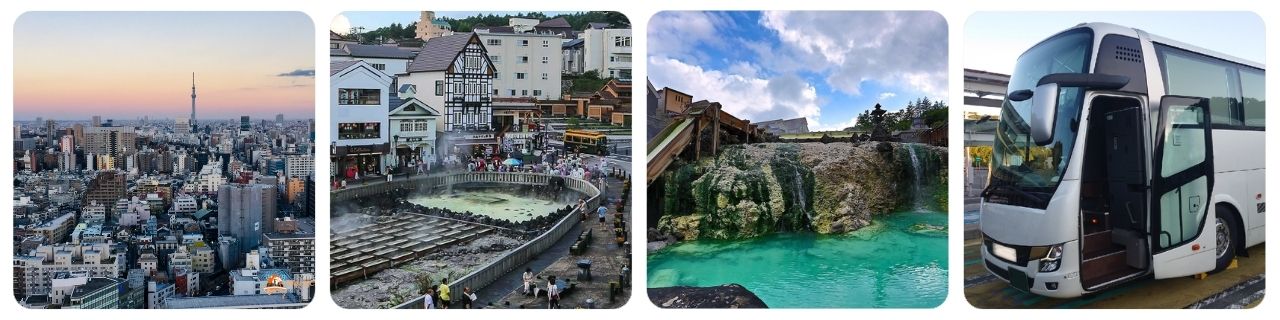
Thinking of soaking in Kusatsu Onsen’s legendary hot springs from Tokyo? Here’s exactly how to get there by bus, train, or car, with realistic times, costs, and step-by-step directions.
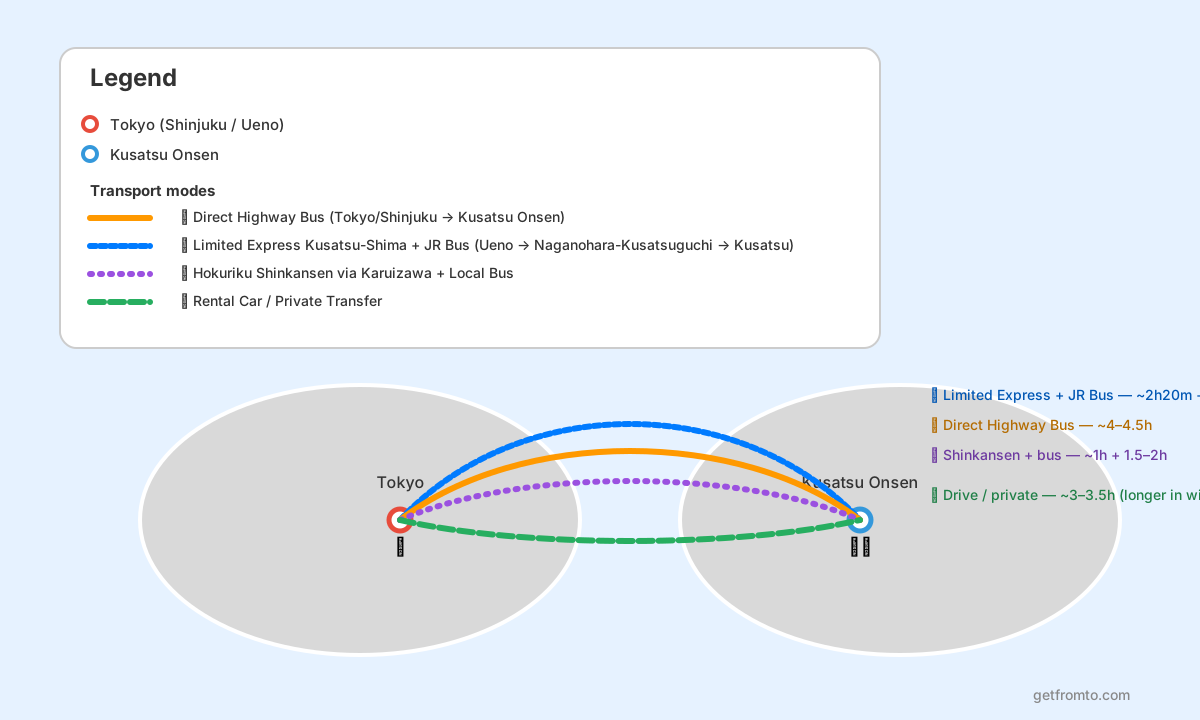
At A Glance (Tokyo to Kusatsu Onsen)
| Mode | Duration | Best For |
|---|---|---|
| 🚌 Direct Highway Bus (Tokyo/Shinjuku → Kusatsu Onsen) | ~4–4.5h direct | Budget travelers, easy point-to-point ride |
| 🏷️ Cost: ~JPY 3,500–4,500 one-way » compare buses & taxis | day-trip tour option | ||
| 🚆 Limited Express Kusatsu-Shima + JR Bus (Ueno → Naganohara-Kusatsuguchi → Kusatsu) | ~2h20m train + 25–30m bus | Fastest public transport, JR pass users |
| 🏷️ Cost: ~JPY 6,000–6,500 one-way (train + bus) | good value if you hold JR passes or rail passes | ||
| 🚄 Hokuriku Shinkansen via Karuizawa + Local Bus | ~1h Shinkansen + 1.5–2h bus | Comfort, frequent departures, combining with Karuizawa |
| 🏷️ Cost: ~JPY 7,000–8,500 one-way equivalent (train + bus) » sample itineraries | ||
| 🚗 Rental Car / Private Transfer | ~3–3.5h drive (longer in winter/traffic) | Groups, lots of luggage, ski gear, late arrivals |
| 🏷️ Cost: Rental car from ~JPY 8,000–12,000/day (+ tolls & fuel) » compare car rentals | private transfer from ~JPY 60,000+/vehicle pre-book a driver | ||
Which Option or Route Should You Choose?
- Fastest / Most Convenient: For most visitors, Option #2 – Limited Express Kusatsu-Shima + JR Bus is the most time-efficient and weather-proof, especially if you are staying near Ueno or can easily reach it by JR or subway.
- Cheapest / Most Economical: If you want to minimize costs and avoid transfers, Option #1 – Direct Highway Bus is usually the lowest cash outlay while still being comfortable, especially outside peak holiday seasons.
- Most Scenic / Flexible Schedule: If you’d like to add outlet shopping or a resort town to your trip, Option #3 – Shinkansen via Karuizawa + Bus lets you enjoy high-speed rail and a stylish mountain town on the way.
- Best for Families or Big Ski Bags: If you’re traveling as a group with bulky luggage or plan to visit multiple resorts in Gunma and Nagano, Option #4 – Rental Car / Private Transfer gives you door-to-door control over your schedule.
How to Book and Practical Tips
- Book weekends and holidays early: Limited Express Kusatsu-Shima and direct highway buses can sell out around Japanese holidays and winter weekends. Aim to reserve seats as soon as your dates are fixed.
- Use rail passes wisely: If you hold a Japan Rail Pass or regional JR East passes, the limited express + JR bus route is particularly attractive, as much of the journey may be covered by your pass depending on current rules.
- Consider bundled tours for simplicity: If you prefer not to deal with individual tickets, check packaged Kusatsu Onsen day trips and overnights on Klook’s Kusatsu Onsen activities or GetYourGuide’s Kusatsu page. These often include round-trip bus transport and onsen admission.
- Reserve accommodation near the bus terminal or Yubatake: To minimize walking with luggage, look for hotels and ryokan around Kusatsu Onsen Bus Terminal or the Yubatake area. You can compare a range of options on Booking.com – Kusatsu hotels or Trip.com’s Kusatsu guide.
- Lighten your load in Tokyo: If you’re traveling with big suitcases but want to bring only a small bag to Kusatsu, consider leaving luggage at your Tokyo hotel or using luggage storage services around major stations. Platforms like Radical Storage in Tokyo let you drop bags near Tokyo or Ueno Station while you make the overnight trip.
- Cash & IC cards: Buses from Naganohara-Kusatsuguchi to Kusatsu usually accept cash and often IC cards (like Suica/PASMO). Keep some small bills and coins handy and have an IC card topped up as backup.
- Winter driving caution: Roads into Kusatsu can be snowy or icy in winter, so if you’re driving, ensure your rental car has snow tires and that you’re comfortable with mountain driving. If not, stick to the train + bus or highway bus options.
- Add side trips: Kusatsu pairs beautifully with Karuizawa, Nagano, or the Snow Monkey Park. You can stitch together flexible itineraries using trains and buses, and even rent bicycles or motorbikes in Tokyo via services like BikesBooking’s Tokyo rentals if you enjoy two-wheeled exploring elsewhere in Japan.
🚌 Option #1 — Direct Highway Bus (Most Popular, Good Value)
Low cost No transfers Traffic-dependent
- Overview: Direct expressway buses run from central Tokyo (especially Shinjuku Expressway Bus Terminal and Tokyo Station’s Yaesu side, plus some departures from Shibuya/Ikebukuro) straight to Kusatsu Onsen Bus Terminal. The ride takes about 4–4.5 hours depending on traffic and weather.
- How to book (with price): One-way fares are usually around JPY 3,500–4,500 for adults, with discounts sometimes available for round-trips or early booking. You can reserve online via operators like JR Bus Kanto or Kanto Bus, at highway bus ticket counters, or through aggregators such as 12Go Asia (Tokyo → Kusatsu Onsen). For seasonal day-trip packages that include bath tickets, check Kusatsu tours on Klook overnight bus tours.
- Pros: Simple, no transfers; your luggage stays on the same vehicle; relatively cheap; runs even in snowy weather (though at reduced speed).
- Cons: Journey time varies with traffic; seat reservations are essential during peak seasons; less flexibility in departure times than trains.
- Official info: For current schedules and stops, see JR Bus Kanto’s Tokyo–Kusatsu route information and Kanto Bus’s Kusatsu Onsen Line page, both of which list up-to-date timetables, stops, and booking links.
Step-by-step: Direct Highway Bus
- Pick your departure terminal: Most visitors depart from Shinjuku Expressway Bus Terminal (Busta Shinjuku) or Tokyo Station Yaesu south/north exits. Choose the one closest to your hotel to minimize transfers.
- Reserve your seat: Buy tickets online via the highway bus booking site, an agent, or at bus terminals’ ticket counters. For English-friendly planning and comparison, you can use 12Go Asia to compare bus and taxi options on the same route.
- Arrive early: Get to the terminal at least 20–30 minutes before departure. Locate your platform (often shown as “Kusatsu Onsen” or similar) on the departure boards and follow signs.
- Board and settle in: Show your ticket or QR code to staff, find your reserved seat, and store large luggage in the underfloor compartment. Bring snacks, water, and entertainment—there is usually at least one restroom break en route.
- Arrive at Kusatsu Onsen Bus Terminal: The bus drops you in the heart of the onsen town. Depending on your ryokan, you can walk (Yubatake is only a few minutes away) or take a short hotel shuttle or local taxi to your accommodation.
Getting to the main embarking points (Shinjuku Expressway Bus Terminal / Tokyo Station)
- From within central Tokyo to Shinjuku Expressway Bus Terminal: Take any JR line or subway to Shinjuku Station. From the south or new south exits, follow signs to “Busta Shinjuku / Expressway Bus Terminal” (it’s directly attached above the station).
- Reaching Tokyo Station’s Yaesu side: At Tokyo Station, follow signs for the Yaesu South or Yaesu North exits. Long-distance buses depart from the bus terminal areas on the Yaesu side; check signage and electronic boards for Kusatsu-bound services.
- Using taxi or ride-hailing: If you have heavy luggage or are far from Shinjuku/Tokyo Stations, consider a taxi or ride-hailing app. In Tokyo you can request licensed taxis via the GO taxi app or use Uber as a taxi-hailing alternative. For pre-arranged station drop-offs from the airport or your hotel, services like Welcome Pickups Tokyo or GetTransfer can be handy.
- Locations/Trip Planner: 🔗 Google Map / 🔗 OpenStreetMap
🚆 Option #2 — Limited Express Kusatsu-Shima + JR Bus
Fastest public transport JR pass-friendly One easy transfer
- Overview: Take the Limited Express Kusatsu-Shima from Ueno Station in Tokyo to Naganohara-Kusatsuguchi Station, then transfer to the connecting JR Bus Kanto for a 25–30 minute ride up to Kusatsu Onsen Bus Terminal. Total journey time is about 3 hours door-to-door.
- How to book (with price): A one-way trip from Ueno to Kusatsu Onsen (train + bus) typically costs around JPY 6,000–6,500, depending on seat class. All seats on the limited express are reserved. You can buy tickets at JR ticket machines and counters (Midori no Madoguchi), via JR East’s online reservation tools, or as part of passes such as JR TOKYO Wide Pass or JR EAST Pass when available. For planning inspiration and route ideas, you can also browse Kusatsu access itineraries on Trip.com’s Kusatsu travel guide.
- Pros: Very reliable even in bad weather; comfortable reserved seats; scenic river and mountain views; convenient if you already hold a JR rail pass.
- Cons: Fewer departures per day than regular commuter trains; you must connect to a bus at Naganohara-Kusatsuguchi (though the transfer is short and well-signed); slightly higher cost than the highway bus.
- Official info: JR East’s Kusatsu-Shima train information page and the Kusatsu Onsen town access page both provide current details on travel times, connections, and approximate fares for this classic rail route.
Step-by-step: Limited Express Kusatsu-Shima + JR Bus
- Head to Ueno Station: From most parts of central Tokyo you can reach Ueno via the JR Yamanote Line, Keihin-Tohoku Line, Ginza Line, or Hibiya Line. Follow station signs for the JR conventional lines and look for the platforms serving the Limited Express Kusatsu-Shima (Agatsuma Line direction).
- Buy or confirm your reservations: If you don’t already have tickets, visit a JR ticket office or use a reserved-seat machine to purchase a seat on the Limited Express Kusatsu-Shima to Naganohara-Kusatsuguchi. If you hold an applicable JR pass, you can reserve seats without extra cost at the counter.
- Ride the limited express: Board the train a few minutes before departure, find your reserved seat, and enjoy the ~2h20m ride into the Gunma mountains. There are overhead racks for carry-ons and limited space at carriage ends for larger suitcases.
- Transfer to the JR Bus at Naganohara-Kusatsuguchi: On arrival, follow signs (and the crowd) toward the bus stop for Kusatsu Onsen, located just outside the station. Buses are timed to meet the train departures and usually depart within about 5–10 minutes.
- Paying for the bus: Either tap an IC card (if accepted) or take a ticket when boarding and pay the driver in cash when getting off. Current fares are roughly in the JPY 700–800 range each way.
- Arrive at Kusatsu Onsen: You’ll arrive at Kusatsu Onsen Bus Terminal. From here, many ryokan provide shuttles or are within walking distance; check your hotel’s instructions in advance.
Getting to the main embarking points (Ueno Station)
- From Tokyo Station: Take the JR Yamanote Line or Keihin-Tohoku Line to Ueno (about 7–8 minutes). Once there, follow signs for “JR Lines (Platforms 3–6)” and look for limited express departures toward the Agatsuma Line.
- From Shinjuku/Shibuya: Ride the JR Yamanote Line directly to Ueno. Alternatively, use the Tokyo Metro Fukutoshin + Hibiya Lines or Marunouchi + Ginza Lines with a simple transfer at central stations.
- By taxi or app: If you have lots of luggage or are tight on time, take a metered taxi or use the GO taxi app or Uber to reach Ueno Station quickly from your hotel.
- Locations/Trip Planner: 🔗 Google Map / 🔗 OpenStreetMap
🚄 Option #3 — Hokuriku Shinkansen via Karuizawa + Local Bus
Comfortable Frequent trains Great for side trips
- Overview: Travel from Tokyo or Ueno Station to Karuizawa on the Hokuriku Shinkansen (about 1 hour), then transfer to a highway or local bus bound for Kusatsu Onsen (about 1.5–2 hours). This route is smooth, fast, and ideal if you also want to explore Karuizawa’s outlets, cafes, and nature trails.
- How to book (with price): A standard-class Shinkansen seat from Tokyo to Karuizawa is usually around JPY 5,500–6,500 one-way, and buses from Karuizawa to Kusatsu Onsen add roughly JPY 2,000, depending on the operator. Book Shinkansen tickets at JR ticket offices, vending machines, or online; bus tickets can be purchased at Karuizawa Station’s bus terminal. For fully packaged multi-day trips combining Karuizawa, Kusatsu, and nearby volcanic sights, consider curated tours such as those listed on Klook’s Karuizawa & Kusatsu packages.
- Pros: Very frequent Shinkansen departures; comfortable, quiet ride; easy to tack on shopping or cafes in Karuizawa either on the way in or out.
- Cons: Slightly more expensive and longer than the direct limited express route; requires navigating Karuizawa Station and locating the correct bus bay.
- Official info: JR East’s Hokuriku Shinkansen route pages list current schedules and fares, while Gunma Prefecture and Kusatsu tourism sites explain bus options between Karuizawa and Kusatsu.
Step-by-step: Shinkansen via Karuizawa + Bus
- Reach Tokyo or Ueno Station: Choose whichever Shinkansen station is more convenient for you. Both Tokyo Station and Ueno Station are served by the Hokuriku Shinkansen line.
- Buy Shinkansen tickets: At the station, use the Shinkansen ticket machines or visit a JR ticket office. Select a train bound for Karuizawa (Asama or Hakutaka services). If you’re using a JR rail pass that covers this section, simply book your reserved seat at no extra charge.
- Ride to Karuizawa: Enjoy the roughly 1-hour ride. Karuizawa Station has shopping and food options if you’d like a quick break.
- Find the Kusatsu bus at Karuizawa: Exit toward the bus terminal area (typically on the north side) and look for buses labeled for Kusatsu Onsen, Kusatsu Onsen Bus Terminal, or via Kita-Karuizawa. Check the posted timetables and buy tickets from machines, counters, or on the bus, depending on the operator.
- Travel to Kusatsu Onsen: The bus winds through highland scenery and may stop at intermediate resorts. Total time is about 90–120 minutes. You’ll be dropped at Kusatsu Onsen Bus Terminal, central to town.
Getting to the main embarking points (Tokyo Station / Ueno Station for Shinkansen)
- From Shinjuku: Take the JR Chuo Line Rapid or Yamanote Line to Tokyo Station (about 15 minutes), then follow signs to the Hokuriku Shinkansen platforms. Alternatively, ride the Yamanote Line to Ueno and board the Shinkansen there.
- Subway connections: The Marunouchi Line serves Tokyo Station, while the Hibiya and Ginza Lines connect easily to Ueno. Both stations are well signposted in English.
- Taxi/ride-hailing: With luggage or small children, a taxi ride to Tokyo or Ueno Station via GO taxi app or Uber can be worth it, especially during rush hour or bad weather.
- Locations/Trip Planner: 🔗 Google Map / 🔗 OpenStreetMap
🚗 Option #4 — Rental Car or Private Transfer (Most Flexible)
Door-to-door Great for groups Requires winter driving confidence
- Overview: Driving from Tokyo to Kusatsu Onsen takes about 3–3.5 hours in good conditions, longer in winter or on busy weekends. The usual route follows the Kan-Etsu Expressway toward Shibukawa and then mountain roads into Gunma’s highlands. This option is ideal if you’re visiting multiple onsen towns, ski resorts, or rural sights that are less accessible by public transport.
- How to book (with price): Standard rental cars start around JPY 8,000–12,000 per day, plus highway tolls and fuel. Compare offers and book in advance via Booking.com’s car rentals or local Japanese rental chains around Tokyo and the airports. If you prefer not to drive yourself, you can arrange a private driver through services like Welcome Pickups in Tokyo or pre-book long-distance transfers using GetTransfer, then use local taxis for short trips around Kusatsu. In Tokyo itself, ride-hailing via Uber or the GO taxi app is a convenient alternative to relying on street taxis.
- Pros: Maximum flexibility for side trips and ski resorts; easy door-to-door access to more remote ryokan; great for families or groups splitting the cost.
- Cons: Tolls and fuel add up; winter conditions can be challenging; parking in Kusatsu can be limited near Yubatake (many lodgings provide their own parking, often a short walk away).
- Official info: Check the latest road conditions and any winter closures on Japanese road authority websites and Gunma Prefecture’s tourism pages, especially around Mount Shirane, where roads can close due to snow or volcanic activity.
Step-by-step: Rental Car or Private Transfer
- Pick up your vehicle in Tokyo: Choose a rental outlet near your arrival point (Haneda, Narita, or major city stations like Tokyo/Shinjuku). Verify that your car has ETC (electronic toll collection) and winter tires if traveling in colder months.
- Plan your route: Set your navigation for “Kusatsu Onsen Bus Terminal” or your specific ryokan. Most drivers take the Kan-Etsu Expressway toward Shibukawa-Ikaho IC, then follow national and prefectural roads up toward Kusatsu.
- Drive with mountain conditions in mind: Expect winding roads, possible fog, and snow or ice in winter. Take breaks at service areas and keep an eye on fuel, as gas stations thin out in the mountains.
- Parking in Kusatsu: Many accommodations have guest parking; some free municipal lots exist farther from Yubatake. Confirm details with your hotel in advance so you know where to park on arrival.
- Using transfers instead of self-driving: If you’re not comfortable driving, you can have a driver pick you up from your Tokyo hotel or airport via services like Welcome Pickups or GetTransfer, then rely on walking and short taxi rides (bookable with GO or Uber) within Kusatsu itself.
Getting to the main embarking points (Tokyo city / Airport rental branches)
- From central Tokyo: Many rental agencies cluster around major hubs such as Tokyo Station, Shinjuku, or Ikebukuro. Use trains or the GO taxi app/Uber to reach the branch at your scheduled pickup time.
- From the airports: If you’re landing at Haneda or Narita and driving straight to Kusatsu, pick up a car at the airport rental counters. This avoids navigating central Tokyo’s dense traffic.
- Locations/Trip Planner: 🔗 Google Map / 🔗 OpenStreetMap
FAQ (Tokyo to Kusatsu Onsen)
How long does it take to get from Tokyo to Kusatsu Onsen?
For most travelers, expect about 3–4.5 hours one-way. The Limited Express Kusatsu-Shima plus JR bus combination takes roughly 3 hours total, while the direct highway bus is closer to 4–4.5 hours depending on road conditions. Driving yourself will also take around 3–3.5 hours in good weather.
Can I visit Kusatsu Onsen as a day trip from Tokyo?
Yes, it’s possible as a long day trip, especially if you take the earliest Limited Express train or direct highway bus and return in the evening. You’ll have a few hours to walk around Yubatake, soak in an onsen, and enjoy a meal. That said, most people prefer to stay at least one night in a ryokan to fully enjoy the hot springs and evening atmosphere.
Which route is best in winter?
In winter, trains plus the JR bus (Option #2) are usually the most reliable because they are less affected by snow than roads. Highway buses generally still run but may be delayed by weather or traffic. Unless you’re very comfortable with snowy mountain driving and have a properly equipped car, it’s wise to avoid self-driving during heavy snow.
Is the journey covered by rail passes like the Japan Rail Pass or JR East passes?
The Limited Express Kusatsu-Shima between Ueno and Naganohara-Kusatsuguchi is typically covered by many JR rail passes that include JR East lines, and some passes also cover the connecting JR local bus to Kusatsu Onsen. However, direct highway buses from Tokyo to Kusatsu are usually not covered. Always confirm current coverage and conditions when buying or using a pass, as rules can change.
What about luggage – can I bring big suitcases?
Yes. On highway buses, large suitcases go in the underfloor compartment; on the limited express train there is overhead storage and some space at carriage ends. If you’d rather travel light, consider leaving big bags at your Tokyo hotel or using a service like Radical Storage in Tokyo and taking just an overnight bag to Kusatsu.
Do I need to book everything in advance?
For weekends, holidays, and winter ski season, it’s strongly recommended to reserve highway buses, limited express train seats, and your Kusatsu accommodation in advance. On quieter weekdays, you may find same-day seats, but trains and buses can still book out during special events or three-day weekends.
Related Tours/Services
Popular Routes
Recent Routes
- How to get from Tokyo to Kusatsu Onsen
- How to get from Gorontalo to Togean Islands
- How to get from Krabi to Koh Jum
- How to get from Pakse to Si Phan Don
- How to get from Kampot to Kep
- How to get from Barcelona–El Prat Airport to Port of Barcelona Cruise Terminal
- How to get from Rome Fiumicino Airport to Civitavecchia Cruise Port
- How to get from Tokyo Haneda Airport to Yokohama Osanbashi International Passenger Terminal
- How to get from Taipei Taoyuan International Airport to Keelung Cruise Terminal
- How to get from London Heathrow Airport to Tower of London
Top Travel Gears

MiiKARE Airplane Travel Essentials Phone Holder, Universal Handsfree Phone Mount for Flying with 360 Degree Rotation, Accessory for Airplane, Travel Must Haves Phone Stand for Desk, Tray Table
travel inspira Luggage Scale, Portable Digital Hanging Baggage Scale for Travel, Suitcase Weight Scale with Rubber Paint, 110 Pounds, Battery Included - Silver

zelin Anti Theft Zipper Clips Double Opening Small Carabiner Clips, 4Pcs Elegant Zinc Alloy Zipper Pull Replacement for Travel, Commuting and Camping (Space Grey)

Travel Utensils with Case, Quatish Portable Silverware Set for Work, Stainless Steel Reusable Travel Cutlery Set, Fork and Spoon Set for Camping, Picnic, Gadgets, Lunch Box for Men, Black

BASIC CONCEPTS Airplane Foot Hammock for Plane Travel Essentials - Airplane Travel Essentials, Long Flight Foot Rest - Plane Gadgets
