

How to get from Seoul to Jeonju
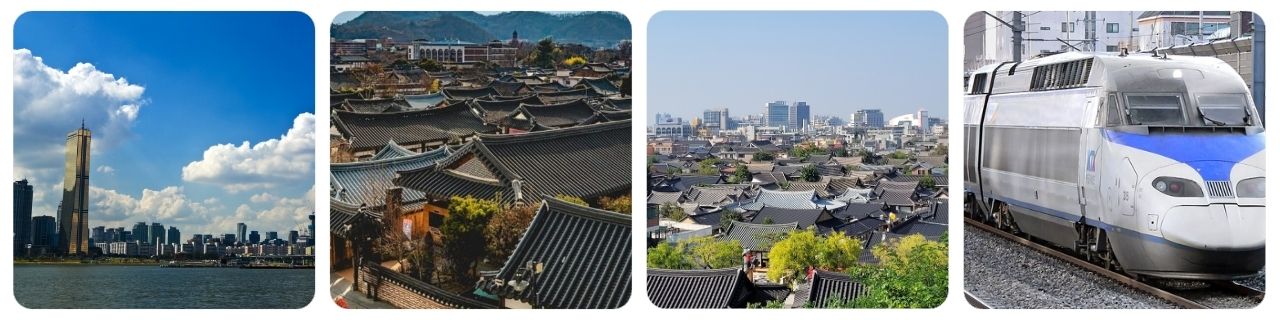
Getting from Seoul to Jeonju is an easy 2–3 hour trip by high-speed train, express bus, or car, and the best route for you depends on your budget, schedule, and whether you’re visiting just for a day or staying overnight in Jeonju Hanok Village.
At A Glance (Seoul to Jeonju)
| Mode | Duration | Best For |
|---|---|---|
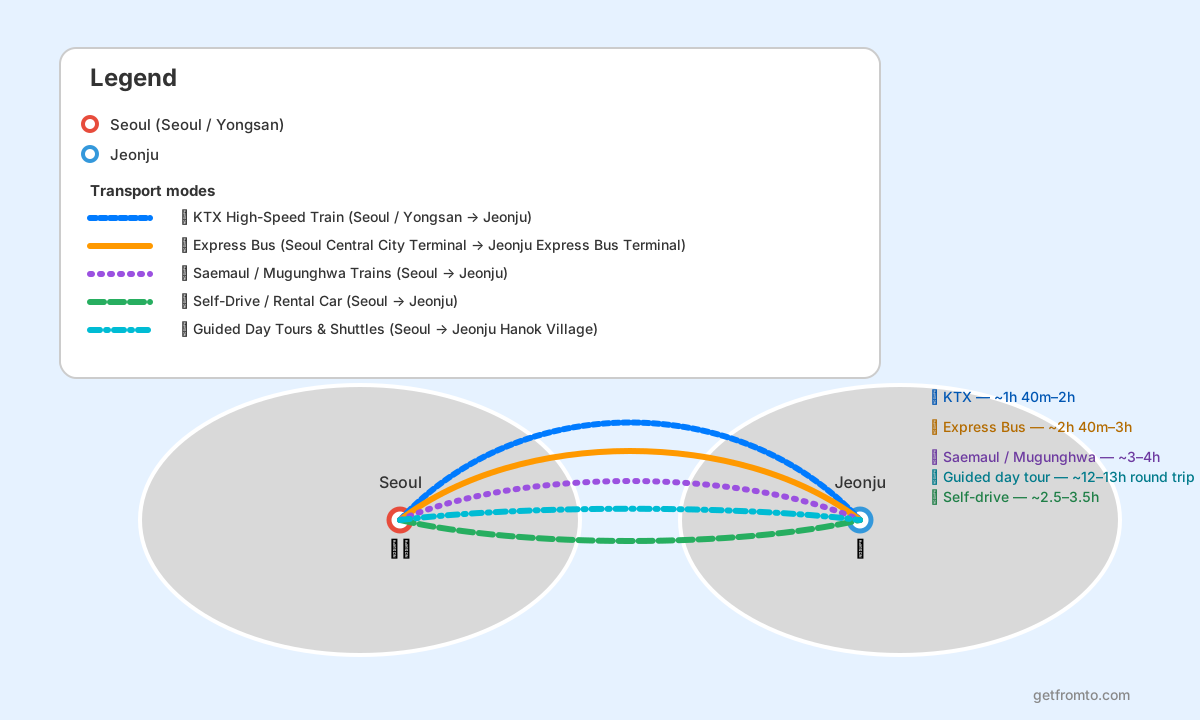
| 🚄 KTX High-Speed Train (Seoul/Yongsan → Jeonju) | ~1h 40m–2h (direct, route-dependent) | Fastest travel, day trips, comfort |
| 🏷️ Cost: ~KRW 30,000–45,000 one-way in standard class depending on time and demand. Check real-time schedules and fares on the official Korail English site or compare options via 12Go’s Seoul → Jeonju trains. | ||
| 🚌 Express Bus (Seoul Central City Terminal → Jeonju Express Bus Terminal) | ~2h 40m–3h (traffic-dependent) | Budget travelers, frequent departures |
| 🏷️ Cost: ~KRW 15,000–25,000 one-way for standard to premium buses. You can pre-book tickets in English on Klook’s Central City → Jeonju bus page or buy directly at the terminal. | ||
| 🚆 Saemaul / Mugunghwa Trains (Seoul → Jeonju) | ~3–4h (with possible transfers) | Cheaper rail option, flexible tickets |
| 🏷️ Cost: Typically ~KRW 15,000–25,000 one-way depending on train type and time. See mixed KTX and regular train options on 12Go Asia or check timetables on Korail’s timetable page. | ||
| 🚗 Self-Drive / Rental Car (Seoul → Jeonju) | ~2.5–3.5h by highway | Road-trippers, multi-stop itineraries |
| 🏷️ Cost: Rental cars from ~KRW 70,000–120,000 per day plus tolls and fuel. Compare rental prices and pickup points in Seoul on Booking.com Car Rentals. | ||
| 🚐 Guided Day Tours & Shuttles (Seoul → Jeonju Hanok Village) | ~12–13h round trip (full-day tour) | Hands-off planning, cultural focus |
| 🏷️ Cost: From ~KRW 70,000–130,000+ per person depending on inclusions. Check Jeonju day trips from Seoul on GetYourGuide Jeonju tours or Klook Jeonju Hanok Village tours. | ||
Which Option or Route Should You Choose?
- Fastest / most convenient overall: For most visitors, the KTX high-speed train (Option #1) is ideal. It’s fast, comfortable, and drops you at Jeonju Station with easy access to Jeonju Hanok Village.
- Cheapest & most frequent: If you’re watching your budget or booking late, the express bus from Central City Terminal (Option #2) is usually the best-value choice, with departures roughly every 15–30 minutes during the day.
- More relaxed but slower rail: Travelers who prefer trains but want to save a bit can look at Saemaul and Mugunghwa services (Option #3), trading extra travel time for slightly lower fares.
- Road-trip flexibility: If Jeonju is just one stop on a bigger Honam-region road trip, self-driving (Option #4) gives you maximum flexibility to stop at service areas, countryside cafes, and smaller towns along the way.
- Best for non-planners and culture lovers: First-time visitors who mainly care about Jeonju Hanok Village and don’t want to navigate Korea’s ticketing systems may enjoy guided tours and shuttles (Option #5), which bundle transport, a guide, and free time in the village.
How to Book and Practical Tips
- Use official booking sites for trains: Check KTX and other train schedules and buy tickets up to a month in advance on the official Korail reservation site. If you prefer one platform for multiple journeys, you can also compare Seoul–Jeonju trains on 12Go Asia or via third-party sellers like Trip.com’s Seoul → Jeonju KTX page.
- Book buses online or buy at the terminal: Express bus tickets can be bought in person at Seoul Central City Terminal on the day, but on weekends and holidays it’s safer to pre-book via Korean apps or international-friendly sites like Klook’s Central City → Jeonju bus page.
- Plan where to stay: If you’re staying overnight, book Jeonju hotels or hanok stays near Hanok Village or Gaeksa to minimize transfers. Compare options and reviews on Booking.com stays near Jeonju Hanok Village.
- Arriving from overseas: If you’re coming straight from Incheon or Gimpo airports, you can either go into central Seoul first or look for direct buses to Jeonju. For a smoother landing, consider booking a private airport transfer on Welcome Pickups Seoul, and note that ride-hailing apps like Kakao T and Uber (limited) are widely used around Seoul.
- Travel light or store luggage: Jeonju’s cobbled streets and hanok lanes are easier with a small bag. If you’re continuing to other cities afterward, consider luggage storage in Seoul or major hubs via services like Radical Storage in Seoul.
- Consider a rail pass for longer trips: If you’ll be bouncing between Seoul, Busan, Gyeongju, Jeonju, and more, compare individual KTX ticket prices against a Korail Pass to see if unlimited KTX travel for a few days saves money.
- Think about local mobility: In Seoul, you rarely need a car; public transport plus taxis and Kakao T are usually best. If you’d like two wheels for day trips or photo missions, you can compare scooter, motorcycle, or bike rentals via scooter rentals in Seoul or bicycle hire in Seoul.
🚄 Option #1 — KTX High-Speed Train (Fastest, Most Comfortable)
Very fast Easy for day trips Seat reservations recommended
- Overview: KTX and KTX-Sancheon high-speed trains connect Seoul (often via Yongsan Station) to Jeonju in about 1h 40m–1h 55m, with comfortable seats, air-conditioning, power points on newer trains, and luggage racks. Trains typically run several times per day, making Jeonju an easy day trip or overnight escape.
- Typical journey: Most travelers board at Seoul Station or Yongsan Station and ride a direct or one-stop KTX service to Jeonju Station. Some routes may require a transfer at Iksan, but you’ll see this clearly when booking.
- How to book (with price): Standard-class tickets usually cost around KRW 30,000–45,000 one-way, depending on time of day and how early you book. You can check schedules and buy tickets directly on the official Korail reservation website or compare departure times and prices via 12Go’s Seoul–Jeonju train listings or Trip.com KTX bookings.
- Seat classes: Economy (standard) is sufficient for most people; first-class offers wider seats and a quieter carriage at a higher price. Families or groups can also reserve seats together when booking early.
- Pros: Fastest, most comfortable, and very reliable; weather and traffic have minimal impact; easy to work or relax on board; toilets and vending machines available on many trains.
- Cons: Slightly more expensive than buses; popular time slots can sell out, especially on weekends, holidays, and during peak foliage or cherry-blossom seasons.
- Official info: For the latest timetables, fares, and seat availability, use the Korail timetable & fare search (English version available).
Step-by-step: KTX from Seoul/Yongsan to Jeonju
- Check your dates and times: Decide whether you want an early-morning departure for a full day in Jeonju or a later train for a leisurely start. On weekends, morning trains can be busy.
- Search and book tickets online: Go to the Korail reservation page and search for trains from Seoul or Yongsan to Jeonju, or use 12Go or Trip.com if you prefer paying in your home currency.
- Choose seat type and departure: Pick a direct KTX or KTX-Sancheon service with a time that matches your hotel check-in or planned Jeonju Hanok Village visit. Reserve seats together if traveling as a group.
- Get to the station in Seoul: From your hotel, ride the subway, airport railroad, or taxi/Kakao T to Seoul Station or Yongsan Station. Aim to arrive at least 20–30 minutes before departure to find your platform calmly.
- Board the train: Follow signs to your car number, stow larger bags in the luggage areas, and keep valuables and tickets with you. KTX tickets show car and seat numbers clearly.
- Arrive in Jeonju and transfer to the center: From Jeonju Station, it’s a short taxi or local bus ride to Jeonju Hanok Village and downtown. Use Kakao T or ask at the station’s tourist information counter if unsure which bus to take.
Getting to the main embarking points (Seoul Station & Yongsan Station)
- From central Seoul: Subway lines 1 and 4 stop at Seoul Station; line 1 connects to Yongsan. Follow signs for KTX platforms. Look for English signage and information desks if you’re unsure.
- From Incheon or Gimpo airports: The Airport Railroad (AREX) connects Incheon Airport with Seoul Station; Gimpo Airport is also linked by AREX and subway lines 5 and 9. For late arrivals or lots of luggage, consider a private transfer with Welcome Pickups or a Kakao T taxi straight to your hotel near Seoul Station.
- Staying near the station: If you have early-morning trains, book accommodation within walking distance of Seoul Station or Yongsan using Booking.com Seoul hotels and filter by distance to the station.
- Locations/Trip Planner: 🔗 Google Map / 🔗 OpenStreetMap
🚌 Option #2 — Express Bus from Seoul Central City Terminal (Most Popular, Good Value)
Lower cost Frequent departures Traffic-dependent
- Overview: Express buses from Seoul’s Central City Terminal (part of the Express Bus Terminal complex in Gangnam) to Jeonju Express Bus Terminal run very frequently, often every 15–30 minutes during the day. The ride takes about 2h 40m–3h, mostly on expressways, with comfortable reclining seats and air-conditioning.
- Bus types: You’ll find general, deluxe, and sometimes premium “Udx” buses. Deluxe and premium options have wider seats and more legroom at a slightly higher fare.
- How to book (with price): Expect to pay roughly KRW 15,000–25,000 one-way depending on bus class and time. You can buy tickets at the terminal ticket counters or machines on the day, or reserve in advance online via Korean services like TxBus or international-friendly platforms like Klook’s Central City → Jeonju bus tickets.
- Pros: Very frequent departures; good value; easy to use even without pre-booking on quieter days; arrives near Jeonju’s city center and has its own tourist information center.
- Cons: Journey time is longer than KTX and can be affected by traffic, especially on weekends and holidays; onboard toilets may not be available on all services (though rest stops are common on longer routes).
- Official info: For background on Korea’s express bus system and route categories, see the Korea Tourism Organization’s Express Bus guide. For Korean-language booking, locals use sites like TxBus.
Step-by-step: Express Bus from Seoul to Jeonju
- Get to Central City Terminal: Ride Seoul Subway lines 3, 7, or 9 to Express Bus Terminal station and follow signs to the Honam/Honam Line or Central City Terminal ticket hall.
- Buy or collect your ticket: Purchase tickets from the counters or machines, or show your e-voucher/QR code if you booked through Klook. Choose your preferred departure time and bus class.
- Find the gate and board: Check your ticket for gate number and departure time, then wait in the appropriate waiting area. Boarding usually starts 10–15 minutes before departure; staff will scan your ticket before you board.
- Enjoy the ride: Store larger bags in the underfloor luggage compartment, keep valuables in a small daypack, and enjoy the highway scenery. There may be a short rest-stop break on some services.
- Arrive at Jeonju Express Bus Terminal: On arrival, you’ll exit into a complex with convenience stores and cafes. From here, it’s a short taxi or local bus ride to Jeonju Hanok Village and central attractions.
Getting to the main embarking points (Central City & Jeonju Express Bus Terminal)
- Within Seoul: Take the subway to Express Bus Terminal station and follow signs to the Central City/Honam line concourse. Allow extra time at peak hours; the complex is large and can be crowded.
- By taxi or ride-hailing: Taxis and Kakao T are easy ways to reach the terminal from central areas like Myeongdong, Hongdae, or Itaewon. Just set your destination to “Central City Terminal” or “Express Bus Terminal”.
- From Jeonju Express Bus Terminal to Hanok Village: Use a short taxi ride, Kakao T, or local city bus to reach Jeonju Hanok Village. Tourist information desks can help with bus numbers and maps when you arrive.
- Locations/Trip Planner: 🔗 Google Map / 🔗 OpenStreetMap
🚆 Option #3 — Saemaul & Mugunghwa Trains (Cheaper Rail Alternative)
Budget rail Scenic Slower than KTX
- Overview: If you prefer trains but are happy to trade speed for savings, Saemaul and Mugunghwa services connect Seoul and Jeonju (often via Iksan) in around 3–4 hours. These conventional trains are slower but can be quieter and cheaper than KTX.
- How to book (with price): Fares usually fall in the KRW 15,000–25,000 one-way range depending on train type and departure. You can search all train types together on the Korail timetable & fares page or through aggregators like 12Go Asia.
- Pros: Often less expensive than KTX; pleasant scenery; a good backup option if KTX is sold out.
- Cons: Longer journey times; fewer departures than KTX on some days; may involve transfers.
Step-by-step: Using Saemaul/Mugunghwa Trains
- Search mixed train options: On the Korail reservation site, search for Seoul/Yongsan → Jeonju without filtering to KTX only, so that Saemaul and Mugunghwa show up.
- Compare times and fares: Look at departure and arrival times and compare fares with KTX. If you’re not in a rush, a slower train might be good value.
- Book and collect tickets: Book online or buy at the station ticket counters or machines. As with KTX, keep your booking number or QR code handy.
- Board and enjoy the ride: Conventional trains usually have more of a “local” feel, with slightly different seat layouts and facilities than KTX. Bring snacks and enjoy the countryside views.
Getting to the main embarking points (Seoul/Yongsan → Jeonju Station)
- Seoul Station and Yongsan: Both are large hubs with clear English signage. Arrive early enough to find your platform and car without rushing.
- Jeonju Station to city center: Take a taxi, Kakao T, or local bus to Jeonju Hanok Village and downtown; signage and maps at the station help you pick the right route.
- Locations/Trip Planner: 🔗 Google Map / 🔗 OpenStreetMap
🚗 Option #4 — Self-Drive / Rental Car (Most Flexible)
Maximum flexibility Good for groups Tolls & traffic
- Overview: Driving from Seoul to Jeonju via expressways takes around 2.5–3.5 hours depending on traffic and your starting point. This is a good option if you’re planning a wider road trip through the Honam region or traveling as a family or group with lots of luggage.
- Route: Most drivers head south via the Gyeongbu Expressway and Honam Expressway, following signs for Jeonju. GPS navigation apps like Kakao Map or Naver Map (with English support) make routing easy.
- How to book (with price): Small rental cars in Seoul typically start around KRW 70,000–120,000 per day, plus highway tolls and fuel. Compare rental companies and pickup locations across Seoul on Booking.com Car Rentals, and make sure you have an International Driving Permit if required.
- Pros: Full control over departure times and stops; easy to combine Jeonju with nearby temples, mountains, or small towns; cost-effective for groups when split.
- Cons: City driving and parking in Seoul can be stressful; highway traffic can be heavy on holidays; tolls add to overall cost; not necessary if you’re only visiting Jeonju and Seoul.
Step-by-step: Driving from Seoul to Jeonju
- Arrange your rental car: Decide whether to pick up the car in downtown Seoul or at an airport location. Use Booking.com Car Rentals to compare prices and policies, and check whether GPS and insurance are included.
- Pick up the car and set your route: Collect your car, inspect it, and set Jeonju as your destination in Kakao Map or Naver Map. Factor in potential tolls and fuel stops.
- Drive via expressways: Follow the expressways south, observing speed limits and lane rules. Consider taking breaks at highway service areas, which often have food courts, restrooms, and convenience stores.
- Arrive and park in Jeonju: Many hotels and guesthouses offer parking; hanok accommodations within Jeonju Hanok Village may direct you to nearby public or private lots. Verify parking options when booking accommodation on Booking.com.
Getting to the main embarking points (Rental Offices & Jeonju City)
- Rental offices in Seoul: Major brands have branches in central districts and at Incheon/Gimpo airports. Choose a pickup location that’s convenient to your hotel to avoid complex city driving right away.
- Using taxis and transfers: If you don’t want to drive inside Seoul, but still want a car for regional travel, consider a private transfer out of the city with GetTransfer combined with local car rental, or rely on taxis and Kakao T to get you to a suburban rental branch.
- Parking in Jeonju: Check your accommodation’s parking policy and daily rates. Jeonju Hanok Village has public car parks within walking distance of the main sights.
- Locations/Trip Planner: 🔗 Google Map / 🔗 OpenStreetMap
🚐 Option #5 — Guided Day Tours & Shuttles from Seoul (Most Hassle-Free)
No planning Cultural focus Fixed schedule
- Overview: Several operators run full-day tours and shuttle services from Seoul to Jeonju Hanok Village, usually including round-trip transport, a guide, and free time in the village. Some tours combine Jeonju with nearby attractions like Maisan or Daedunsan.
- How to book (with price): Prices for Jeonju day tours generally start from around KRW 70,000–130,000+ per person depending on inclusions. You can compare itineraries and reviews on GetYourGuide or via Klook’s Jeonju Hanok Village tours, some of which include hanbok rental or admission passes.
- What’s typically included: Round-trip coach transport from central Seoul pickup points (like Myeongdong, Hongdae, or Dongdaemun History & Culture Park), an English-speaking guide, and several hours of free time in Jeonju Hanok Village; some tours add temple visits or mountain scenery.
- Pros: Zero logistics; great for non-Korean speakers; fixed price that includes many extras; good for those with limited time who want a focused cultural day.
- Cons: Less flexibility on timing; limited evening time in Jeonju; larger groups may feel rushed at crowded photo spots.
Step-by-step: Joining a Day Tour or Shuttle
- Compare tour options: Browse Jeonju Hanok Village tours on GetYourGuide and Klook. Look for details like departure times, included meals, and optional activities such as hanbok rentals.
- Choose pickup location: Select the pickup point closest to your accommodation (for example, near Myeongdong or Hongdae). Confirm the exact meeting point and time on your voucher.
- Prepare for the day: Wear comfortable shoes for village alleys, bring some cash or a card for snacks and souvenirs, and pack layers depending on the season.
- Join the group at the meeting point: Arrive 10–15 minutes early and look for staff holding a tour sign. After check-in, relax on the bus ride to Jeonju.
- Enjoy Jeonju and return to Seoul: Follow your guide’s orientation, then enjoy your free time exploring Jeonju Hanok Village before meeting at the agreed spot for the return trip.
Getting to the main embarking points (Seoul Meeting Spots)
- Subway access: Most tour pickups are near subway exits in popular districts (e.g., Myeongdong Station, Hongik Univ. Station, Dongdaemun History & Culture Park Station). Check your tour voucher for the specific exit number.
- By taxi or Kakao T: If you’re staying further away, a short taxi or Kakao T ride to the meeting point is easiest. Factor in traffic during morning rush hour.
- After the tour: Buses usually drop you back at the same central locations, from where you can walk, take the subway, or use a taxi/Kakao T back to your hotel.
- Locations/Trip Planner: 🔗 Google Map / 🔗 OpenStreetMap
FAQ (Seoul to Jeonju)
Is it better to take the KTX or the express bus from Seoul to Jeonju?
If budget allows, most travelers find the KTX high-speed train more comfortable and quicker (around 1h 40m–2h), especially for day trips. However, express buses from Central City Terminal are cheaper and run more frequently, making them a great option if you’re flexible on time or booking close to your travel date.
Do I need to book tickets in advance?
For weekends, holidays, and peak seasons (cherry blossom, autumn foliage), it’s wise to book KTX seats several days or even weeks ahead using the Korail website or 12Go/Trip.com. Express buses can often be purchased on the day, but advance booking via Klook or local apps is still recommended if you have a fixed schedule.
How do I get from Jeonju Station or Bus Terminal to Jeonju Hanok Village?
From both Jeonju Station and Jeonju Express Bus Terminal, it’s a short taxi ride (usually 10–15 minutes depending on traffic). Kakao T is widely used and convenient. There are also local buses serving Hanok Village; check route maps at the station or terminal tourist information center if you prefer public transport.
Can Jeonju be done as a day trip from Seoul?
Yes. With an early KTX or express bus, you can arrive in Jeonju by late morning, spend several hours exploring Jeonju Hanok Village and nearby sights, and return in the evening. However, many travelers choose to stay one night so they can enjoy the village after day-trippers leave and sample more of Jeonju’s famous food scene.
Where can I find more official information about Jeonju?
The city has an official cultural tourism site in English that provides maps, event listings, and attraction details, and Korea’s national tourism website has detailed articles on Jeonju Hanok Village and the region.





Related Tours/Services
Popular Routes
Recent Routes
- How to get from Oslo Opera House to Oslo Central Station
- How to get from Helsinki Cathedral to Helsinki Central Station
- How to get from Bucharest Old Town to Gara de Nord
- How to get from Ban Jelačić Square (Zagreb) to Zagreb Glavni Kolodvor
- How to get from Knez Mihailova Street (Belgrade) to Belgrade Centre (Prokop) Station
- How to get from The Bund (Shanghai) to Shanghai Railway Station
- How to get from Odori Park (Sapporo) to Sapporo Station
- How to get from Plaza de Armas to Terminal Alameda (Santiago)
- How to get from Times Square to Penn Station (New York)
- How to get from India Gate to New Delhi Railway Station
Top Travel Gears

zelin Anti Theft Zipper Clips, Travel Essentials, Carabiner, 4Pcs Grey
2026 Travel Essentials for Apple Watch Charger,Cruise Vacation Camping Essentials,iPhone Charger,Multi Charging Cable,3 in 2 Charging Docks for iWatch Series 12 11-2/Ultra,iPhone 17-12,Car

INIU 10000mAh 45W Fast Charging Portable Charger, Smaller Travel Power Bank

LISEN Airplane Travel Essentials for Flying Airplane Phone Holder for Desk
FYY Electronic Organizer, Travel Tech Pouch Bag, Cable Organizer Black
