

How to get from Seville to Madrid
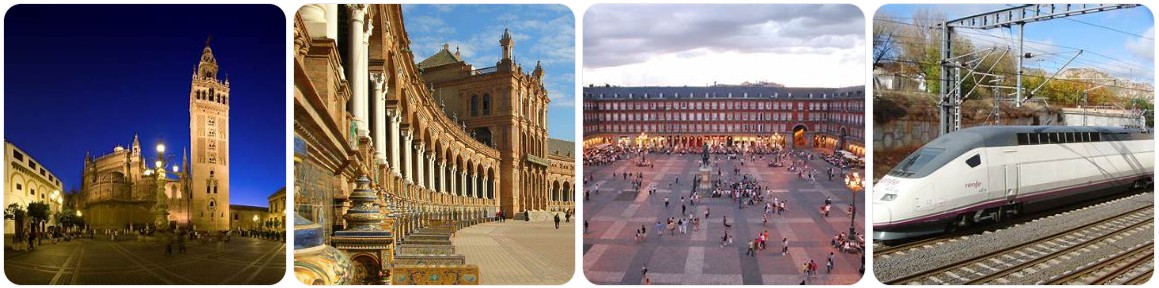
Traveling from Seville to Madrid is one of the easiest intercity trips in Spain: high-speed trains are usually the fastest and most convenient, while buses, flights, and road transfers can fit different budgets and schedules.
At A Glance (Seville to Madrid)
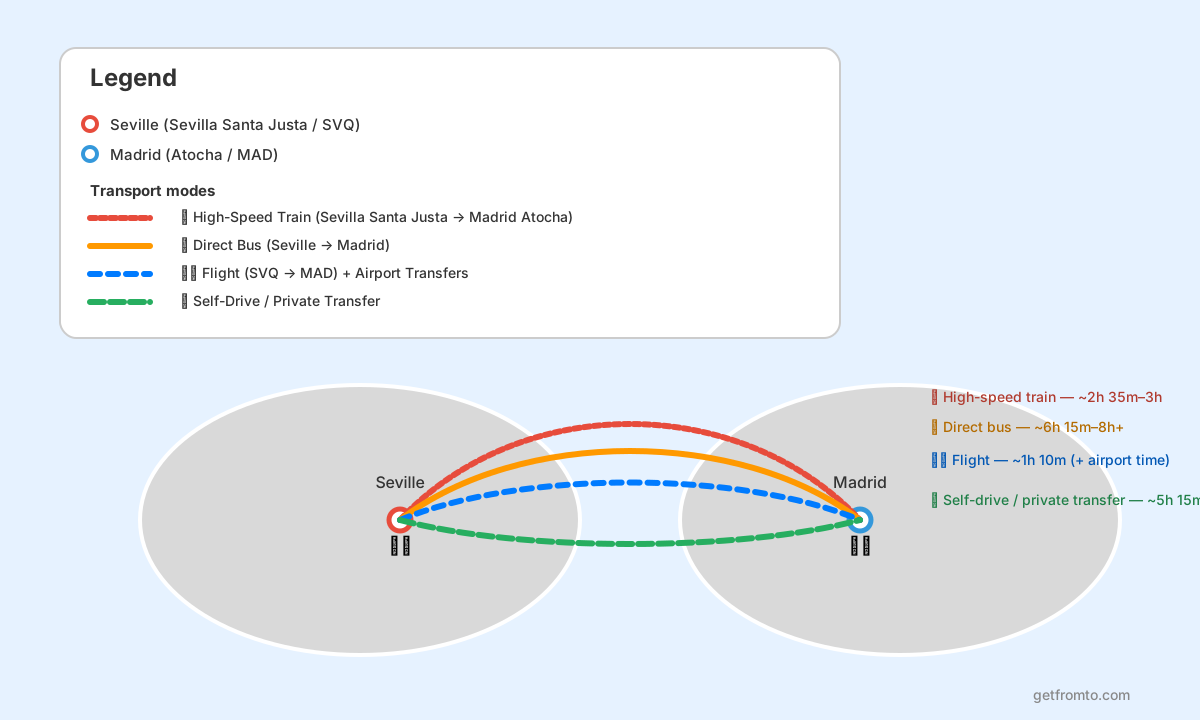
| Mode | Duration | Best For |
|---|---|---|
| 🚄 High-Speed Train (Sevilla Santa Justa → Madrid Atocha) | ~2h 35m–3h (station to station) | Fastest city-center to city-center travel |
| 🏷️ Cost: ~€9–€90+ one-way depending on operator/time » compare rail options | Renfe route info | ||
| 🚌 Direct Bus (Seville → Madrid) | ~6h 15m–8h+ (traffic-dependent) | Lower cost, overnight trips, flexible luggage |
| 🏷️ Cost: ~€18–€45 one-way » compare buses | Socibus | ||
| ✈️ Flight (SVQ → MAD) + Airport Transfers | ~1h 10m flight (+ airport time = ~4–6h door-to-door) | Airport connections, mileage runs, specific flight deals |
| 🏷️ Cost: ~€25–€180+ one-way incl. transfer variability » search flights | private airport pickup | ||
| 🚗 Self-Drive / Private Transfer | ~5h 15m–6h 30m (stops + traffic) | Road-trip flexibility, groups, rural detours |
| 🏷️ Cost: Car rental + fuel + toll/parking (varies) » compare car rental | private transfer quotes | ||
Which Option or Route Should You Choose?
- Fastest/Most Convenient: Option #1 — High-Speed Train for a true city-center to city-center trip with frequent departures.
- Cheapest/Most Economical: Option #2 — Direct Bus if you book ahead or don’t mind overnight travel.
- Best for onward flights / airport connections: Option #3 — Flight when you’re connecting through Madrid-Barajas or using points.
- Most Scenic/Flexible Schedule: Option #4 — Self-Drive / Private Transfer if you want stops in Córdoba, La Mancha, or small towns.
How to Book and Practical Tips
- Book trains early for the lowest fares: Spain’s high-speed tickets can be very cheap when released, then rise sharply on busy dates.
- Compare operators, not just one brand: Renfe (AVE/Avlo), iryo, and OUIGO all operate high-speed services on the Madrid–Andalusia corridor.
- Use station names carefully: Seville’s main station is Sevilla Santa Justa; Madrid arrivals are commonly Madrid Puerta de Atocha-Almudena Grandes.
- Arrive early for trains: Allow extra time for station access and platform controls, especially on peak weekends/holidays.
- If flying, include airport transfer time: Short flight time does not always mean a faster total journey than the train.
- Check luggage rules before low-cost rail/air fares: Budget tickets may have stricter baggage allowances or paid extras.
- Need to store bags before departure or after arrival? Consider luggage storage in Seville or luggage storage in Madrid.
- Planning activities after arrival: You can line up a same-day city tour or museum entry on GetYourGuide Madrid or browse Klook Madrid activities.
🚄 Option #1 — High-Speed Train (Fastest, Best Overall)
Fastest City center to center Best frequency
- Overview: High-speed trains connect Sevilla Santa Justa and Madrid Atocha in roughly 2h 35m–3h. This is usually the most time-efficient option once transfers and airport time are included.
- How to book (with price): Typical fares range from ~€9–€90+ depending on operator, demand, and how early you book. Check Renfe’s Seville–Madrid route page, iryo Seville–Madrid trains, and compare on Trip.com Trains.
- Pros: Very fast, comfortable, frequent departures, no airport commute. Cons: Peak-hour fares can be expensive; budget tickets may have stricter change/refund conditions.
- Arrival advantage: Renfe notes Madrid Atocha has metro, bus, taxi, and commuter train connections, and many long-distance Renfe tickets include a Cercanías connection (Combinado Cercanías) on eligible journeys.
Step-by-step: High-Speed Train
- Choose your operator and departure time: Compare AVE/Avlo/Renfe, iryo, and (on selected dates) low-cost high-speed options. Early morning and midweek departures often have better pricing.
- Go to Sevilla Santa Justa station: Use taxi, local bus, or ride-hailing. If you are staying far from the station and want a pre-booked car, compare Welcome Pickups (private ride style service) or GetTransfer; on-demand alternatives in Seville commonly include Uber and Cabify (availability varies by area/time).
- Arrive with buffer time: Aim for 20–40 minutes early to find platforms, handle ticket checks, and settle luggage.
- Board and ride to Madrid Atocha: Travel time is commonly under 3 hours, with onboard amenities varying by ticket class/operator.
- Continue from Atocha: Take metro/Cercanías/taxi to your final destination, or walk if staying nearby. For accommodation search, use Booking.com Madrid hotels.
Getting to the main embarking points (Sevilla Santa Justa)
- From Seville Old Town / Cathedral area: Taxi or ride-hailing is usually the easiest with luggage; allow extra time during rush hour.
- From Triana / Los Remedios: Taxi/Cabify/Uber is straightforward; some bus combinations work but can be slower with bags.
- From Sevilla Airport (SVQ): The Aena page for Seville Airport shows the airport bus (EA line) and taxi info; the airport bus also serves strategic city stops and is useful if you land and continue by train the same day.
- Locations/Trip Planner: 🔗 Google Map / 🔗 OpenStreetMap
🚌 Option #2 — Direct Bus (Most Affordable on Many Dates)
Low cost Overnight-friendly Traffic-dependent
- Overview: Direct coaches between Seville and Madrid are a solid budget option, usually taking ~6h 15m–8h+ depending on departure time, traffic, and exact stop pattern.
- How to book (with price): Ballpark fares are ~€18–€45 one-way. Check operator websites such as Socibus and ALSA, or compare listings on 12Go.
- Pros: Usually cheaper than same-day trains/flights, useful for late-night departures, simple for travelers with heavier luggage. Cons: Slower, more sensitive to traffic, and arrival point may be less central than Atocha depending on route.
- Operator note: Socibus officially lists the Madrid–Seville route among its managed routes.
Step-by-step: Direct Bus
- Choose daytime vs. overnight: Overnight buses can save a hotel night, while daytime buses are easier if you prefer regular sleep and daylight arrival.
- Confirm exact departure and arrival stations: Madrid buses may use different terminals/stop points depending on operator and service.
- Arrive 20–30 minutes early: Allow time for platform/stand changes and luggage loading.
- Keep essentials in your carry-on: Phone charger, water, layers, and valuables should stay with you on board.
- After arrival in Madrid: Continue by Metro, Cercanías, taxi, or ride-hailing. If you need a transfer to hotel/apartment, compare GetTransfer in Madrid or Welcome Pickups Madrid (and local apps like Cabify, Uber, Bolt, or FREE NOW where available).
Getting to the main embarking points (Seville bus stations / stops)
- Plaza de Armas area: A common departure area for long-distance coaches; reach it by taxi, city bus, or ride-hailing from central Seville.
- San Bernardo / other operator stops: Some services may use alternate stops; always verify the boarding point on your ticket confirmation.
- From Sevilla Airport (SVQ): The Aena Sevilla Airport page links to bus and taxi access info; if timing is tight, a taxi/private transfer is safer than multiple city-bus changes.
- Locations/Trip Planner: 🔗 Google Map / 🔗 OpenStreetMap
✈️ Option #3 — Flight (Best for Airport Connections)
Useful for connections Frequent air service Airport-time heavy
- Overview: Flights from Sevilla Airport (SVQ) to Madrid-Barajas (MAD) are short (around ~1h 10m–1h 15m in the air), but total door-to-door time is often ~4–6 hours after airport transfers, check-in, and security.
- How to book (with price): One-way fares can be ~€25–€180+ depending on season, baggage, and timing. Search Booking.com Flights (SVQ→MAD) or compare on Trip.com Flights.
- Pros: Good if you are connecting onward from Madrid or using airline miles. Cons: Usually not faster than the train city-to-city; weather/ATC delays can affect schedules.
- Airport transfer basics: Aena’s Seville Airport pages list bus and taxi access, while Aena’s Madrid-Barajas page lists metro, bus, train (T4), taxi, and car options.
Step-by-step: Flight (SVQ → MAD)
- Book the flight with baggage rules in mind: Budget fares may only include a small cabin bag.
- Get to Sevilla Airport (SVQ): Aena lists the airport bus (EA line) with published schedules/fares and airport taxi information. The airport bus is often the cheapest option; taxi/private transfer is easiest with early/late departures.
- Arrive early: Aim for 1.5–2 hours before domestic departure if checking bags or traveling during peak periods.
- Land at MAD and check terminal: If connecting, confirm whether you need to change terminals; Aena provides terminal transfer information, including the free inter-terminal bus.
- Continue into Madrid: Use Metro, Cercanías (from T4), taxi, or ride-hailing depending on your terminal and destination. If you want a pre-booked arrival transfer, compare Welcome Pickups Madrid airport transfer.
Getting to the main embarking points (Sevilla Airport SVQ / Madrid-Barajas MAD)
- To SVQ from central Seville: Aena’s airport bus page shows the EA line schedule and fare (single and return options); taxis are more convenient for early departures or heavy luggage.
- From MAD to central Madrid: Aena Madrid-Barajas lists Metro Line 8 access, city/intercity buses, and Cercanías connections (at T4).
- Ride-hailing alternatives: In Madrid and Seville, travelers commonly use Cabify and Uber; Bolt/FREE NOW may also be available depending on zone and time.
- Locations/Trip Planner: 🔗 Google Map / 🔗 OpenStreetMap
🚗 Option #4 — Self-Drive / Private Transfer (Flexible, Best for Groups)
Flexible stops Good for groups Driving & parking effort
- Overview: Driving from Seville to Madrid generally takes around ~5h 15m–6h 30m depending on route, rest stops, and traffic conditions.
- How to book (with price): Compare car rental on Booking.com Cars for one-way rentals (watch one-way drop fees), or request a chauffeur quote via GetTransfer. Private transfer pricing varies widely by vehicle size and season.
- Pros: Door-to-door convenience, easy to stop in Córdoba or scenic towns, great for families/groups. Cons: Fuel/parking costs, urban driving, and possible one-way rental surcharges.
- Road conditions: Check traffic/incidents before departure, especially around Madrid approaches and holiday weekends.
Step-by-step: Self-Drive / Private Transfer
- Choose your route and stops: Decide whether you want a direct motorway run or a stop in Córdoba/La Mancha.
- Collect the rental car or meet your driver: Airport and city-center pickup points are both common; city pickup can save airport fees if you are already in Seville.
- Check luggage and child seat needs: Reserve extras in advance for peak dates.
- Drive with rest breaks: Plan a stop every 2–3 hours; motorway services are frequent on major routes.
- Parking in Madrid: If staying central, confirm hotel parking before arrival or consider returning the car near the city edge and using transit/taxi.
Getting to the main embarking points (city rental office / Sevilla Airport car rental)
- City-center rental pickup: Best if you already slept in Seville and want to avoid airport detours.
- SVQ car rental desks: Convenient for fly-drive plans; Aena Sevilla lists airport services including car hire.
- Live traffic check: Use Spain’s official traffic resources (DGT / NAP traffic portals) before leaving, especially on holiday travel dates.
- Locations/Trip Planner: 🔗 Google Map / 🔗 OpenStreetMap
FAQ (Seville to Madrid)
What’s the easiest way to get from Seville to Madrid?
For most travelers, the high-speed train is the easiest option because it is fast, frequent, and runs city center to city center.
How long does each option take? High-speed train: ~2h 35m–3h. Direct bus: ~6h 15m–8h+. Flight: ~1h 10m in the air, but usually ~4–6h total door-to-door. Self-drive/private transfer: ~5h 15m–6h 30m.
Is flying faster than the train?
Usually no for city-center to city-center travel. The flight is short, but airport transfers, check-in, and security often make total travel time longer than the train.
Which station should I use in Seville and Madrid?
For rail, use Sevilla Santa Justa in Seville and typically Madrid Puerta de Atocha-Almudena Grandes in Madrid.
What is the cheapest option?
The direct bus is often the cheapest, especially for last-minute travel when train prices surge. Low-cost rail promos can also be very competitive if booked early.
Can I do a same-day trip?
Yes, with the high-speed train it is practical to travel in the morning and return in the evening, though an overnight stay is better if you want a relaxed visit.
Are ride-hailing apps available in Seville and Madrid?
Yes, travelers commonly use Cabify and Uber; Bolt and FREE NOW may also be available depending on your location and time.
Where can I leave luggage if I arrive before check-in?
You can use station lockers (where available) or services such as Radical Storage in Madrid and Radical Storage in Seville.
Where should I stay in Madrid after arrival?
If arriving at Atocha, staying near Atocha, Sol, Gran Vía, or Chamberí is convenient for first-time visitors. Compare options on Booking.com Madrid.





Related Tours/Services
Popular Routes
Recent Routes
- How to get from Oslo Opera House to Oslo Central Station
- How to get from Helsinki Cathedral to Helsinki Central Station
- How to get from Bucharest Old Town to Gara de Nord
- How to get from Ban Jelačić Square (Zagreb) to Zagreb Glavni Kolodvor
- How to get from Knez Mihailova Street (Belgrade) to Belgrade Centre (Prokop) Station
- How to get from The Bund (Shanghai) to Shanghai Railway Station
- How to get from Odori Park (Sapporo) to Sapporo Station
- How to get from Plaza de Armas to Terminal Alameda (Santiago)
- How to get from Times Square to Penn Station (New York)
- How to get from India Gate to New Delhi Railway Station
Top Travel Gears

zelin Anti Theft Zipper Clips, Travel Essentials, Carabiner, 4Pcs Grey
2026 Travel Essentials for Apple Watch Charger,Cruise Vacation Camping Essentials,iPhone Charger,Multi Charging Cable,3 in 2 Charging Docks for iWatch Series 12 11-2/Ultra,iPhone 17-12,Car

INIU 10000mAh 45W Fast Charging Portable Charger, Smaller Travel Power Bank

LISEN Airplane Travel Essentials for Flying Airplane Phone Holder for Desk
FYY Electronic Organizer, Travel Tech Pouch Bag, Cable Organizer Black
