
How to get from Seoul Incheon International Airport to Busan International Passenger Terminal
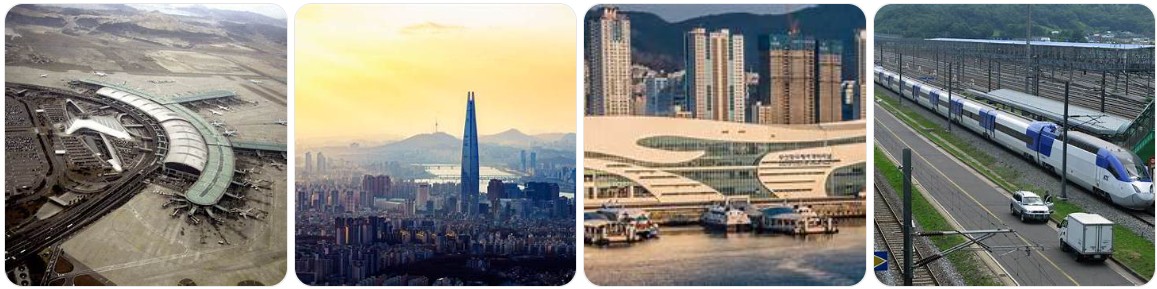
Seoul Incheon International Airport (ICN) is on Korea’s west coast, while Busan International Passenger Terminal (Busan Port International Passenger Terminal) is in Busan North Port, close to Busan Station. Below are the 4 most practical routes—choose based on how quickly you need to arrive and how much luggage you’re carrying.
At A Glance (Seoul Incheon International Airport to Busan International Passenger Terminal)
| Mode | Duration | Best For |
|---|---|---|
| 🚆 AREX + KTX (ICN→Seoul Station→Busan Station) | ~3.5–4.5h total (connection-dependent) | Most travelers, reliable & frequent |
| 🏷️ Cost: ~KRW 60,000–120,000 total (depends on AREX type + KTX seat class) » AREX deals | » KTX tickets (alt.) | » compare trains | ||
| ✈️ Flight (ICN→Gimhae PUS) + Metro/Taxi | ~2–3.5h total (incl. airport time + city transfer) | Fastest arrival, tight schedules |
| 🏷️ Cost: ~KRW 50,000–200,000+ one-way (varies a lot by date) » search flights | » compare fares | ||
| 🚌 Direct Intercity Bus (ICN→Busan terminal area) | ~5.5–7h (traffic-dependent) | Budget travelers, fewer transfers |
| 🏷️ Cost: ~KRW 45,000–90,000 one-way » check schedules (TxBus) | ||
| 🚖 Private Transfer / Taxi (Door-to-door) | ~4.5–6h (traffic-dependent) | Families, late arrivals, heavy luggage |
| 🏷️ Cost: ~KRW 350,000–800,000+ per car (vehicle-dependent) » transfer-style service | » GetTransfer options | ||
Which Option or Route Should You Choose?
- Fastest / tight schedule: Choose Option #2 (Flight)—a direct ICN→PUS flight is typically about 1h 10m in the air, then you connect into Busan by light rail/metro or taxi.
- Most convenient overall: Choose Option #1 (AREX + KTX)—frequent departures and the easiest “public transport” route if you don’t want to deal with airport check-in again.
- Cheapest / most economical: Try Option #3 (Direct intercity bus)—often the lowest price, but slower and traffic-sensitive.
- Door-to-door comfort: Pick Option #4 (Private transfer)—best if you’re arriving late, have kids, or you want a single payment for the whole journey.
How to Book and Practical Tips
- Use official sources for final schedules: KTX on Korail (global) and bus schedules via Incheon Airport’s Bus Search (links out to TxBus / Kobus). Ticketing portals can change on short notice.
- Plan your “last mile” to the terminal: Busan Port International Passenger Terminal is in Busan North Port; it’s close to Busan Station and has a dedicated terminal page on Busan Port Authority.
- Build buffer time: If you’re catching a ferry, arrive at the terminal early for check-in/CIQ—international departures often require more time than domestic rail/bus.
- Cashless commuting: A T-money transit card (or mobile equivalent) is handy for AREX/subway/metro and transfers in Busan.
- Luggage strategy: If you have a long gap in Seoul or Busan, consider storing bags near major stations: luggage storage at Seoul Station or luggage storage at Busan Station.
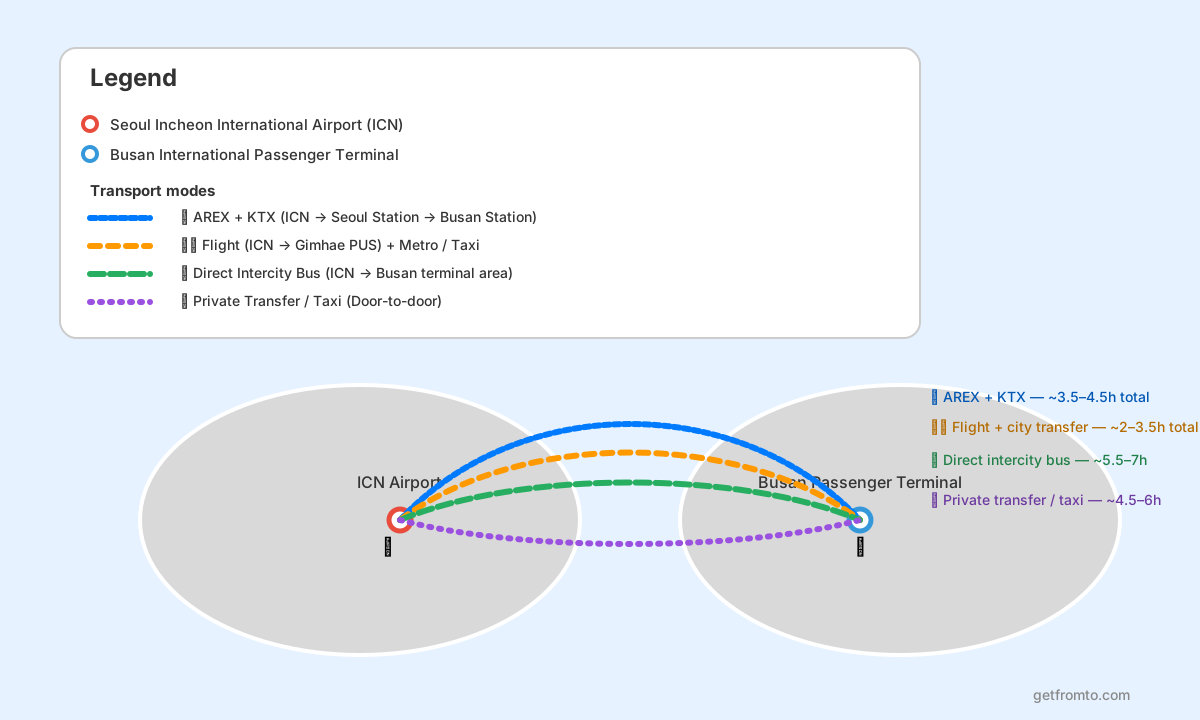
🚆 Option #1 — AREX + KTX (Best Balance: Speed + Reliability)
Reliable Frequent departures 1–2 transfers
- Overview: Take AREX from ICN to Seoul Station, then board the KTX high-speed train to Busan Station. From Busan Station, continue a short hop to Busan International Passenger Terminal (by shuttle bus, local bus, taxi, or subway/walk depending on your exact route).
- Typical time: AREX Express is around 43 minutes to Seoul Station and runs about every 20–40 minutes (Express); total rail time to Busan varies by your KTX (roughly 2h 15m–3h from Seoul to Busan). Total door-to-door is usually ~3.5–4.5h depending on connections. (AREX timing referenced by official tourism guidance.)
- How to book (with price): Buy KTX tickets on Korail’s booking page (or compare options on 12Go). AREX tickets can be purchased at the station; discounted e-tickets are commonly available via Klook.
- Pros: Predictable, comfortable, great if you want to arrive at Busan Station (central). Cons: Requires a connection at Seoul Station; luggage racks on KTX can fill up on peak departures.
Step-by-step: AREX + KTX
- At ICN (Terminal 1 or 2), follow signs for the Airport Railroad (AREX) and ride to Seoul Station.
- At Seoul Station, move to the Korail/KTX concourse and confirm your platform. If you booked on Korail, keep your QR/booking number ready.
- Board the KTX to Busan Station. If booking via third parties, compare seat classes and times on Trip.com or 12Go.
- From Busan Station to Busan International Passenger Terminal: take a taxi (fastest), local bus, or use the shuttle route information published by Busan City (if operating on your travel date).
Getting to the main embarking points (Seoul Station & Busan Station)
- At ICN: AREX stations are inside the airport complex—follow “Airport Railroad/AREX” signage after arrivals.
- At Seoul Station: Allow extra time to walk between AREX platforms and the KTX concourse (especially with luggage).
- At Busan Station: For the final leg, the terminal is at Busan North Port; check the terminal overview for facilities and location details.
- Locations/Trip Planner: 🔗 Google Map / 🔗 OpenStreetMap
✈️ Option #2 — Fly ICN→Gimhae (PUS) + Light Rail/Metro (Fastest)
Fastest Many daily flights Airport time adds up
- Overview: Fly from Incheon (ICN) to Busan/Gimhae International Airport (PUS), then take the Busan–Gimhae Light Rail/metro connections toward downtown Busan and onward to the passenger terminal area.
- Typical time: Direct flights are about 1h 10m in the air; total time usually becomes ~2–3.5h after security, boarding, baggage, and the final city transfer.
- How to book (with price): Compare domestic flight prices on Booking.com Flights or 12Go (prices swing widely by day and time).
- Pros: Fastest “arrival in Busan” option. Cons: Extra airport steps; can be less convenient if you have oversized luggage or you’re connecting immediately to a ferry.
Step-by-step: Flight to Gimhae (PUS)
- At ICN, check in for your domestic flight (allow time for domestic security and the correct terminal/gate).
- Arrive at Gimhae (PUS) and follow signs for ground transport. Gimhae Airport’s official page outlines connections by bus, subway transfers, and taxi.
- Use the Busan–Gimhae Light Rail Transit access points and transfer into the Busan Metro system (common transfer points include Sasang or Daejeo depending on your route).
- Continue toward Busan Station / Jungang-dong area, then take a short taxi or local bus/shuttle to Busan International Passenger Terminal.
Getting to the main embarking points (Gimhae Airport & Busan Metro connections)
- From Gimhae Airport: Check the official transport guidance for subway/light rail transfer points (Sasang or Daejeo are common). Gimhae Airport transportation
- In downtown Busan: The city’s public transport overview (fares, rail operators) can help if you’re using stored-value cards. Busan public transportation
- Locations/Trip Planner: 🔗 Google Map / 🔗 OpenStreetMap
🚌 Option #3 — Direct Intercity Bus (Most Budget-Friendly, No Trains)
Good value Fewer transfers Traffic-dependent
- Overview: Take a direct intercity/express bus from ICN to Busan (routes may terminate at major terminals like Busan Central/Busan Nopo/Seobu depending on the service). From the Busan terminal, transfer by metro or taxi to Busan International Passenger Terminal.
- Typical time: Usually ~5.5–7h (and can be longer in peak traffic).
- How to book (with price): Use Incheon Airport’s official Bus Search and Reservation, which links out to the integrated intercity bus reservation platform. In practice, many travelers use TxBus (T-money intercity bus) for online booking where available.
- Pros: Often cheapest, simple once onboard. Cons: Slower and less predictable; you may still need a metro/taxi ride to reach the port terminal.
Step-by-step: Direct bus
- At ICN, find the intercity/express bus ticketing area (airport signage is clear; staff can confirm the Busan-bound platform).
- Check schedules and reserve seats via TxBus when your route is listed, or buy at the airport counter if online seats aren’t shown.
- Arrive at your Busan bus terminal, then transfer by subway/taxi toward Busan Station / Jungang-dong area.
- Finish with a short taxi or local bus/shuttle to Busan International Passenger Terminal.
Getting to the main embarking points (ICN bus bays & Busan terminals)
- At ICN: Start with the airport’s official bus search to confirm whether your Busan route is running on your date.
- In Busan: If your bus arrives far from Busan Station, expect an extra 20–50 minutes on the metro depending on terminal and time of day.
- Locations/Trip Planner: 🔗 Google Map / 🔗 OpenStreetMap
🚖 Option #4 — Private Transfer / Taxi (Door-to-Door, Easiest With Luggage)
Hassle-free Any arrival time Highest cost
- Overview: Pre-book a car with a driver (or take a taxi) from ICN straight to Busan International Passenger Terminal. This is the simplest option if you have multiple suitcases, kids, or you’re arriving late.
- Typical time: ~4.5–6h depending on traffic and rest stops.
- How to book (with price): Compare pre-booked transfers using GetTransfer. For a “transfer-style” service model (meet-and-greet, fixed quote style), you can also review providers like Welcome Pickups (availability may be Seoul-focused; verify they serve your full ICN→Busan route). If you prefer to drive yourself, check Booking.com Car Rental.
- Ride-hailing alternatives: In Korea, Kakao T is widely used for taxis; availability is generally good in major cities (you may need a local number/payment method depending on setup).
- Pros: No transfers, best for heavy luggage. Cons: Costly, and traffic can still be an issue.
Step-by-step: Private transfer
- Book a vehicle in advance and confirm pickup details (terminal number, arrival time, luggage count).
- On arrival, meet your driver at the agreed location and begin the drive toward Busan.
- Ask the driver to drop you at “Busan Port International Passenger Terminal” (Busan North Port) for ferry check-in.
Getting to the main embarking points (ICN pickup points)
- At ICN: Use clearly marked arrival hall exits and designated pickup zones; confirm whether your driver can enter short-term parking or will wait curbside.
- In Busan: The terminal is operated by Busan Port Authority; use their International Passenger Terminal overview to confirm location/facilities before arrival.
- Locations/Trip Planner: 🔗 Google Map / 🔗 OpenStreetMap
FAQ (Seoul Incheon International Airport to Busan International Passenger Terminal)
What’s the easiest way to get from ICN to Busan International Passenger Terminal?
Most travelers find AREX + KTX easiest for public transport, because it’s frequent and puts you into central Busan (Busan Station) close to the port terminal.
Is flying actually faster than KTX?
In the air, yes (around 1h 10m), but total travel time often ends up similar once you add check-in/security and the ride from Gimhae Airport into town. If you value predictability, AREX + KTX is often the “less hassle” choice.
How do I get from Busan Station to Busan International Passenger Terminal?
It’s a short last-mile transfer: taxi is the quickest; Busan City has also published shuttle service information between Busan Station and the passenger terminal area (check current operation details before relying on it).
Where exactly is Busan International Passenger Terminal?
It’s in Busan North Port. The terminal operator’s overview lists the location and facilities, and Visit Korea provides the commonly used road address.
Can I store luggage near the stations if I’m early for check-in?
Yes—if you want to explore hands-free, use Seoul Station luggage storage or Busan Station luggage storage.





Related Tours/Services
Popular Routes
Recent Routes
- How to get from PortMiami Cruise Terminal to Miami International Airport
- How to get from Samarkand to Bukhara
- How to get from Bell Tower (Xi’an) to Xi’an North Railway Station
- How to get from Canal City Hakata to Hakata Station
- How to get from Rialto Bridge (Venice) to Venezia Santa Lucia Station
- How to get from Florence Cathedral (Duomo) to Firenze Santa Maria Novella Station
- How to get from Nice to Paris
- How to get from Ribeira District (Porto) to Porto Campanhã Station
- How to get from Anne Frank House to Amsterdam Sloterdijk Station
- How to get from Buckingham Palace to London Victoria Station
Top Travel Gears

DUDE Wipes Unscented Pocket Packs, Adult Flushable Travel Wipes, 48 Count

zelin Anti Theft Zipper Clips, Travel Essentials, Carabiner, 4Pcs Grey

INIU 10000mAh 45W Fast Charging Portable Charger, Smaller Travel Power Bank | Flight-Safe, Detachable USB C Cable, Travel Essential, External Battery Phone Pack for iPhone 18 17 Samsung iPad etc
travel inspira Luggage Scale Digital Suitcase Weight Scale for Travel
2026 Travel Essentials for Apple Watch Charger,Cruise Vacation Camping Essentials,iPhone Charger,Multi Charging Cable,3 in 2 Charging Docks for iWatch Series 12 11-2/Ultra,iPhone 18 17-12,Car