
How to get from Barcelona to Madrid
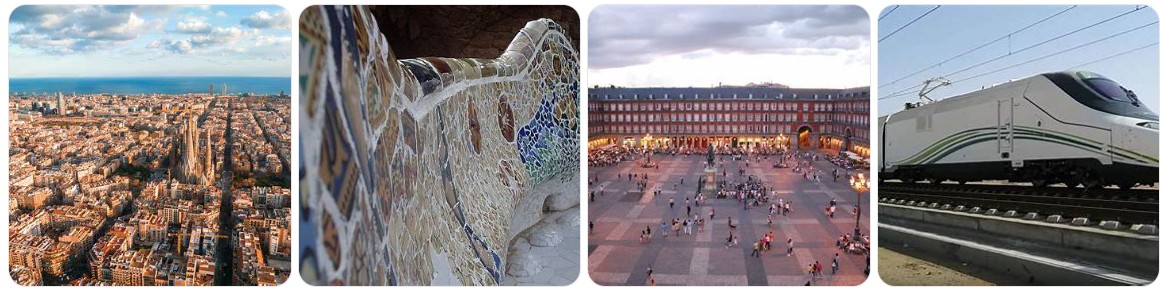
Barcelona to Madrid is one of Europe’s easiest intercity trips: high-speed trains are usually the best choice for speed and city-center convenience, while buses and flights can still make sense for budget travelers, late-night departures, or specific airport connections.
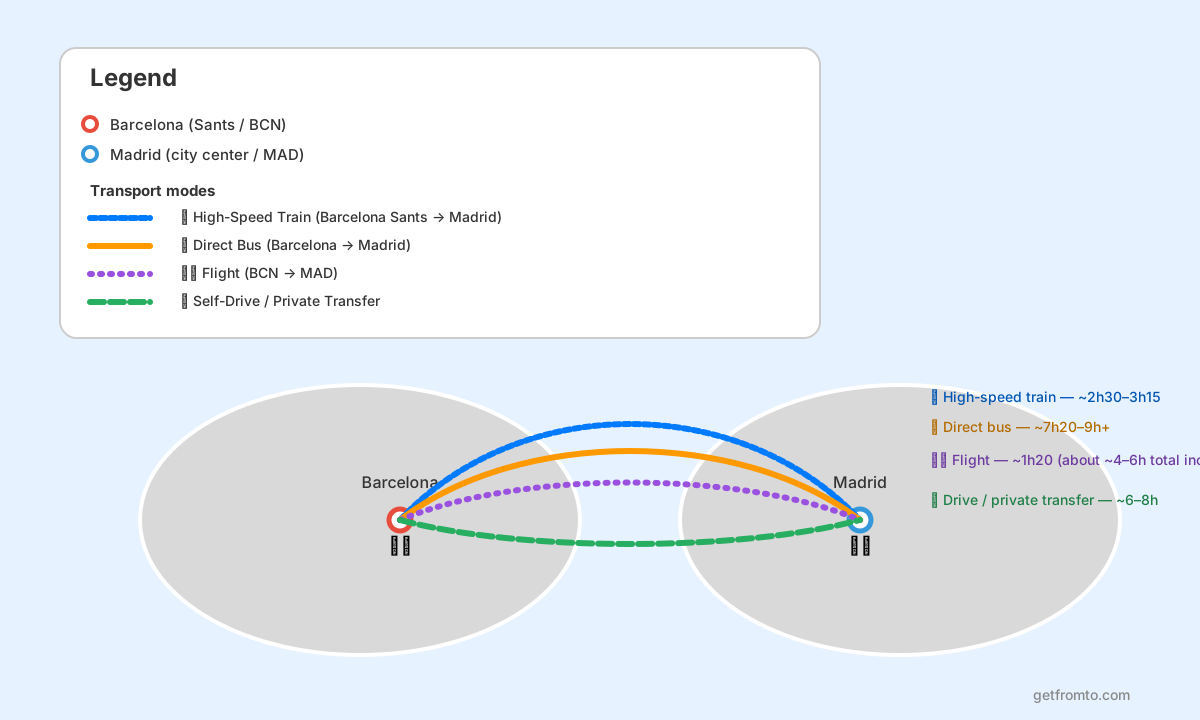
At A Glance (Barcelona to Madrid)
| Mode | Duration | Best For |
|---|---|---|
| 🚄 High-Speed Train (Barcelona Sants → Madrid) | ~2h30–3h15 (schedule/date dependent) | Fastest city-center to city-center travel |
| 🏷️ Cost: ~€9–€120+ one-way » compare train/bus options | alt. train search | ||
| 🚌 Direct Bus (Barcelona → Madrid) | ~7h20–9h+ | Low fares, overnight trips, flexible luggage |
| 🏷️ Cost: ~€5–€45+ one-way » compare buses | official Alsa route | ||
| ✈️ Flight (BCN → MAD) | ~1h20 flight (+ airport time/transfers = ~4–6h total) | Airport-to-airport connections, miles/loyalty use |
| 🏷️ Cost: ~€30–€180+ one-way » search flights | alt. flight search | ||
| 🚗 Self-Drive / Private Transfer | ~6–8h driving (+ stops/traffic) | Road trip stops, groups, door-to-door flexibility |
| 🏷️ Cost: Car rental ~€35–€120/day + fuel/tolls » compare car rentals | private pickup option | ||
Which Option or Route Should You Choose?
- Fastest / Most Convenient: Option #1 — High-Speed Train for city-center to city-center travel with frequent departures.
- Cheapest / Most Economical: Option #3 — Direct Bus if you book early or take overnight services; some budget train fares can also compete on off-peak dates.
- Best for airport connections: Option #2 — Flight if you are connecting to another flight from Madrid-Barajas.
- Most Scenic / Flexible Schedule: Option #4 — Self-Drive / Private Transfer if you want stops in Zaragoza, Lleida, or smaller towns along the way.
How to Book and Practical Tips
- Book trains early for the best fares, especially Friday/Sunday and holiday weekends. Compare operators (Renfe, iryo, OUIGO) because prices and baggage rules differ.
- Choose your station/airport strategically: Barcelona Sants is usually the simplest departure point for trains; flights require extra time to/from BCN and MAD airports.
- Check luggage rules before low-cost train/flight bookings so you avoid add-on fees at checkout or at boarding.
- Arrive early enough: high-speed rail stations may have boarding/security checks; airports need much more buffer time.
- Store bags if needed near stations using luggage storage in Barcelona or luggage storage in Madrid if you have a late hotel check-in.
- For door-to-door transfers, compare private car quotes on GetTransfer in Barcelona and airport pickups on Welcome Pickups Madrid; ride-hailing alternatives like Uber and Cabify are also widely used in both cities.
🚄 Option #1 — High-Speed Train (Best Overall for Most Travelers)
Fastest city-center route Frequent departures Best overall value
- Overview: High-speed trains connect Barcelona Sants and Madrid (commonly Puerta de Atocha/Chamartín depending on operator and service). This is usually the easiest way to travel between the two cities.
- Typical duration: Around 2h30–3h15 depending on operator, stop pattern, and temporary infrastructure works.
- How to book (with price): Budget fares can start around €9–€25 on low-cost services if booked early; more common fares are €25–€80, and peak/flexible fares can be higher. Compare on 12Go or Trip.com Trains, then check official operators such as Renfe (AVE/Avlo), iryo, and OUIGO Spain.
- Pros: Fast, comfortable, avoids airport transfers, usually the best door-to-door time. Cons: Cheapest fares sell out; low-cost operators may charge for extra bags/seat selection.
- Official websites: Renfe, iryo route page, OUIGO Spain route page, Adif Barcelona Sants station info.
Step-by-step: High-speed train
- Choose your operator and arrival station (Atocha or Chamartín in Madrid can vary by service).
- Book the ticket on the operator site or compare schedules/fares first on 12Go and Trip.com.
- Get to Barcelona Sants by Metro, commuter rail, taxi, Uber/Cabify, or private transfer; if you need station-area luggage storage beforehand, use Radical Storage Barcelona.
- Arrive early (commonly 20–40 minutes is comfortable) for boarding/security checks and platform access.
- Board and ride to Madrid; keep your ticket/QR code ready, and check baggage policy if traveling on low-cost rail fares.
- From Madrid station, continue by Metro/Cercanías/taxi/Uber/Cabify or pre-booked transfer; if your hotel is later, use Radical Storage Madrid.
Getting to the main embarking points (Barcelona Sants)
- Metro: Sants Estació is served by Barcelona Metro and is the easiest public transit access point for most central neighborhoods.
- Taxi / ride-hailing: Taxis are plentiful; Uber and Cabify operate in Barcelona and are useful for early departures or heavy luggage.
- Private transfer: For hotel-to-station pickup, compare Welcome Pickups (airport-focused but useful if you are starting from BCN area) and GetTransfer.
- Locations/Trip Planner: 🔗 Google Map / 🔗 OpenStreetMap
✈️ Option #2 — Flight (Best for Airport Connections)
Good for onward flights Frequent air route Longer total trip time
- Overview: Fly from Barcelona-El Prat (BCN) to Madrid-Barajas (MAD). Useful mainly if you are connecting internationally or using airline loyalty points.
- Typical duration: Flight time is around 1h15–1h30, but total door-to-door time is often 4–6+ hours after airport transfers, check-in, and security.
- How to book (with price): One-way fares can be as low as €30–€70 on some dates, but common fares are often €60–€180+ depending on luggage and flexibility. Compare on Booking.com Flights or Trip.com Flights.
- Pros: Best if your trip starts/ends at an airport; easy for through-ticketed itineraries. Cons: Usually slower door-to-door than the train; airport transfer costs add up.
- Official websites: Aena Barcelona-El Prat (BCN), Aena Madrid-Barajas (MAD), Aena flight information.
Step-by-step: Flight (BCN → MAD)
- Compare schedules and total cost (including bags, airport transfer, and seat selection) on Booking.com Flights or Trip.com.
- Check your terminal on the airline booking and verify live status via Aena flight info close to departure.
- Travel to BCN Airport by Aerobús/metro/rodalies/taxi/Uber/Cabify, or pre-book a private transfer using Welcome Pickups Barcelona Airport Transfer.
- Arrive with enough buffer time for check-in/bag drop/security (especially at peak times).
- On arrival at MAD, continue by Metro/Cercanías/taxi/Uber/Cabify or pre-booked car with Welcome Pickups Madrid Airport Transfer or GetTransfer Madrid.
- If you have long layover time, consider booking a hotel near MAD or in central Madrid on Booking.com Madrid stays.
Getting to the main embarking points (BCN Airport)
- Airport buses/public transit: BCN is well connected from central Barcelona; allow extra time during rush hours.
- Taxi / ride-hailing: Taxi is straightforward; Uber and Cabify are practical alternatives for door-to-door airport runs.
- Private airport transfer: Pre-booking helps if you are traveling very early/late or carrying a lot of luggage.
- Locations/Trip Planner: 🔗 Google Map / 🔗 OpenStreetMap
- Locations/Trip Planner: 🔗 Google Map / 🔗 OpenStreetMap
🚌 Option #3 — Direct Bus (Most Economical / Overnight-Friendly)
Low cost Overnight options Longer journey
- Overview: Long-distance coaches (commonly Alsa) connect Barcelona and Madrid with many daily departures, including useful late departures for overnight travel.
- Typical duration: Around 7h20–9h+, depending on departure time and number of stops.
- How to book (with price): Promotional fares can be very cheap (~€5–€15), while many tickets fall in the €15–€45+ range. Compare on 12Go and check the official Alsa Barcelona–Madrid route page.
- Pros: Cheapest on many dates, good late-night schedules, fewer baggage hassles than budget flights. Cons: Much slower than train; comfort varies by departure and seat availability.
- Official websites: Alsa Barcelona–Madrid, Alsa schedules.
Step-by-step: Direct bus
- Check schedules for departure/arrival terminals and trip length on Alsa or compare first on 12Go.
- Select your departure terminal in Barcelona (often Estació del Nord or other points depending on service).
- Arrive early to identify your platform/gate and load luggage.
- Keep essentials handy for overnight trips (neck pillow, water, power bank, light layer).
- On arrival in Madrid, continue by Metro/taxi/Uber/Cabify or private transfer; if you arrive before check-in, use Radical Storage Madrid.
Getting to the main embarking points (Barcelona bus terminals)
- Barcelona Nord / other bus terminals: Confirm your exact terminal in the ticket confirmation because some services use different stops.
- Taxi / ride-hailing: Useful if you have bulky luggage or a late-night departure; Uber and Cabify are common options.
- Private transfer: If you want a fixed pickup, compare GetTransfer Barcelona offers.
- Locations/Trip Planner: 🔗 Google Map / 🔗 OpenStreetMap
🚗 Option #4 — Self-Drive / Private Transfer (Flexible Door-to-Door)
Flexible stops Great for groups Fuel/tolls/parking costs
- Overview: Renting a car or booking a private intercity transfer gives maximum flexibility for stops (Zaragoza, Lleida, wineries, etc.) and door-to-door travel.
- Typical duration: Around 6–8 hours depending on route, traffic, and stops.
- How to book (with price): Compare rental cars on Booking.com Car Rentals; private transfer quotes may vary widely by vehicle class and pickup point on GetTransfer and Welcome Pickups (airport-focused). Expect added costs for fuel, tolls (route-dependent), and parking.
- Pros: Full schedule control, easy for families/groups, great for side trips. Cons: Parking in city centers can be expensive; driving/traffic fatigue; one-way rental fees may apply.
- Official / major planning websites: DGT (Spain traffic authority) for road safety guidance and traffic information.
Step-by-step: Self-drive / private transfer
- Decide between rental and chauffeur transfer based on group size, luggage, and whether you want sightseeing stops.
- For rental cars, compare pickup/drop-off options (city center vs airport) on Booking.com Cars.
- For private transfer, compare quotes and vehicle types on GetTransfer; airport pickups can also be arranged via Welcome Pickups.
- Plan stops and parking in advance if entering central Madrid, and confirm hotel parking access before arrival.
- If arriving early, store bags near your final area with Radical Storage Madrid.
Getting to the main embarking points (city pickup / rental depot)
- City center pickup: Convenient if your accommodation is central and parking is manageable.
- Airport pickup: Often provides more vehicle inventory and simpler highway access, but may add airport transfer time first.
- Ride-hailing alternative: Uber and Cabify are useful for reaching the rental depot or for short city segments before/after the intercity journey.
- Locations/Trip Planner: 🔗 Google Map / 🔗 OpenStreetMap
FAQ (Barcelona to Madrid)
What is the best way to get from Barcelona to Madrid?
For most travelers, the high-speed train is the best option because it is usually the fastest door-to-door and runs between central stations.
Is train faster than flying from Barcelona to Madrid?
Usually yes for total trip time. While the flight is short in the air, airport transfers and check-in/security often make it slower overall than the train.
How much does the Barcelona to Madrid train cost?
It depends on operator, demand, and booking timing. Budget fares can start very low, while peak-time and flexible tickets are more expensive. Compare operators before booking.
Can I take an overnight bus instead?
Yes. The direct bus is a common budget choice and can work well if you want to save on a hotel night.
Which Madrid station will I arrive at by train?
It depends on the operator and service. Check your ticket carefully because some services may use Puerta de Atocha while others may use Chamartín.
Should I rent a car for this route?
Only if you want flexibility for stops or are traveling as a group. For a simple city-to-city trip, the train is usually easier and often more efficient.
Are Uber or Cabify available in Barcelona and Madrid?
Yes, both cities commonly have ride-hailing options such as Uber and Cabify, though availability and pickup rules can vary by exact location/time.





Related Tours/Services
Popular Routes
Recent Routes
- How to get from PortMiami Cruise Terminal to Miami International Airport
- How to get from Samarkand to Bukhara
- How to get from Bell Tower (Xi’an) to Xi’an North Railway Station
- How to get from Canal City Hakata to Hakata Station
- How to get from Rialto Bridge (Venice) to Venezia Santa Lucia Station
- How to get from Florence Cathedral (Duomo) to Firenze Santa Maria Novella Station
- How to get from Nice to Paris
- How to get from Ribeira District (Porto) to Porto Campanhã Station
- How to get from Anne Frank House to Amsterdam Sloterdijk Station
- How to get from Buckingham Palace to London Victoria Station
Top Travel Gears

LISEN Airplane Travel Essentials for Flying Airplane Phone Holder for Desk | Phone Stand Hands Free MagSafe Travel Accessories Flying Long Flight International Travel Must Haves Gifts for Men
2026 Travel Essentials for Apple Watch Charger,Cruise Vacation Camping Essentials,iPhone Charger,Multi Charging Cable,3 in 2 Charging Docks for iWatch Series 12 11-2/Ultra,iPhone 18 17-12,Car
travel inspira Luggage Scale Digital Suitcase Weight Scale for Travel | Blue Backlight, Rubber Paint Handle, Tare & Data Lock, Auto-Off, Battery Included, 110 Pounds, Travel Essentials

zelin Anti Theft Zipper Clips, Travel Essentials, Carabiner, 4Pcs Grey | Elegant Zinc Alloy Zipper Pull Locks, Airplane Gadgets and Travel Accessories for Backpacks, Commuting and Outdoor Safety

DUDE Wipes Unscented Pocket Packs, Adult Flushable Travel Wipes, 48 Count | 6 pocket sized packs of 8 flushable butt wipes. Travel essentials. Hypoallergenic and fragrance free with aloe. Septic safe.