
How to get from Tokyo to Kawagoe
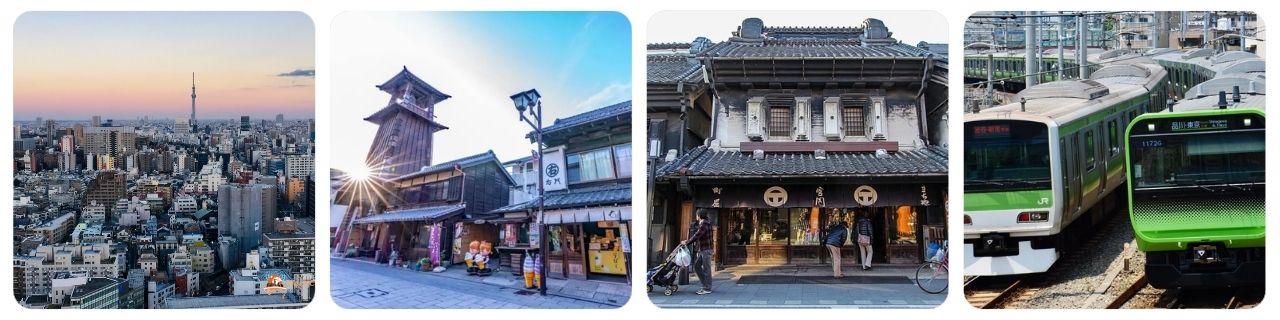
Tokyo to Kawagoe is one of the easiest day trips from Tokyo, with fast trains, discount passes, and even guided tours that get you to “Little Edo” in around 30–60 minutes.
At A Glance (Tokyo to Kawagoe)
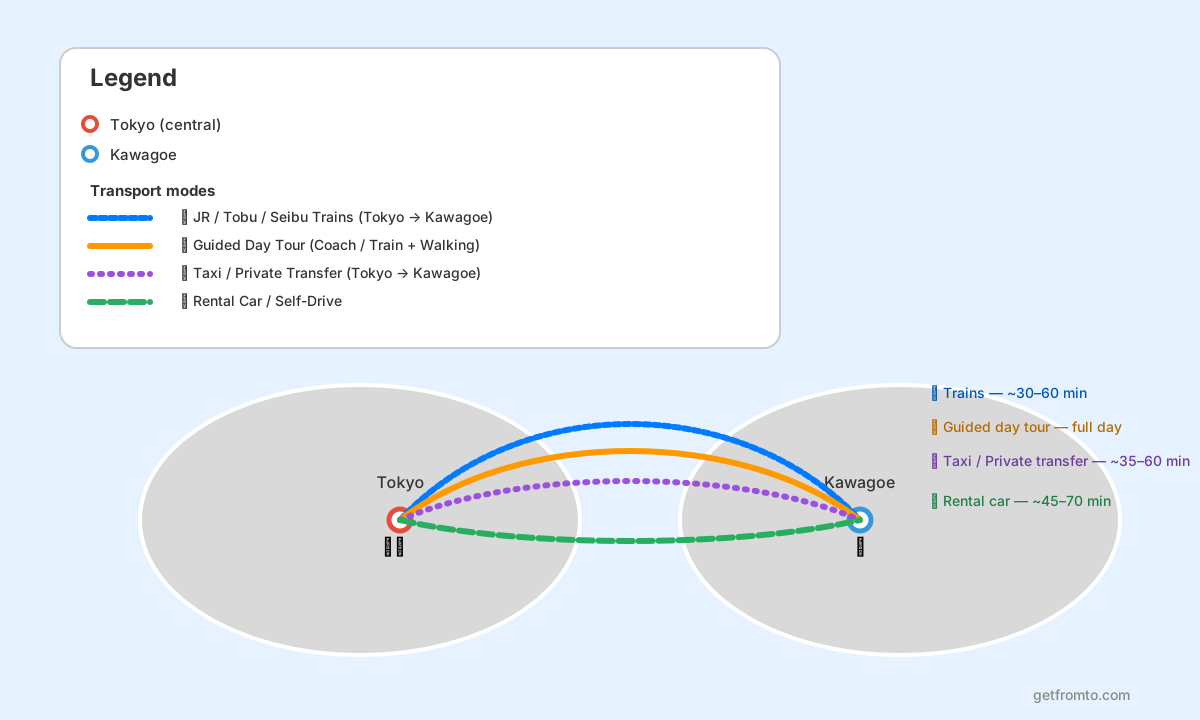
| Mode | Duration | Best For |
|---|---|---|
| 🚆 JR / Tobu / Seibu Trains (Tokyo → Kawagoe) | ~30–60 minutes from central Tokyo | Most travelers, cheap & fast |
| 🏷️ Cost: ~¥470–¥1,000 one-way » compare trains | detailed timetables | ||
| 🚌 Guided Day Tour (Coach / Train + Walking) | Full day (~7–9 hours round-trip) | First-time visitors, hassle-free sightseeing |
| 🏷️ Cost: ~¥9,000–¥18,000 per person » Kawagoe day trips | more tours | ||
| 🚖 Taxi / Private Transfer (Tokyo → Kawagoe) | ~35–60 minutes door-to-door | Door-to-door comfort, lots of luggage |
| 🏷️ Cost: ~¥15,000–¥25,000 per car (incl. tolls) » private transfers | airport–Tokyo rides | ||
| 🚗 Rental Car / Self-Drive | ~45–70 minutes (traffic-dependent) | Day trips with multiple stops, families |
| 🏷️ Cost: Rental car from ~¥7,000–¥12,000/day + fuel & tolls » compare rental cars | ||
Which Option or Route Should You Choose?
- Fastest / most convenient for most people: JR / Tobu / Seibu trains from major Tokyo hubs (Ikebukuro, Shinjuku, Shibuya, Tokyo). Trains run every few minutes and drop you right in Kawagoe.
- Most hassle-free sightseeing: Choose a guided day tour that bundles round-trip travel and a walking tour of Kurazukuri Street, Toki no Kane, and key temples.
- Most comfortable with luggage or kids: Go for a taxi / private transfer directly from your hotel or airport to Kawagoe and back.
- Most flexible / road-trip style: Rent a car and self-drive via the expressways, combining Kawagoe with other Saitama sights like Chichibu or Omiya.
How to Book and Practical Tips
- Trains: You don’t need reservations for local or rapid trains. Just tap in with your IC card (Suica, PASMO, etc.) or buy a paper ticket at the station. To compare operators and approximate fares in advance, you can also check routes on 12Go’s Tokyo–Kawagoe train listings or Trip.com’s Japan train planner.
- Discount passes: If you’re using the Tobu Tojo Line from Ikebukuro, look at the KAWAGOE DISCOUNT PASS range, which bundles round-trip train fare with local bus rides and small perks in town.
- Book tours online: For a structured day out, browse Kawagoe day tours on GetYourGuide or Kawagoe trips on Klook and reserve in advance, especially on weekends and during cherry blossom or autumn foliage seasons.
- Staying near your departure station: For an early start, consider a night near Ikebukuro Station, a major gateway to Kawagoe. You can search hotels around Ikebukuro and simply walk to the Tobu Tojo Line in the morning.
- Luggage & lockers: Kawagoe’s old streets are much nicer without big suitcases. Store your bags at major Tokyo stations or at off-station locations via Radical Storage’s Tokyo partners and travel to Kawagoe hands-free.
- Bikes for exploring more widely: Within Tokyo, it can be fun to use a rental bicycle or scooter to get to and from big hubs like Ikebukuro or Shinjuku. Compare providers on BikesBooking’s Tokyo bicycle rentals if you want a pedal-powered city base.
- Arriving by air: If you land at Narita or Haneda and want to go straight to your Tokyo hotel before heading to Kawagoe, consider pre-booking an airport transfer with Welcome Pickups or GetTransfer, then continue by train the next day.
🚆 Option #1 — JR / Tobu / Seibu Trains (Most Popular, Best Value)
Low cost Fast & frequent IC card friendly
- Overview: Ride regular commuter trains from central Tokyo straight into Kawagoe. The main options are the Tobu Tojo Line from Ikebukuro (to Kawagoe or Kawagoeshi), the JR Saikyo / Kawagoe Line from Shinjuku / Shibuya / Ikebukuro (to Kawagoe), and the Seibu Shinjuku Line from Seibu-Shinjuku (to Hon-Kawagoe). Typical journeys take ~30 minutes (fast Tobu trains from Ikebukuro) to ~50–60 minutes (JR / Seibu from Shinjuku).
- Typical fare: Expect roughly ¥470–¥800 one-way, depending on line, train type, and starting station. Local and express services cost the same on these lines; limited express trains (if you choose them) can carry a small surcharge.
- How to book (with price): Most visitors simply tap in with an IC card and hop on the next express. If you want to check times and approximate prices before you go, compare routes on Trip.com’s Tokyo–Kawagoe train page or 12Go’s Tokyo–Kawagoe listings. For Tobu’s own special tickets, see the Kawagoe Discount Pass.
- Pros: Very frequent departures; inexpensive; no reservation needed; IC cards accepted; easy for a spontaneous day trip.
- Cons: Can be crowded at rush hour; standing room only at peak times; you’ll still need to walk or take a short bus ride from the station area to some attractions.
Step-by-step: JR & Tobu Trains from Central Tokyo
- Pick the Tokyo station that suits you:
- For fastest access, head to Ikebukuro Station for the Tobu Tojo Line rapid or express to Kawagoe / Kawagoeshi.
- From west Tokyo, Shinjuku or Shibuya on the JR Saikyo Line are easy starting points for direct trains to Kawagoe.
- If you’re near Seibu-Shinjuku Station, Seibu trains run directly to Hon-Kawagoe (close to the old streets).
- Check your route and platform: Use an English route planner like Japan Transit Planner (Jorudan) or JR East’s route maps to confirm the fastest train from your nearest station.
- Buy a ticket or tap your IC card: At the ticket machines, choose your destination (Kawagoe, Kawagoeshi, or Hon-Kawagoe). If you have Suica / PASMO, you can skip the machine and tap through the ticket gates directly.
- Board the right service: Look for Rapid, Rapid Express or Express services stopping at Kawagoe. Station signboards and platform displays in Tokyo clearly show whether a train serves Kawagoe and the approximate time.
- Arrive in Kawagoe:
- Kawagoe Station (JR / Tobu): Good for general access, buses, and the main shopping streets.
- Kawagoeshi Station (Tobu): A short walk closer to the old town area.
- Hon-Kawagoe Station (Seibu): The closest to Kurazukuri Street and Toki no Kane.
- Connect to local buses or walk: From any of the three stations, you can walk 10–20 minutes to the classic warehouse district or hop on local buses listed on the Koedo Kawagoe access page.
Getting to the main embarking points (Tokyo, Ikebukuro & Shinjuku stations)
- By Tokyo Metro / JR within the city: Use the Yamanote Line or Tokyo Metro lines (e.g., Marunouchi, Fukutoshin) to reach Ikebukuro, Shinjuku, Shibuya, or Tokyo Station. All have very clear English signage guiding you toward JR and private railway platforms.
- From airports: From Narita or Haneda, consider an airport limousine bus or a pre-booked transfer with Welcome Pickups or GetTransfer into central Tokyo, then continue by train to Kawagoe.
- Ride-hailing to the station: In Tokyo you can also use taxi and ride-hailing apps such as Uber, GO or S.Ride to reach your departure station if you’re carrying heavy luggage or traveling in a group.
- Locations/Trip Planner: 🔗 Google Map / 🔗 OpenStreetMap
🚌 Option #2 — Guided Day Tour from Tokyo (Easiest for First-Time Visitors)
All-in-one English-speaking guide Hotel / station meet-ups
- Overview: Join a small-group or private tour that handles transport from Tokyo and guides you around Kawagoe’s highlights. Many tours include visits to Kurazukuri Street, Toki no Kane bell tower, Hikawa Shrine, and local sweets alleys.
- Typical duration & schedule: Expect a full-day experience of about 7–9 hours, usually departing Tokyo in the morning and returning by late afternoon or early evening.
- How to book (with price): Browse options such as Kawagoe day tours on GetYourGuide or
chartered-car day tours from Tokyo on Klook. Prices typically range from ~¥9,000–¥18,000 per person, depending on group size and inclusions. - Pros: Zero navigation worries; commentary about history and culture; convenient for families and those with limited time.
- Cons: Less flexibility in schedule; more expensive than going by regular train on your own.
Step-by-step: Booking & Taking a Guided Kawagoe Day Tour
- Choose your tour style: Decide between a small-group coach tour, a private licensed-guide tour, or a chartered-car experience. Read the full itinerary and inclusions (meals, shrine fees, etc.).
- Book online: Reserve your spot on platforms like GetYourGuide or Klook’s Kawagoe day trips. Many tours offer instant confirmation and mobile vouchers.
- Confirm meeting point: Most tours depart from central locations like Shinjuku, Tokyo Station, or directly from your hotel lobby. Double-check the meeting time and exact spot on your booking voucher.
- Travel to the meetup point: Use Tokyo Metro or JR lines to reach the meeting point, aiming to arrive 10–15 minutes early. If you’re staying far away or traveling with kids, you can also take a short taxi or use ride-hailing apps like Uber or GO.
- Ride to Kawagoe: Depending on the tour, you’ll travel by chartered bus, car, or regular train with your guide. Travel time is usually 30–60 minutes.
- Enjoy the guided walk: Follow your guide through Kawagoe’s old town, sample local snacks, visit temples and historical buildings, and ask plenty of questions about the area’s Edo-era heritage.
- Return to Tokyo: You’ll be dropped back at the original meeting point or another agreed spot in the city, usually in time for dinner.
Getting to the main embarking points (Typical Tokyo tour meeting spots)
- Shinjuku Station area: Many buses and tours meet outside Shinjuku Station or near major landmarks like department stores and hotel lobbies. Allow extra time to navigate this huge station.
- Tokyo Station area: For tours that start near Marunouchi or Yaesu exits, follow the color-coded signage from the platforms. The Marunouchi side is especially convenient for bus pickups.
- Hotel pickups: Some private tours and chartered-car options will collect you directly from your accommodation, especially around popular districts like Shinjuku, Shibuya, and Ginza.
- Locations/Trip Planner: 🔗 Google Map / 🔗 OpenStreetMap
🚖 Option #3 — Taxi / Private Transfer (Door-to-Door Comfort)
Door-to-door No transfers Best with luggage / groups
- Overview: Travel directly from your Tokyo hotel or apartment to Kawagoe by taxi or pre-booked private car. This is the most comfortable way to travel, particularly if you’re coming straight from the airport or traveling with young children, elderly relatives, or heavy baggage.
- Typical time & distance: Kawagoe is around 30–40 km from central Tokyo; journey times are usually ~35–60 minutes one-way, depending on traffic and whether you use expressways.
- Estimated cost: A metered taxi typically runs around ¥15,000–¥25,000 one-way, including expressway tolls, depending on starting point and congestion. Fixed-rate private transfers may quote a similar or slightly higher price but offer guaranteed pricing upfront.
- How to book (with price):
- For pre-booked cars, check services like GetTransfer’s Tokyo rides or Welcome Pickups’ Tokyo transfers, where you can see vehicle types and prices before confirming.
- As an alternative, you can hail a taxi on the street or via Japanese taxi apps (GO, S.Ride) and international options like Uber, but pricing will be metered and can vary with traffic.
- Pros: No transfers; ideal with bulky luggage; extremely straightforward even if you don’t speak Japanese (most drivers can navigate by address or map).
- Cons: By far the most expensive option; traffic delays possible at peak times; little cost advantage if you’re traveling solo.
Step-by-step: Using a Taxi / Private Transfer to Kawagoe
- Get your Kawagoe destination ready: Have the address of your hotel, a landmark, or a station (e.g., Hon-Kawagoe Station, Kawagoe Station) ready in both English and Japanese (many booking pages include the Japanese address).
- Book your ride:
- For predictable pricing, reserve online with a provider like GetTransfer or Welcome Pickups, specifying pick-up in Tokyo and drop-off in Kawagoe.
- Alternatively, use taxi apps such as GO or S.Ride, or international apps like Uber, to request a ride on the day.
- Meet your driver: For pre-booked transfers, you’ll usually meet the driver in your hotel lobby, at your apartment entrance, or at a clearly marked pick-up point outside a train station.
- Ride via expressway: Most drivers will use expressways to reach Kawagoe quickly; tolls are typically included in fixed-price transfers and added automatically on metered rides.
- Arrive in Kawagoe: Get dropped off exactly where you like – ideal if your accommodation or starting point is not close to the three main train stations.
Getting to the main embarking points (hotel, apartment, or station)
- Hotel pickups: Most private transfer companies and taxi apps can pick you up right at your hotel entrance, especially in central districts like Shinjuku, Shibuya, Ginza, and Tokyo Station area.
- Apartment / Airbnb: Provide a precise pin or address for smaller residential streets so the driver can navigate accurately.
- Station taxi ranks: If you decide on a taxi at the last minute, head to the official taxi stands outside major stations (Tokyo, Shinjuku, Ikebukuro, etc.) and show the driver your Kawagoe address or a dropped pin on your phone.
- Locations/Trip Planner: 🔗 Google Map / 🔗 OpenStreetMap
🚗 Option #4 — Rental Car / Self-Drive (Flexible Day Trip)
Flexible stops Great for groups Expressway tolls
- Overview: Rent a car in Tokyo and drive to Kawagoe, giving you the freedom to detour to other Saitama attractions such as Omiya (railway museum) or nature spots beyond the city.
- Route & time: The fastest routes usually follow the Kan-Etsu Expressway or other major highways north; expect ~45–70 minutes one-way depending on traffic and your starting point.
- Costs: Day rentals for compact cars typically start from around ¥7,000–¥12,000, plus fuel and expressway tolls. You can compare different rental companies and car types via
Booking.com’s car rental search. - Requirements: Most overseas visitors need a valid driver’s license and an International Driving Permit (IDP) recognized by Japan, plus a credit card for the deposit.
- Pros: Flexible schedule; easy to combine destinations; comfortable for families and groups; door-to-door convenience.
- Cons: City traffic and parking fees; navigation can be stressful for first-time visitors; higher cost than trains for solo travelers.
Step-by-step: Driving from Tokyo to Kawagoe
- Book your rental car: Reserve a vehicle near your accommodation or a major station using a comparison site such as Booking.com Cars, checking that the company accepts international licenses and provides English GPS or a smartphone mount.
- Pick up the car: Arrive at the rental office with your passport, driver’s license, IDP (if needed), and booking confirmation. Inspect the car before departure.
- Set navigation: Enter “Kawagoe Station,” “Hon-Kawagoe Station,” or your hotel/parking lot in Kawagoe into the car’s navigation system or your preferred map app.
- Drive via expressways: Follow signs for the Kan-Etsu Expressway or other recommended routes. Ensure you understand toll payment (ETC card or cash) and speed limits.
- Park in Kawagoe: Use paid coin-operated parking lots near Kurazukuri Street and other sightseeing zones. Most are clearly signposted, and some have maximum daily rates.
Getting to the main embarking points (rental offices & expressways)
- Rental offices near stations: Many car-hire offices cluster around hubs like Tokyo Station, Ikebukuro, Shinjuku, and Shibuya. Choose one that’s easy to reach by train from your accommodation.
- Fuel & services: There are numerous petrol stations on the way toward Saitama; staff can assist if you’re unsure about full-service refueling.
- Alternative: two wheels in Tokyo: If you prefer not to drive but still want independent transport around Tokyo itself, you can rent a bicycle or scooter via BikesBooking’s Tokyo listings and use the train for the Tokyo–Kawagoe leg.
- Locations/Trip Planner: 🔗 Google Map / 🔗 OpenStreetMap
FAQ (Tokyo to Kawagoe)
How long does it take to get from Tokyo to Kawagoe by train?
Most routes from central Tokyo to Kawagoe take around 30–60 minutes one-way. The Tobu Tojo Line rapid or express from Ikebukuro is among the fastest (around 30 minutes), while JR Saikyo / Kawagoe Line and Seibu Shinjuku Line services are typically closer to 50–60 minutes depending on where you board.
What is the cheapest way to travel from Tokyo to Kawagoe?
The cheapest option is usually a regular local or express train on Tobu, JR, or Seibu lines, costing about ¥470–¥800 one-way. If you are using the Tobu Tojo Line from Ikebukuro, the Kawagoe Discount Pass can reduce costs further and may include unlimited local bus rides within Kawagoe.
Is the Japan Rail Pass valid for Tokyo–Kawagoe?
Yes, if you travel on JR lines (for example, the Saikyo / Kawagoe Line from Shinjuku or Ikebukuro to Kawagoe Station), the Japan Rail Pass covers the journey. However, it does not cover Tobu Tojo Line or Seibu Shinjuku Line trains, which are private railways.
Which station in Kawagoe should I use?
You can use any of the three, depending on your route and plans:
- Kawagoe Station (JR / Tobu): Well-connected, with good bus links.
- Kawagoeshi Station (Tobu): Slightly closer to the historic district than Kawagoe Station.
- Hon-Kawagoe Station (Seibu): The closest walk to Kurazukuri Street and Toki no Kane.
Can I store my luggage while I explore Kawagoe?
Yes. Kawagoe’s stations and visitor centers often have coin lockers, and some tourist centers may offer storage. If you’re coming directly from Tokyo and don’t want to carry luggage at all, you can drop bags at major Tokyo stations or nearby shops through services like Radical Storage before boarding the train.
Is Kawagoe suitable for a family day trip?
Absolutely. The compact old town area, sweet potato snacks, and easy access by train make Kawagoe very family-friendly. Just bring a stroller-friendly plan if you have younger children, and consider avoiding the busiest midday weekend hours in peak seasons.



Related Tours/Services
Popular Routes
Recent Routes
- How to get from PortMiami Cruise Terminal to Miami International Airport
- How to get from Samarkand to Bukhara
- How to get from Bell Tower (Xi’an) to Xi’an North Railway Station
- How to get from Canal City Hakata to Hakata Station
- How to get from Rialto Bridge (Venice) to Venezia Santa Lucia Station
- How to get from Florence Cathedral (Duomo) to Firenze Santa Maria Novella Station
- How to get from Nice to Paris
- How to get from Ribeira District (Porto) to Porto Campanhã Station
- How to get from Anne Frank House to Amsterdam Sloterdijk Station
- How to get from Buckingham Palace to London Victoria Station
Top Travel Gears

DUDE Wipes Unscented Pocket Packs, Adult Flushable Travel Wipes, 48 Count

zelin Anti Theft Zipper Clips, Travel Essentials, Carabiner, 4Pcs Grey

INIU 10000mAh 45W Fast Charging Portable Charger, Smaller Travel Power Bank | Flight-Safe, Detachable USB C Cable, Travel Essential, External Battery Phone Pack for iPhone 18 17 Samsung iPad etc
travel inspira Luggage Scale Digital Suitcase Weight Scale for Travel
2026 Travel Essentials for Apple Watch Charger,Cruise Vacation Camping Essentials,iPhone Charger,Multi Charging Cable,3 in 2 Charging Docks for iWatch Series 12 11-2/Ultra,iPhone 18 17-12,Car