

How to get from Paris to London

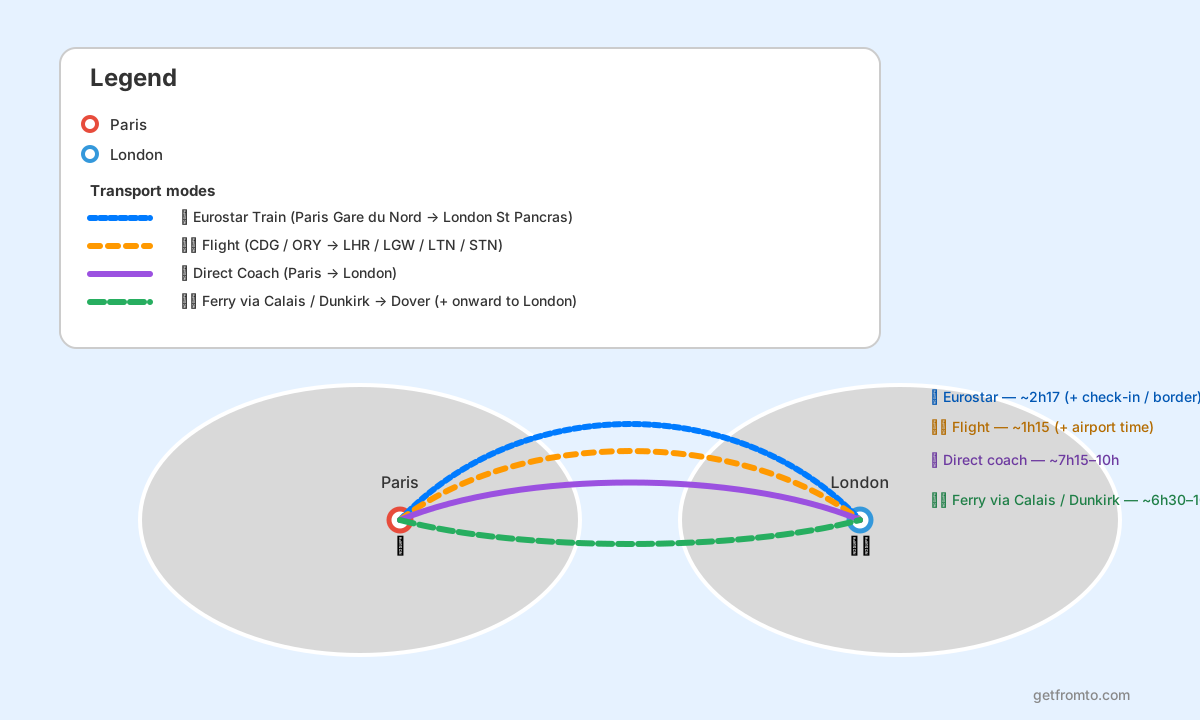
Paris to London is a quick cross-Channel hop with four practical choices: the Eurostar train for the fastest city-center route, flights for certain schedules, direct coaches for the lowest fares, and a ferry-based route if you want a road-trip vibe or you’re traveling with a vehicle.
At A Glance (Paris to London)
| Mode | Duration | Best For |
|---|---|---|
| 🚄 Eurostar Train (Paris Gare du Nord → London St Pancras) | ~2h17 on train (+ 60–90m check-in/border) | Fastest, most convenient city-center to city-center |
| 🏷️ Cost: ~€44–180+ one-way (dynamic) » compare transport | official tickets | ||
| ✈️ Flight (CDG/ORY → LHR/LGW/LTN/STN) | ~1h15 flight (+ 2–3h airport time) | Specific schedules, onward connections, miles/points |
| 🏷️ Cost: ~€40–220+ one-way (route/date dependent) » search flights | alt. fares | ||
| 🚌 Direct Coach (Paris → London) | ~7h15–10h (traffic & border dependent) | Cheapest option, overnight travel, budget flexibility |
| 🏷️ Cost: ~€20–70 one-way » coach schedules | compare listings | ||
| ⛴️ Ferry via Calais/Dunkirk → Dover (+ train/drive to London) | ~6h30–10h+ total (connections vary) | Road-trip style, travelers with vehicles, flexible routing |
| 🏷️ Cost: Ferry ticket varies by sailing/vehicle + onward transport » official Calais–Dover | alt. Channel Tunnel (cars) | ||
Which Option or Route Should You Choose?
- Fastest/Most Convenient: Option #1 — Eurostar Train (best overall for most travelers).
- Cheapest/Most Economical: Option #3 — Direct Coach (especially on early-booked or overnight departures).
- Best for onward flights or very specific timings: Option #2 — Flight (compare door-to-door time).
- Most Scenic/Flexible (road-trip vibe): Option #4 — Ferry via the Channel ports (good with a car or if you want a slower pace).
How to Book and Practical Tips
- Border checks matter on this route: Eurostar and many coach/vehicle crossings involve UK and French controls; arrive early and keep your passport/ID and any required travel authorisation ready. For official guidance on entry, see Entering the UK and Eurostar’s travel documents page.
- Book Eurostar early for the best fares and seat choice; peak weekends and school holidays sell out fastest.
- For coaches, build in buffer time because traffic + border queues can stretch journey times.
- Pick the right London arrival point: Eurostar arrives at St Pancras International; flights can land at several airports; coaches often arrive at Victoria Coach Station or other London stops depending on operator.
- Luggage strategy: If you arrive before check-in, store bags with Radical Storage near St Pancras/Victoria or central zones so you can explore hands-free.
- Door-to-door rides: In Paris and London, apps like Uber and Bolt are widely used. For pre-booked pickups (big luggage, early morning), compare Welcome Pickups and GetTransfer.
- Turning the trip into sightseeing: If you’re staying overnight in either city, browse top activities on Paris-to-London experiences or check London attraction passes.
🚄 Option #1 — Eurostar Train (Fastest City-Center to City-Center)
Fast Central stations Early arrival required
- Overview: Eurostar runs direct from Paris Gare du Nord to London St Pancras International in about 2h17, making it the fastest and simplest way to travel between city centers.
- How to book (with price): Buy directly on the official Paris to London Eurostar page, or compare times across options on 12Go. Typical one-way fares start around €44 on promotions and rise with demand.
- Pros: Fast, comfortable, no airport commute. Cons: You must arrive early for security and border processing; peak trains can sell out.
Step-by-step: Eurostar
- Head to Paris Gare du Nord with your passport/ID and ticket ready.
- Arrive 60–90 minutes before departure (more on peak dates) to complete security and border controls.
- Check document requirements in advance on Eurostar travel documents and, for UK entry rules, Entering the UK.
- Board and travel direct to London St Pancras.
- Continue by London Underground, taxi, Uber/Bolt, or a pre-booked transfer if you have lots of luggage.
Getting to the main embarking points (Paris Gare du Nord / London St Pancras)
- Paris Gare du Nord: Easy to reach via Paris Metro/RER; give extra time if you’re coming from CDG by RER B due to variability.
- London St Pancras: Connects to multiple Underground lines and is walkable to King’s Cross; great for onward UK trains.
- Luggage storage: If you arrive early, store bags near the stations using Radical Storage.
- Locations/Trip Planner: 🔗 Google Map / 🔗 OpenStreetMap
✈️ Option #2 — Flight (Best for Specific Schedules or Connections)
Many airports Good for connections Airport time heavy
- Overview: Flights are short (~1h15), but getting to/from airports plus security usually makes the trip longer than Eurostar door-to-door for most city-center travelers.
- How to book (with price): Compare routes (CDG/ORY → LHR/LGW/LTN/STN) on Booking.com Flights or Trip.com Flights. Ballpark one-way fares can be €40–220+, depending on the airport pair, timing, and baggage.
- Pros: Works well if you need a particular arrival time or an onward long-haul connection. Cons: More variables (transfers, delays, baggage rules) and often longer total travel time.
Step-by-step: Flight
- Choose your airport pair based on where you’re staying (Paris) and where you need to be (London).
- Book flights and factor in baggage fees and airport transfer cost/time.
- Arrive early for check-in/security, especially with checked bags.
- On arrival, use rail/bus/ride-hailing to central London; consider Uber/Bolt or pre-book with Welcome Pickups if landing late.
Getting to the main embarking points (CDG/ORY → London airports)
- Paris airport access: CDG is well connected by RER B; ORY has tram/Orlyval links depending on your route.
- London airport access: Each airport has different transfer times and costs—check your terminal’s rail/bus options before booking.
- Locations/Trip Planner: 🔗 Google Map / 🔗 OpenStreetMap
🚌 Option #3 — Direct Coach (Cheapest, Flexible)
Lowest cost Many departures Border/traffic delays
- Overview: Direct coaches are usually the most budget-friendly way to travel between Paris and London. Fast schedules can be around 7h15, but traffic and border processing can stretch this.
- How to book (with price): Check schedules on FlixBus Paris–London or compare across listings on 12Go. Typical fares range from €20–70 one-way depending on demand.
- Pros: Cheapest, convenient if you’re not in a rush. Cons: Long ride, variable timing, less comfortable than rail for many travelers.
Step-by-step: Direct Coach
- Pick your departure stop in Paris and arrival stop in London (many services arrive near Victoria Coach Station or other London hubs).
- Arrive 20–30 minutes early and keep passport/ID and ticket ready.
- Pack essentials in a small carry-on (charger, water, snacks) and label checked luggage for the hold.
- Build in buffer time if you have a same-day connection in London.
Getting to the main embarking points (Paris coach stops / London coach stations)
- Paris departures: Stops vary by operator; confirm the exact address in your ticket and arrive early.
- London arrivals: Plan last-mile transport (Tube, taxi, Uber/Bolt) from the coach station to your hotel.
- Locations/Trip Planner: 🔗 Google Map / 🔗 OpenStreetMap
⛴️ Option #4 — Ferry via Calais/Dunkirk → Dover (Road-Trip Style)
Vehicle-friendly Flexible routing More steps
- Overview: If you want to travel with a car (or you like the scenic, flexible approach), go from Paris to a Channel port (often Calais or Dunkirk), cross to Dover by ferry, then continue to London by train/coach or drive.
- How to book (with price): Check official ferry info on DFDS Calais–Dover and DFDS timetables. If you’re traveling with a vehicle and want the fastest Channel crossing, consider the Channel Tunnel car shuttle on LeShuttle as an alternative. Total cost varies widely by vehicle type, sailing time, and season.
- Pros: Great for road trips, flexible stops, can be cost-effective for groups with a car. Cons: Longer total time, more planning, and traffic/queue variability at ports.
Step-by-step: Ferry route (Paris → Calais/Dunkirk → Dover → London)
- Travel from Paris to the port area (Calais or Dunkirk) by car or train.
- Arrive early, complete check-in and border procedures, then board the ferry.
- Sail to Dover and follow signs for onward travel to London (drive or use rail/coach connections).
- If driving in London, plan parking in advance; congestion and parking costs can be significant.
- For UK entry requirements, check Entering the UK before you travel.
Getting to the main embarking points (Calais/Dunkirk ports & Dover)
- Port access: Calais and Dunkirk are easiest with a car; by rail, you’ll typically connect via local transport/taxi to the terminal.
- Last-mile in London: If you don’t want to drive into central London, consider parking outside the center and continuing by rail.
- Locations/Trip Planner: 🔗 Google Map / 🔗 OpenStreetMap
FAQ (Paris to London)
What’s the easiest way to get from Paris to London?
For most travelers, Eurostar is the easiest: city-center stations, fast journey time, and no airport transfers.
How early should I arrive for Eurostar?
Plan to arrive 60–90 minutes before departure for security and border processes; on peak days, arriving earlier can reduce stress.
Is flying faster than Eurostar?
Usually not door-to-door. The flight is short, but airport travel time and security often make Eurostar faster overall for city-center trips.
What’s the cheapest way to travel from Paris to London?
Typically the direct coach, especially if booked early or on overnight departures.
Do I need a passport?
Yes for most travelers. Check your document requirements before travel on Entering the UK and Eurostar’s travel documents guidance.
Can I store luggage near the station?
Yes. If you arrive early, use Radical Storage near Gare du Nord, St Pancras, or central London.





Related Tours/Services
Popular Routes
Recent Routes
- How to get from The Bund (Shanghai) to Shanghai Railway Station
- How to get from Odori Park (Sapporo) to Sapporo Station
- How to get from Plaza de Armas to Terminal Alameda (Santiago)
- How to get from Times Square to Penn Station (New York)
- How to get from India Gate to New Delhi Railway Station
- How to get from Denpasar to Nusa Penida
- How to get from Venice to Rome
- How to get from Berlin to Munich
- How to get from Vienna to Bratislava
- How to get from Paris to London
Top Travel Gears

LISEN Airplane Travel Essentials for Flying Airplane Phone Holder for Desk

Clear Shoe Bags for Travel 5 PCS, Drawstring Travel Shoe Bags for Packing

INIU 10000mAh 45W Fast Charging Portable Charger, Smaller Travel Power Bank

FYY Electronic Organizer, Travel Tech Pouch Bag, Cable Organizer Black

2026 Travel Essentials for Apple Watch Charger,Cruise Vacation Camping Essentials,iPhone Charger,Multi Charging Cable,3 in 2 Charging Docks for iWatch Series 12 11-2/Ultra,iPhone 17-12,Car