

How to get from Lisbon to Porto

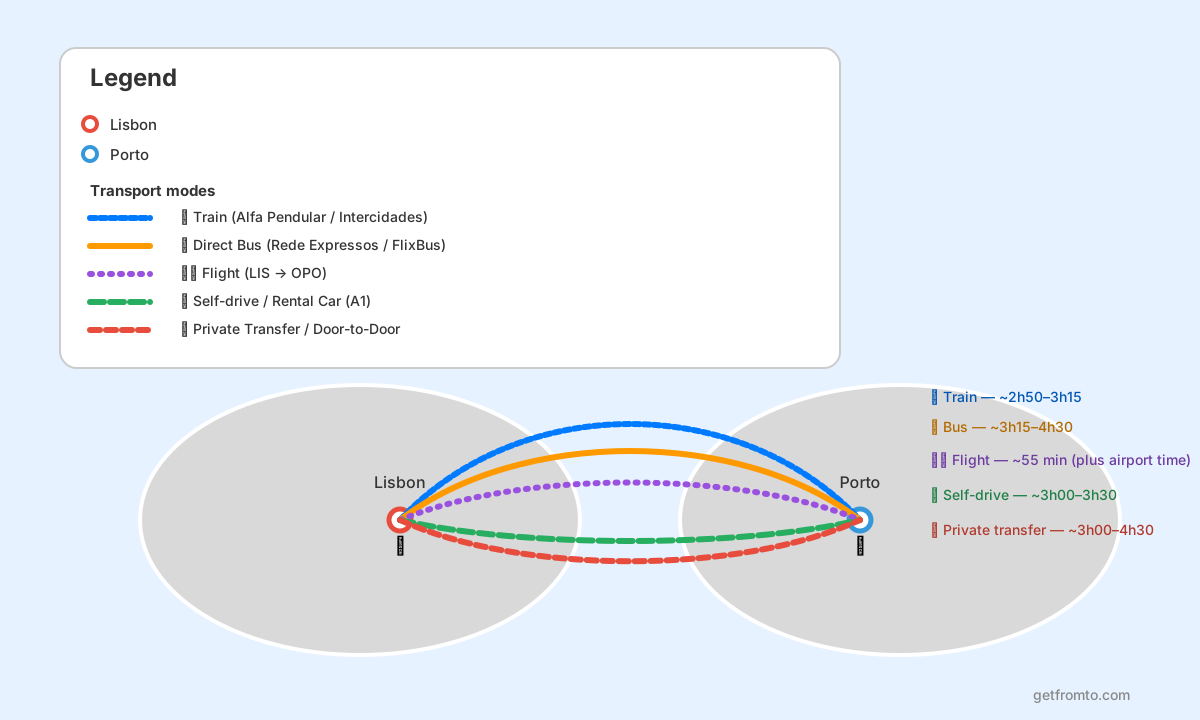
Traveling from Lisbon to Porto is straightforward with frequent trains, buses, flights, self-drive routes, and private transfers; most travelers choose train for speed + comfort or bus for the lowest fares.
At A Glance (Lisbon to Porto)
| Mode | Duration | Best For |
|---|---|---|
| 🚄 Train (Alfa Pendular / Intercidades) | ~2h50–3h15 (station to station) | Fastest city-center to city-center, comfort, frequent departures |
| 🏷️ Cost: ~€10–€45 one-way (advance fares can be much lower) » compare routes | alt. rail search | ||
| 🚌 Direct Bus (Rede Expressos / FlixBus) | ~3h15–4h30 (traffic-dependent) | Budget travelers, late-night/extra departures |
| 🏷️ Cost: ~€4–€25 one-way » compare buses | alt. bus search | ||
| ✈️ Flight (LIS→OPO) | ~55m flight (+ airport time = ~3.5–5h total) | Flight connections, loyalty points, airport-to-airport travel |
| 🏷️ Cost: ~€40–€180+ one-way » search flights | alt. fares | ||
| 🚗 Self-drive / Rental Car (A1) | ~3h00–3h30 driving (+ stops) | Flexible schedule, stopovers (Óbidos/Coimbra/Aveiro) |
| 🏷️ Cost: Car rental ~€25–€90/day + fuel + tolls » compare rental cars | motorbike rental option | ||
| 🚙 Private Transfer / Door-to-Door | ~3h00–4h30 door-to-door | Families, groups, heavy luggage, hotel pickup |
| 🏷️ Cost: ~€220–€450+ per vehicle » pre-book transfer | request quotes | ||
Which Option or Route Should You Choose?
- Fastest city-center to city-center: Option #1 — Train (usually the best overall balance of speed, comfort, and convenience).
- Cheapest / most economical: Option #2 — Direct Bus (especially if booked early or traveling off-peak).
- Best for flexibility and scenic stopovers: Option #4 — Self-drive / Rental Car (easy stops in Coimbra, Aveiro, or Fátima).
- Best for luggage, family, or doorstep convenience: Option #5 — Private Transfer.
- Best only if connecting to another flight: Option #3 — Flight (airport time usually cancels out the short flight time).
How to Book and Practical Tips
- Book train tickets early for the best fares, especially on Fridays, Sundays, and holidays.
- Use Lisbon Oriente station if possible for easier airport/metro access; Santa Apolónia is also used by many trains.
- Arrive 15–30 minutes early for trains/buses to find the platform/gate without stress.
- Traveling with bags before check-in? Store them in luggage storage in Lisbon or luggage storage in Porto while sightseeing.
- For flights, compare total journey time (airport transfer + security + boarding) rather than flight time alone.
- If driving, budget tolls on the A1 and allow extra time entering/exiting Porto during rush hours.
- For private transfers, compare vehicle size and baggage capacity (sedan vs. minivan) before paying.
🚄 Option #1 — Train (Best Overall: Fast + Comfortable)
Fastest city-center Comfortable Advance fares vary
- Overview: CP trains connect Lisbon and Porto frequently. The faster Alfa Pendular (AP) is typically the quickest option, while Intercidades (IC) is slightly slower but often cheaper.
- Typical duration: ~2h50–3h15 depending on service and departure station.
- Main stations: Lisbon Oriente and/or Santa Apolónia to Porto Campanhã (many travelers continue a short local hop/taxi/metro to central Porto areas).
- How to book (with price): Check schedules and fares on the CP online tickets page. Ballpark one-way fares are often ~€10–€45 depending on class, train type, and how early you book; you can also compare searches on 12Go or Trip.com Trains.
- Pros: Fast, comfortable, no airport hassle, city-center arrival. Cons: Cheapest tickets can sell out; peak departures get busy.
Step-by-step: Train (Lisbon to Porto)
- Choose your Lisbon departure station: Most travelers use Oriente (very convenient if arriving from Lisbon Airport/metro) or Santa Apolónia if staying in Alfama/Baixa-side neighborhoods.
- Book your ticket: Use the CP website for AP/IC schedules and seat selection. Save the digital ticket on your phone.
- Arrive early: Reach the station ~20 minutes before departure, check the platform/track screens, and board the correct carriage/class.
- On arrival in Porto: Most long-distance trains arrive at Campanhã. Continue by metro, taxi, or ride-hailing to Ribeira, Trindade, Cedofeita, or the airport if needed.
- If you arrive before hotel check-in: Use luggage storage in Porto and explore the city hands-free.
Getting to the main embarking points (Oriente / Santa Apolónia)
- Lisbon Oriente: Excellent for travelers coming from Lisbon Airport (LIS) via metro/taxi. It is one of the easiest long-distance departure points in Lisbon.
- Santa Apolónia: Convenient for central/historic Lisbon stays, but check whether your chosen train starts there or only stops at Oriente.
- Ride-hailing alternative: Uber and Bolt are widely used in Lisbon and Porto for station transfers; taxis are also easy to find.
- Private airport pickup option: If arriving at LIS and heading straight to the station/hotel, pre-book on Welcome Pickups Lisbon Airport Transfer or compare quotes on GetTransfer Lisbon.
- Locations/Trip Planner: 🔗 Google Map / 🔗 OpenStreetMap
🚌 Option #2 — Direct Bus (Most Popular Budget Option, Good Value)
Low cost Frequent departures Traffic-dependent
- Overview: Direct coaches between Lisbon and Porto are frequent and competitive, with major operators including Rede Expressos and FlixBus. This is usually the cheapest way to travel between the two cities.
- Typical duration: ~3h15–4h30 depending on route, stops, and traffic.
- How to book (with price): Book via the Rede Expressos timetables/tickets page or compare on 12Go and Trip.com Bus. Ballpark fares are often ~€4–€25 one-way.
- Pros: Cheapest fares, many departures, good for last-minute travelers. Cons: Traffic delays, station locations vary by operator, less legroom than train on some services.
Step-by-step: Direct Bus (Lisbon to Porto)
- Choose your operator and station: Rede Expressos and FlixBus may use different terminals/stops in Lisbon and Porto, so verify the exact boarding point on your ticket.
- Book your seat: Use the operator site or compare routes/fares on 12Go. Save the QR code/e-ticket.
- Arrive early: Get to the bus station/stop ~20–30 minutes early, especially on weekends or holidays when platforms can be busy.
- Luggage: Check baggage allowance and any added-bag fees before booking, especially if traveling with large suitcases.
- Arrival in Porto: From the bus terminal/stop, continue by metro, taxi, or Uber/Bolt to your hotel.
Getting to the main embarking points (Sete Rios / Oriente / other bus terminals)
- Sete Rios: A common Lisbon long-distance coach terminal with metro access; confirm this on your ticket because not all services depart here.
- Oriente area: Some buses use Oriente or nearby stops, which is convenient if coming from LIS airport or modern Lisbon neighborhoods.
- Ride-hailing alternative: Uber and Bolt are practical for early/late departures when metro connections are less convenient.
- Locations/Trip Planner: 🔗 Google Map / 🔗 OpenStreetMap
✈️ Option #3 — Flight (Best for Airport Connections)
Good for connections Frequent flights Airport time overhead
- Overview: Flights from Lisbon (LIS) to Porto (OPO) are useful if you are connecting to/from an international flight, traveling on miles, or starting/ending at an airport. For city-center to city-center travel, train is usually more efficient.
- Typical duration: ~55 minutes flight time, but total trip is often 3.5–5 hours including airport transfer, security, and boarding.
- How to book (with price): Search fares on Booking.com Flights or Trip.com Flights; check airline options directly on TAP Air Portugal Lisbon→Porto flights. Ballpark one-way fares are often ~€40–€180+.
- Pros: Useful for airport-to-airport plans and connections. Cons: Usually slower door-to-door than train once airport procedures are included.
Step-by-step: Flight (LIS to OPO)
- Check total timing first: Compare train vs. flight door-to-door time based on your hotel location and airport transfer time.
- Book flight: Use Booking.com Flights or Trip.com, then confirm baggage rules and check-in time on the airline site.
- Get to Lisbon Airport (LIS): Use metro, taxi, or pre-book a ride via Welcome Pickups Lisbon Airport Transfer.
- Arrive at OPO: Continue to central Porto by metro, taxi, or ride-hailing. If landing late or with large luggage, pre-book Porto Airport Transfer.
- Airport alternatives: Compare private transfer quotes from/to airports on GetTransfer if traveling with a group.
Getting to the main embarking points (Lisbon Airport / Porto Airport)
- Lisbon Airport (LIS): Close to Lisbon city and well connected by metro/taxi; still allow enough time for security and boarding.
- Porto Airport (OPO): Well connected to Porto by metro and road transfers; late arrivals may be easier by Uber/Bolt/taxi.
- Ride-hailing alternative: Uber and Bolt both operate in Portugal and are common in Lisbon/Porto.
- Locations/Trip Planner: 🔗 Google Map / 🔗 OpenStreetMap
🚗 Option #4 — Self-drive / Rental Car (Flexible & Scenic Stops)
Flexible schedule Great for stopovers Fuel + toll costs
- Overview: Driving Lisbon to Porto is straightforward via the A1 motorway. This option shines if you want scenic/cultural stopovers like Óbidos, Fátima, Coimbra, or Aveiro.
- Typical duration: ~3h00–3h30 pure driving time, plus stops and city traffic.
- How to book (with price): Compare rentals on Booking.com Car Rentals. Compact car rates can be around ~€25–€90/day depending on season, pickup point, and insurance; budget extra for fuel + tolls + parking. For two-wheel road trips, you can also check BikesBooking.
- Pros: Maximum flexibility, countryside detours, easy luggage handling. Cons: Tolls, parking challenges in Porto, one-way rental fees may apply.
Step-by-step: Self-drive / Rental Car
- Pick your pickup point: Lisbon airport pickups are convenient for arrivals, while city-center pickups can avoid airport traffic if you are already in Lisbon.
- Compare rental terms: Check mileage policy, one-way fees, fuel policy, and toll device options on Booking.com Cars.
- Plan your route: The A1 is the classic direct route; add stopovers if you want a scenic day.
- Porto arrival: Confirm hotel parking in advance because central Porto streets can be steep, narrow, and parking can be limited.
- Returning the car: Consider airport drop-off (OPO) if you want to avoid city-center driving at the end.
Getting to the main embarking points (Lisbon Airport / city rental offices)
- Airport pickup (LIS): Best for travelers arriving by plane and leaving Lisbon right away.
- City-center pickup: Useful if you want to spend a few days in Lisbon first and avoid paying for city parking.
- Motorbike alternative: For experienced riders, compare touring/scooter rentals on BikesBooking and check baggage/weather suitability.
- Locations/Trip Planner: 🔗 Google Map / 🔗 OpenStreetMap
🚙 Option #5 — Private Transfer / Door-to-Door (Most Convenient)
Door-to-door Great for groups Highest cost
- Overview: A private car transfer is the easiest option for families, groups, business travelers, or anyone with big luggage. Pickup is from your hotel/apartment/airport, and drop-off is directly in Porto.
- Typical duration: ~3h00–4h30 depending on pickup point, traffic, and stops.
- How to book (with price): Pre-book airport/city pickups on Welcome Pickups (Lisbon) and onward Porto transfers on Welcome Pickups (Porto), or compare quotes on GetTransfer Lisbon. Typical city-to-city totals are often ~€220–€450+ per vehicle depending on size and inclusions.
- Pros: Door-to-door comfort, flexible pickup time, easy with children/elderly travelers. Cons: Much pricier than train/bus for solo travelers.
Step-by-step: Private Transfer (Lisbon to Porto)
- Decide pickup location: Lisbon Airport (LIS), train station, cruise terminal, or hotel/apartment.
- Choose vehicle size: Sedan vs. minivan based on passenger count and luggage volume.
- Confirm route preferences: Ask whether you want a direct transfer or a stop in Coimbra/Aveiro/Fátima.
- Book and share details: Flight number (if airport pickup), WhatsApp/contact info, and exact drop-off address in Porto.
- Alternative on-demand apps: For short urban transfers before/after the intercity leg, use Uber or Bolt in Lisbon/Porto.
- Optional upgrade: Some travelers choose a sightseeing-style road transfer (driver + stops) via listings such as Lisbon to Porto private transfer on GetYourGuide.
Getting to the main embarking points (Hotel / Airport / Station pickup)
- Hotel/apartment pickup: Most convenient for families and luggage-heavy travelers; verify street access in historic Lisbon lanes.
- Airport pickup: Ideal after a long-haul arrival when you want to go directly to Porto without changing modes.
- Station pickup: Useful if you decide to switch plans after arriving in Lisbon by train.
- Locations/Trip Planner: 🔗 Google Map / 🔗 OpenStreetMap
FAQ (Lisbon to Porto)
What is the best way to get from Lisbon to Porto?
For most travelers, the train is the best overall choice because it is fast, comfortable, and usually the most efficient city-center to city-center option.
What is the cheapest way to travel from Lisbon to Porto?
The direct bus is usually the cheapest, especially when booked early or during off-peak days.
How long is the train from Lisbon to Porto?
Most trips take around 2h50 to 3h15, depending on whether you choose Alfa Pendular or Intercidades and your exact stations.
Is flying from Lisbon to Porto worth it?
Usually only if you have a flight connection, airline miles, or airport-based plans. Even though the flight itself is short, total travel time can be longer than the train once airport procedures are added.
Can I do Lisbon to Porto as a day trip?
Yes, it is possible by train, but most travelers enjoy the route more with at least one night in Porto.
Do Uber or Bolt work in Lisbon and Porto?
Yes, both Uber and Bolt are commonly used in Lisbon and Porto for station/airport transfers (availability can vary by time and location).
Is it worth renting a car between Lisbon and Porto?
It is worth it if you want stopovers like Coimbra or Aveiro, travel with a group, or prefer a flexible schedule. For a simple city-to-city trip, train is usually easier.
Where can I store luggage if I arrive early?
You can use luggage storage in Lisbon or luggage storage in Porto before hotel check-in.





Related Tours/Services
Popular Routes
Recent Routes
- How to get from Oslo Opera House to Oslo Central Station
- How to get from Helsinki Cathedral to Helsinki Central Station
- How to get from Bucharest Old Town to Gara de Nord
- How to get from Ban Jelačić Square (Zagreb) to Zagreb Glavni Kolodvor
- How to get from Knez Mihailova Street (Belgrade) to Belgrade Centre (Prokop) Station
- How to get from The Bund (Shanghai) to Shanghai Railway Station
- How to get from Odori Park (Sapporo) to Sapporo Station
- How to get from Plaza de Armas to Terminal Alameda (Santiago)
- How to get from Times Square to Penn Station (New York)
- How to get from India Gate to New Delhi Railway Station
Top Travel Gears

zelin Anti Theft Zipper Clips, Travel Essentials, Carabiner, 4Pcs Grey
2026 Travel Essentials for Apple Watch Charger,Cruise Vacation Camping Essentials,iPhone Charger,Multi Charging Cable,3 in 2 Charging Docks for iWatch Series 12 11-2/Ultra,iPhone 17-12,Car

INIU 10000mAh 45W Fast Charging Portable Charger, Smaller Travel Power Bank

LISEN Airplane Travel Essentials for Flying Airplane Phone Holder for Desk
FYY Electronic Organizer, Travel Tech Pouch Bag, Cable Organizer Black
