
How to get from Oslo Opera House to Oslo Central Station

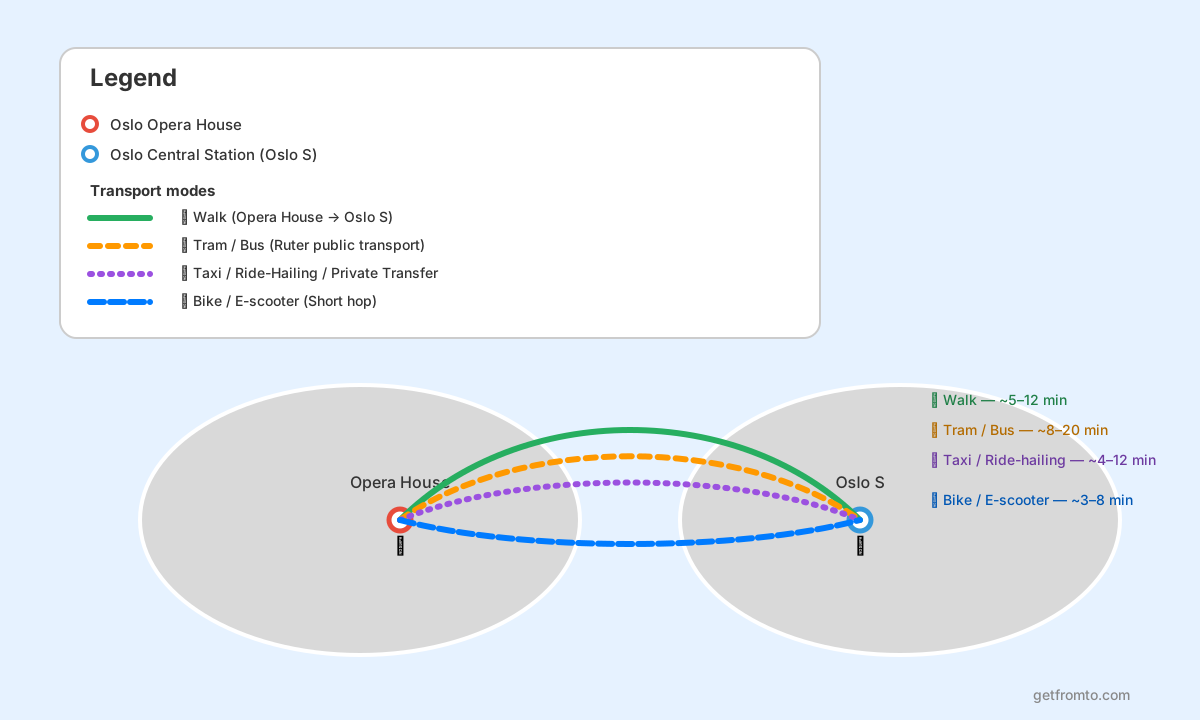
Oslo Opera House and Oslo Central Station (Oslo S) are very close to each other, so most travelers can simply walk, but public transport, taxi/ride-hailing, and micromobility are handy if you have heavy luggage, bad weather, or limited mobility.
At A Glance (Oslo Opera House to Oslo Central Station)
| Mode | Duration | Best For |
|---|---|---|
| 🚶 Walk (Opera House → Oslo S) | ~5–12 min | Most travelers, fastest door-to-door in good weather |
| 🏷️ Cost: Free » nearby Oslo activities (if continuing sightseeing) | ||
| 🚋 Tram / Bus (Ruter public transport) | ~8–20 min total (including wait/walk) | Rain/snow, mobility needs, heavy bags |
| 🏷️ Cost: Zone 1 single ticket (varies by ticket type/app discount) » Ruter tickets & travel info | Entur route planning | ||
| 🚖 Taxi / Ride-Hailing / Private Transfer | ~4–12 min (traffic-dependent) | Door-to-door comfort, late night, bulky luggage |
| 🏷️ Cost: Typically high for such a short trip (minimum fare often applies) » private pickup option | GetTransfer options | ||
| 🚲 Bike / E-scooter (Short hop) | ~3–8 min | Light luggage, good weather, quick flexible hop |
| 🏷️ Cost: Pay-per-minute / unlock fees vary by operator » bike rental alternatives | ||
Which Option or Route Should You Choose?
- Fastest / most convenient for most people: Option #1 — Walk (it is usually the simplest because the distance is very short).
- Best in rain, snow, or with heavy luggage: Option #2 — Tram / Bus (Ruter).
- Most comfortable door-to-door: Option #3 — Taxi / Ride-Hailing / Private Transfer.
- Most flexible quick hop (light luggage): Option #4 — Bike / E-scooter.
How to Book and Practical Tips
- Check the weather first: wind, rain, and icy sidewalks can make a short walk less comfortable in Oslo.
- Use official planners: Ruter Journey Planner and Entur are the easiest ways to see live transit options.
- For public transport tickets, the Ruter app is usually the easiest for visitors.
- If you have large suitcases, walking may still be possible but cobbles/curbs can be annoying—consider a short taxi ride instead.
- Ride-hailing alternatives: In Oslo, Bolt and local taxi apps/operators may be available depending on time and area; compare with a pre-booked car from GetTransfer or Welcome Pickups if you prefer a fixed arrangement.
- Need luggage storage near Oslo S? Check Radical Storage before continuing to your hotel or a tour.
- If you are continuing sightseeing after arriving at Oslo S, you can compare Oslo tours and day trips on GetYourGuide or browse Klook.
🚶 Option #1 — Walk (Best Overall for Most Travelers)
Free Fast Weather-dependent
- Overview: The Norwegian National Opera & Ballet building (Oslo Opera House) and Oslo Central Station (Oslo S) are only a short distance apart, so walking is usually the easiest option and often the quickest door-to-door.
- How to do it (with cost): No booking needed and free. Start from the Opera House area at Kirsten Flagstads plass 1 and walk toward Oslo S / Jernbanetorget. If you need station info on arrival, see Bane NOR’s Oslo S page.
- Pros: Free, simple, no waiting. Cons: Less comfortable in rain/snow or with multiple heavy suitcases.
Step-by-step: Walking from Oslo Opera House to Oslo S
- Exit the Opera House toward the waterfront side facing the city and station area.
- Follow the pedestrian route toward Oslo S / Jernbanetorget (the station complex is visible nearby).
- Use marked crossings and paved pedestrian paths; in winter, walk carefully on slippery surfaces.
- Enter Oslo Central Station at the entrance closest to your platform, airport train, metro, or tram connection.
Getting to the main embarking points (Oslo Opera House entrances)
- Main landmark: Oslo Opera House (Norwegian National Opera & Ballet) at Kirsten Flagstads plass.
- If you are on the roof/plaza: Walk down to street level and orient yourself toward the station side of the waterfront.
- Accessibility: If walking is difficult, switch to taxi/ride-hailing or Ruter public transport.
- Locations/Trip Planner: 🔗 Google Map / 🔗 OpenStreetMap
🚋 Option #2 — Tram / Bus (Ruter Public Transport)
All-weather Accessible Usually slower than walking for this short trip
- Overview: For such a short distance, public transport is mainly useful in bad weather, with mobility issues, or when carrying bags. Ruter operates Oslo’s trams, buses, metro, and local transit in the city.
- How to book (with price): Plan routes on Ruter Journey Planner or Entur, and buy tickets in the Ruter app. This trip is within Oslo Zone 1; the exact fare depends on ticket type and discounts.
- Pros: Good in poor weather, no long walk with luggage, frequent service nearby. Cons: Waiting time can make it slower than walking.
Step-by-step: Tram / Bus (Ruter)
- Open Ruter Journey Planner and search from Oslo Opera House (or your nearby stop) to Oslo S / Jernbanetorget.
- Buy a valid Zone 1 ticket in the Ruter app before boarding (or use another valid ticketing method shown by Ruter).
- Walk to the suggested stop and verify line number/direction on the display.
- Ride one stop or a short segment, then get off at/near Oslo S or Jernbanetorget and walk into the station.
Getting to the main embarking points (Stops near Oslo Opera House / Bjørvika)
- Nearest stop depends on line and disruptions: Use the live planner instead of memorizing a stop name.
- Jernbanetorget / Oslo S area: This is the main interchange and the most common alighting area for station access.
- Backup plan: If the wait is long, simply switch to walking because the distance is short.
- Locations/Trip Planner: 🔗 Google Map / 🔗 OpenStreetMap
🚖 Option #3 — Taxi / Ride-Hailing / Private Transfer (Most Comfortable)
Door-to-door Best with luggage Minimum fare can feel expensive
- Overview: A taxi or ride-hailing car is the easiest option if you have bulky luggage, limited mobility, or poor weather. Because the trip is very short, fares are usually driven by minimum charges rather than distance.
- How to book (with price): For a pre-arranged car, compare GetTransfer in Oslo or request a pickup via Welcome Pickups. In practice, many travelers use a local taxi app or ride-hailing app such as Bolt (availability varies). Expect a minimum fare / short-trip fare rather than a cheap per-km price.
- Pros: No walking with bags, warm/dry, direct drop-off at station entrance. Cons: Poor value for such a short distance if you are traveling light.
Step-by-step: Taxi / Ride-Hailing / Private Transfer
- Set pickup as Oslo Opera House (or the exact curbside point you can access).
- Set destination as Oslo Central Station (Oslo S) and specify the best entrance if meeting someone or catching a train.
- Confirm fare estimate/minimum charge before requesting if your app shows it.
- Use this option when weather is poor, you are short on time, or you have heavy luggage.
Getting to the main embarking points (Taxi pickup points around Oslo Opera House)
- Curbside pickup: Move to a vehicle-accessible point near the Opera House entrance/plaza edge rather than standing on the pedestrian roof area.
- Busy times: After performances, pickup may be easier a short walk away from the crowd.
- Alternative: If cars are delayed, walk or take a quick Ruter tram/bus.
- Locations/Trip Planner: 🔗 Google Map / 🔗 OpenStreetMap
🚲 Option #4 — Bike / E-scooter (Quick Hop in Good Weather)
Quick Flexible Not ideal with luggage
- Overview: If you are traveling light and conditions are good, a bike or e-scooter can be a very quick hop between Bjørvika (Opera House area) and Oslo S. It is mainly a convenience option, not a necessity.
- How to book (with price): Availability and pricing vary by local operator and regulations. For longer bike rentals or alternatives, browse BikesBooking. For most visitors, shared micromobility apps in Oslo (where available) are more practical than advance booking.
- Pros: Fast and flexible, fun on a clear day. Cons: Hard with suitcases, weather-dependent, parking/riding rules apply.
Step-by-step: Bike / E-scooter
- Open your preferred bike/e-scooter app (or local rental operator) and check the nearest available vehicle near the Opera House.
- Confirm permitted riding/parking zones before starting.
- Ride carefully toward Oslo S / Jernbanetorget using marked lanes/allowed streets.
- Park legally near the station and complete the trip in the app before entering Oslo S.
Getting to the main embarking points (Bike/scooter parking zones near Oslo Opera House)
- Vehicle availability changes constantly: Check the app live rather than relying on fixed docks.
- Luggage warning: If you have more than a backpack, walking or taxi is usually better.
- Wet/icy conditions: Avoid scooters and switch to Ruter public transport or a taxi.
- Locations/Trip Planner: 🔗 Google Map / 🔗 OpenStreetMap
FAQ (Oslo Opera House to Oslo Central Station)
What’s the easiest way to get from Oslo Opera House to Oslo Central Station?
For most travelers, walking is the easiest and usually the fastest because the distance is very short.
How long does it take to walk from Oslo Opera House to Oslo S?
Typically around 5–12 minutes depending on your pace, exact entrance/exit points, and weather conditions.
Should I take public transport for this route?
Usually only if it is raining/snowing, you have heavy luggage, or you need an accessible option. Otherwise, walking is simpler.
Can I take a taxi or ride-hailing car?
Yes. A taxi / ride-hailing car is very convenient, but the trip is so short that minimum fares can make it feel expensive.
Which app should I use for Oslo public transport?
The Ruter app is the easiest for journey planning and ticketing in Oslo.
Where can I check official station information for Oslo S?
Use Bane NOR’s Oslo S page for station details and travel information.
Can I store luggage near Oslo S after arriving?
Yes, and you can also compare short-term options with Radical Storage if you want to explore before checking in.





Related Tours/Services
Popular Routes
Recent Routes
- How to get from Oslo Opera House to Oslo Central Station
- How to get from Helsinki Cathedral to Helsinki Central Station
- How to get from Bucharest Old Town to Gara de Nord
- How to get from Ban Jelačić Square (Zagreb) to Zagreb Glavni Kolodvor
- How to get from Knez Mihailova Street (Belgrade) to Belgrade Centre (Prokop) Station
- How to get from The Bund (Shanghai) to Shanghai Railway Station
- How to get from Odori Park (Sapporo) to Sapporo Station
- How to get from Plaza de Armas to Terminal Alameda (Santiago)
- How to get from Times Square to Penn Station (New York)
- How to get from India Gate to New Delhi Railway Station
Top Travel Gears

LISEN Airplane Travel Essentials for Flying Airplane Phone Holder for Desk

INIU 10000mAh 45W Fast Charging Portable Charger, Smaller Travel Power Bank

Clear Shoe Bags for Travel 5 PCS, Drawstring Travel Shoe Bags for Packing

zelin Anti Theft Zipper Clips, Travel Essentials, Carabiner, 4Pcs Grey
FYY Electronic Organizer, Travel Tech Pouch Bag, Cable Organizer Black